


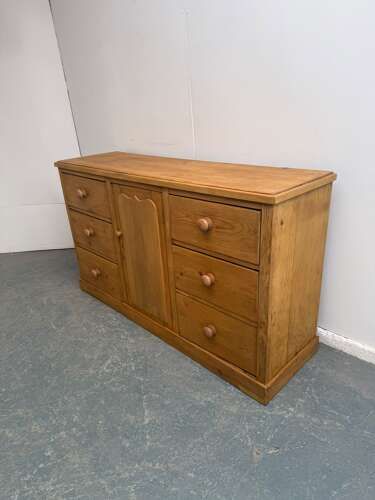
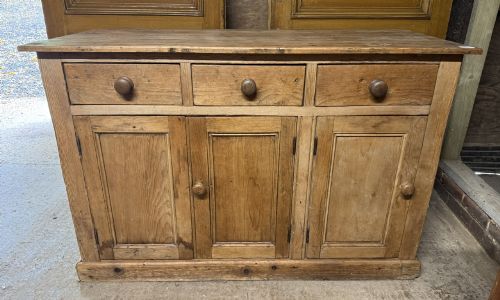
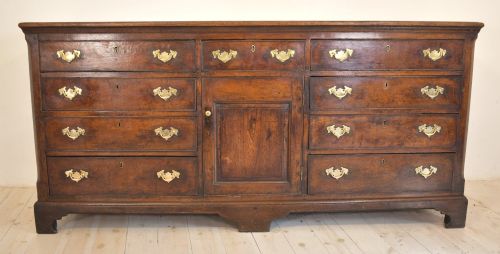
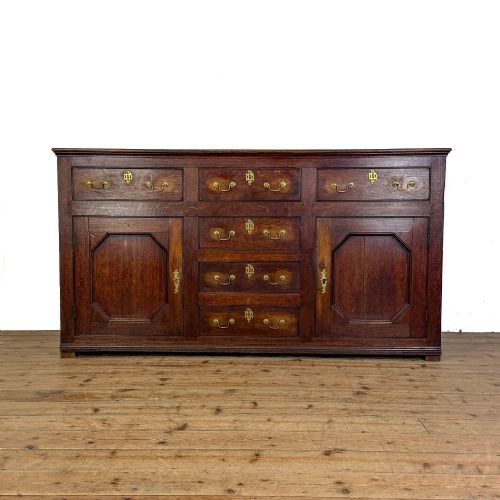

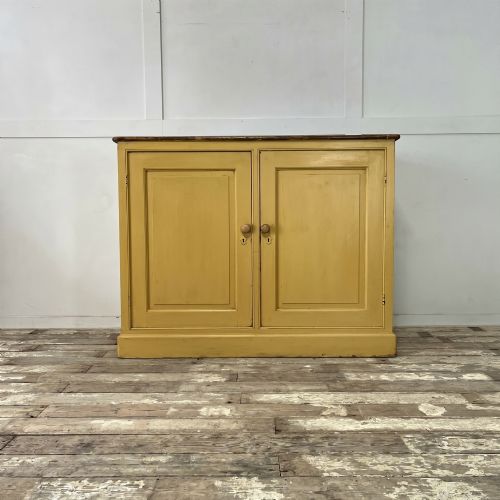

Traditional Low Credenza
Traditional low credenza pieces span centuries of cabinet-making, offering generous storage and enduring utility for the modern home.
Traditional Low Credenza
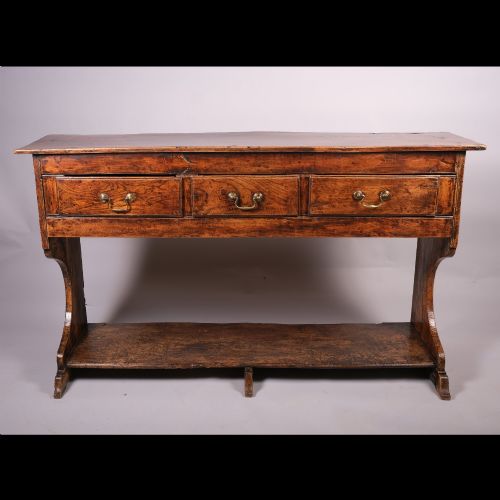
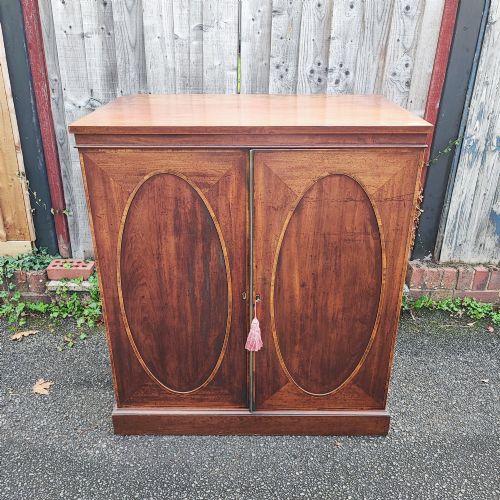
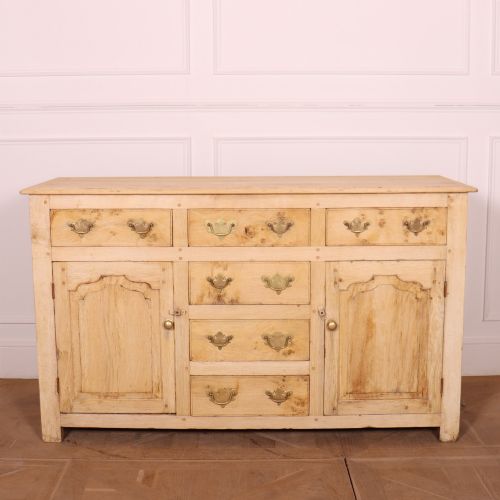
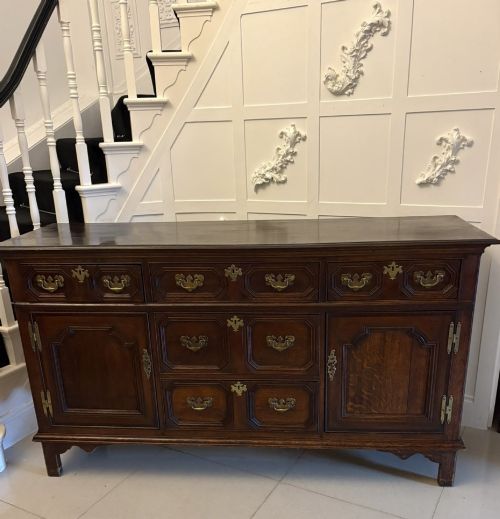
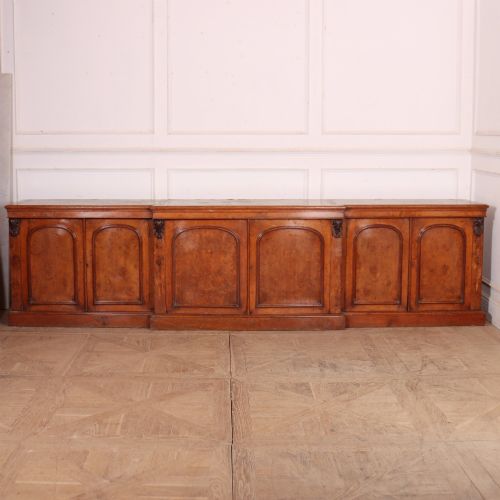
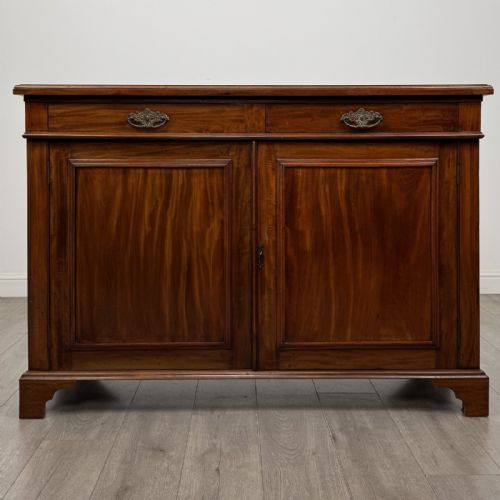
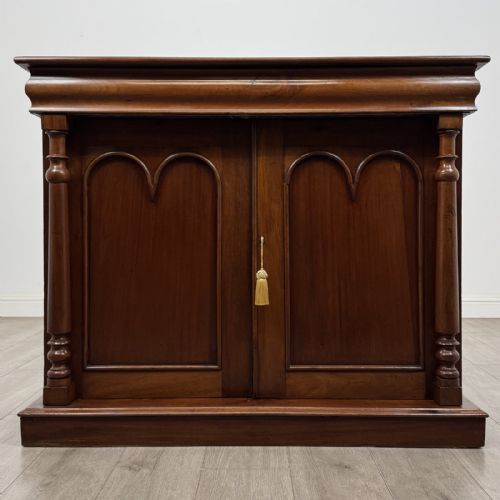
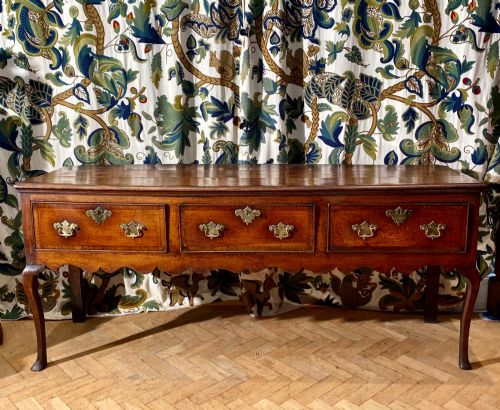
A traditional low credenza encompasses sturdy oak dresser bases, mahogany side cabinets, and low storage cupboards built for domestic utility. These low-profile pieces originate from various periods including the eighteenth, nineteenth, and early twentieth centuries.
The version most commonly met on this page is the English or continental oak dresser base, alongside mahogany and pine cupboards. They provide functional surface space and enclosed storage suited to dining rooms, kitchens, or living areas.
How they were made
Cabinet-makers relied principally on solid timbers such as oak, mahogany, walnut, and pine, frequently pairing them with brass hardware and iron fittings. Construction techniques involved traditional joinery, sturdy drawer framing, and turned or bracket feet.
Surfaces were finished with natural wax, paint, or polish to protect the wood while highlighting grain patterns in materials like burr walnut and birds-eye maple. Structural stability was achieved through heavy timber framing and durable internal shelving.
Traditional Low Credenza Retail Price Guide 2026
Typical asking prices for traditional low credenza among the pieces listed under this phrase on Sellingantiques today, from the lower quarter to the upper quarter. They describe what is for sale here now, not the wider market.
Listings feature oak, mahogany, pine, and elm pieces spanning from the seventeenth century through to the Edwardian era.
What varies in quality
The distinction between standard utility items and finer examples rests on the selection of timber, such as figured walnut or dense eighteenth-century oak, and the crispness of decorative carving. Superior pieces display refined proportions, well-executed joinery, and original brass or iron hardware.
Execution of secondary details, including secret drawers, bracket feet, and panelled doors, separates workshop output. Honest patination and intact structural timber without excessive modern intervention mark the higher tier of surviving examples.
The Traditional Low Credenza Glossary
- Dresser base
- A low wooden storage unit featuring drawers and cupboards, historically used in kitchens and dining rooms for serving food and storing tableware. They form the foundation of many traditional low credenza selections.
- Bracket foot
- A small architectural foot supporting the corners of a cabinet or chest, shaped like a bracket and frequently seen on eighteenth and nineteenth-century case furniture.
- Potboard
- An open slatted lower shelf fitted between the legs of a dresser base, traditionally utilised for storing pots and heavy kitchenware.
- Enfilade
- A long sideboard or cabinet with multiple doors, originating in seventeenth-century France and designed to stand against a dining room wall.
- Patina
- The surface sheen and colour acquired by wood and metal through age, handling, and regular waxing over many decades.
Traditional Low Credenza: Frequently Asked Questions
Where should I place a traditional low credenza?
These low storage cabinets fit well in dining rooms, hallways, or living spaces where surface display and concealed storage are required.
Their restrained height allows them to sit beneath mirrors or artwork without dominating the room.
How do I clean waxed pine and oak?
Maintenance involves dusting with a dry cloth and applying a quality beeswax periodically to nourish the timber.
Avoid harsh chemical cleaners that strip the historic finish and dry out the grain.
Are these pieces suitable for modern televisions?
The low profile and solid construction of dresser bases and side cabinets make them practical media units.
Enclosed cupboards and drawers conceal electronic equipment while providing stable top surfaces.
How can I tell eighteenth-century oak from later copies?
Early pieces exhibit hand-cut joinery, pegged joints, and timber shrinkage consistent with age and hand tools.
Surface wear patterns and old fixing methods provide further indication of period origin.