



Traditional Long Stool
A traditional long stool offers sturdy utility and classic seating, spanning centuries of craftsmanship in oak, mahogany, and leather.
Traditional Long Stool
A traditional long stool provides extended seating or foot support, appearing across various historical periods from the eighteenth century through the early twentieth century. These pieces function as window seats, footstools, piano benches, and hall benches within domestic spaces.
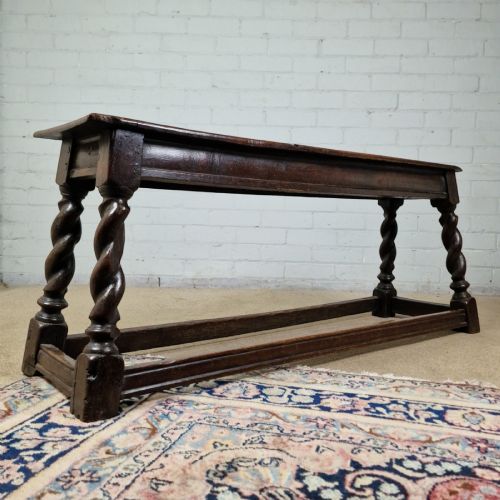
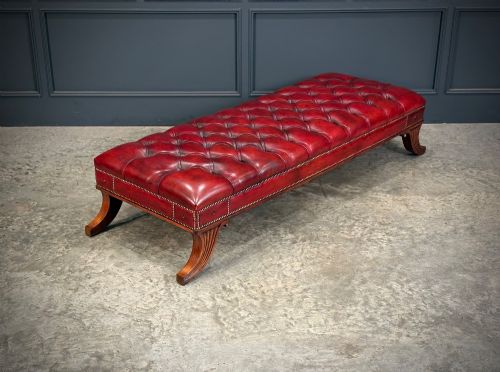
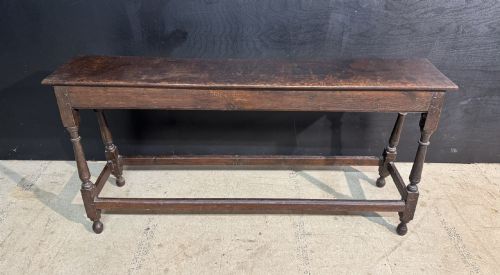
The most common versions encountered on this page include mahogany framed footstools and oak joint stools, alongside upholstered Victorian and Edwardian examples. Formats range from simple wooden benches to buttoned leather ottomans and fabric-covered window seats.
Origins vary from English country house styles to Qing Dynasty carved hardwood benches, demonstrating diverse regional aesthetics. Buyers find these long forms adaptable for placement at the foot of a bed or beside a fireplace.
Materials and construction methods
Construction relies primarily on dense hardwoods such as oak, mahogany, walnut, and rosewood, chosen for structural integrity. Joinery techniques range from traditional peg joints in earlier oak pieces to sturdy frame assembly in later mahogany examples.
Upholstery materials include wool, leather, kilim, linen, and various decorative fabrics, often secured over buttoned or hinged seats. Secondary details incorporate brass hardware, carved ball and claw feet, and fluted wooden legs.
Traditional Long Stool Retail Price Guide 2026
Typical asking prices for traditional long stool among the pieces listed under this phrase on Sellingantiques today, from the lower quarter to the upper quarter. They describe what is for sale here now, not the wider market.
One twentieth-century long stool comes equipped with ball and claw detail, ready to grip the rug with permanent determination.
Assessing quality in long stools
Quality reveals itself in the weight and selection of the timber, where dense hardwoods and precise joint construction indicate superior cabinetmaking. Finer pieces display crisp hand-carving on the frame, such as fluted legs or ball and claw details.
The standard of upholstery and the resilience of the internal webbing or stuffing distinguish standard workshop pieces from higher-status commissions. Original timber surfaces with honest patination hold greater appeal than over-restored finishes.
The Traditional Long Stool Glossary
- Joint stool
- An early form of wooden stool constructed with mortise and tenon joints rather than turned legs. These sturdy pieces date predominantly to the eighteenth century and earlier.
- Window seat
- A long stool specifically designed to fit within a window recess, frequently featuring upholstered tops and decorative frames in Adam or Georgian styles.
- Kilim
- A flat-woven textile often utilised as a durable and decorative upholstery covering for nineteenth-century footstools and benches.
- Ebonised
- Wood finished with a dark stain or paint to imitate ebony, a technique popular during the Victorian era for formal seating.
- Ottoman
- A padded, upholstered bench or stool lacking a back, used for seating or resting feet.
Traditional Long Stool: Frequently Asked Questions
Where should I place a long stool?
These versatile pieces suit placement at the foot of a bed, beneath a window, or along a hallway wall. Their elongated proportions also work well positioned before a large sofa as an alternative to a coffee table.
Ensure the height matches nearby furniture if intended for seating rather than purely decorative use or foot support.
How do I care for antique upholstery?
Vacuum fabric surfaces gently using a soft brush attachment to remove dust without damaging fragile fibres. Leather portions benefit from periodic treatment with appropriate conditioning balms to prevent drying and cracking.
Keep wooden frames away from direct heat sources and strong sunlight to protect the polish and prevent timber warping.
Are these stools comfortable for daily seating?
Many long stools feature padded tops upholstered in wool, linen, or leather, offering adequate comfort for short periods. Padded piano duet stools and upholstered dressing stools were specifically designed for extended sitting.
Firmness varies depending on the internal stuffing and the age of the padding materials used within the piece.
How do I distinguish eighteenth-century pieces?
Earlier examples typically feature heavier timbers like oak, traditional joint construction, and simpler, utilitarian forms. Georgian and eighteenth-century styles often incorporate finer mahogany framing and classical decorative motifs such as fluting.
Examine the underside and joints for tool marks and timber shrinkage that indicate genuine age.