

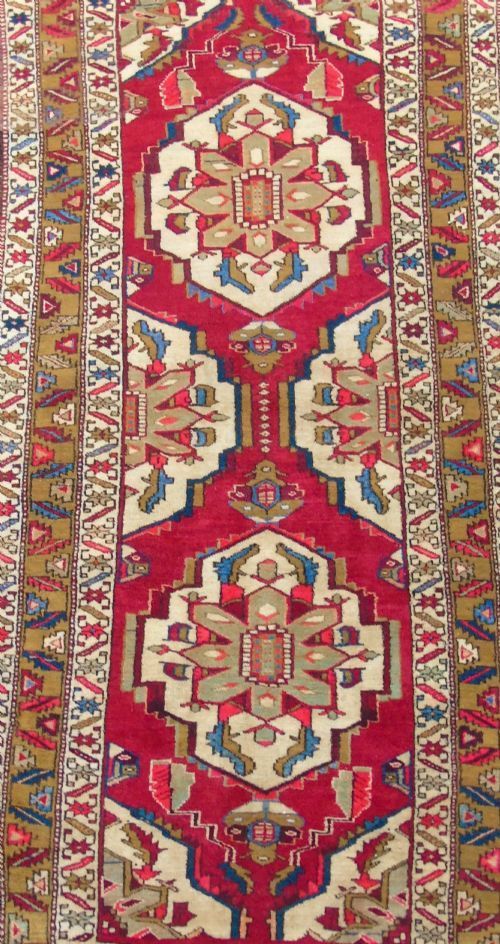
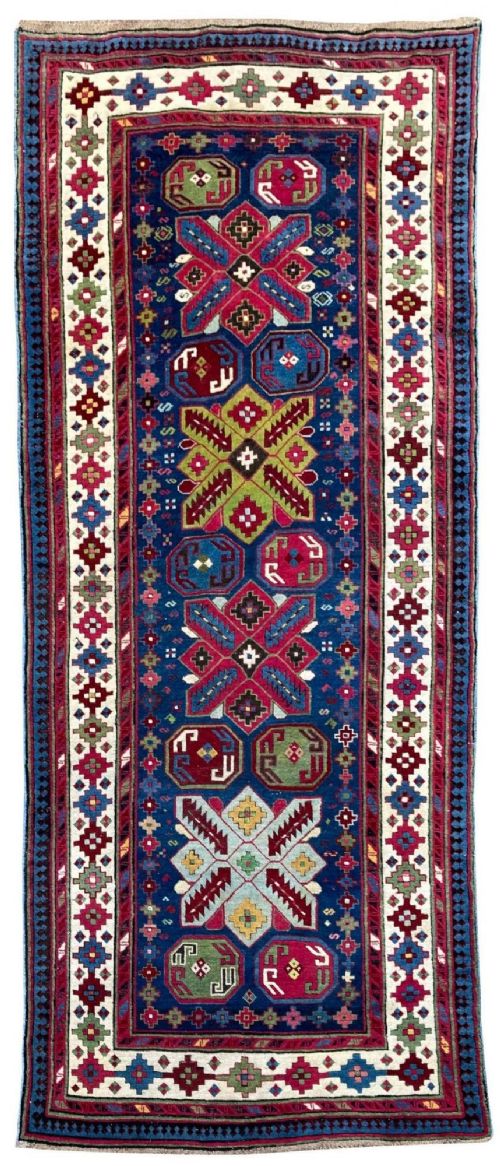
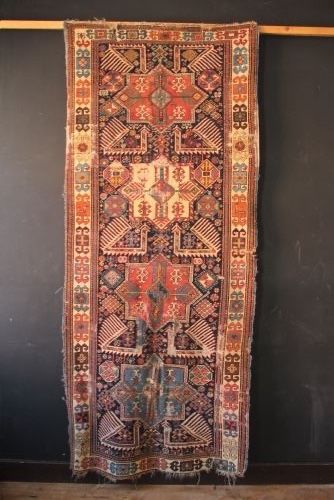
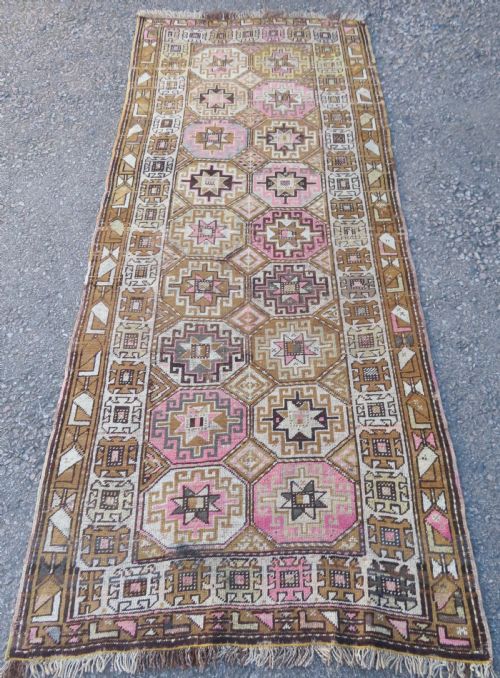
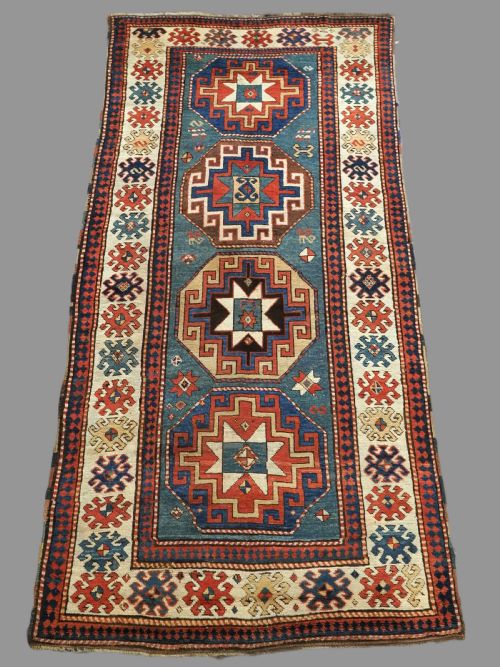
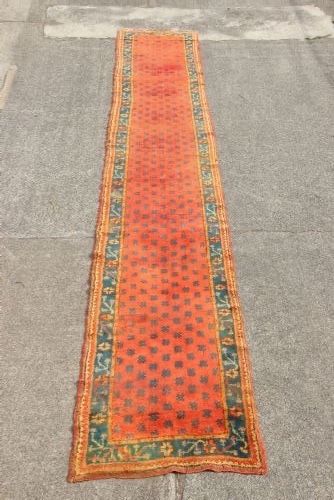
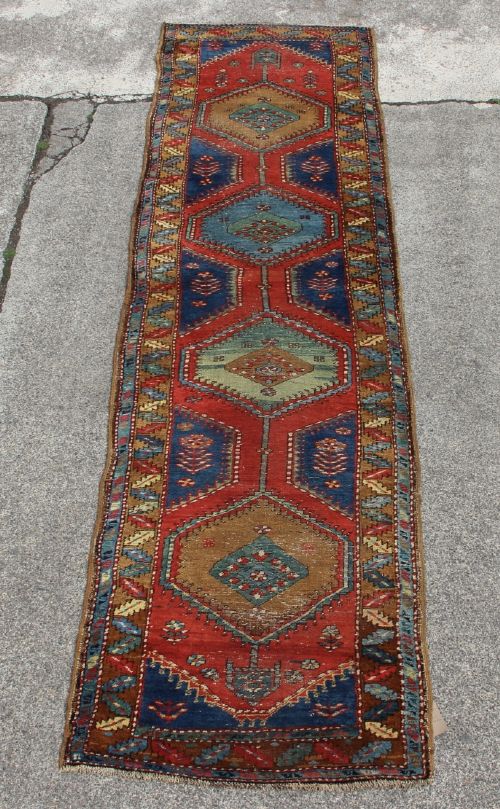
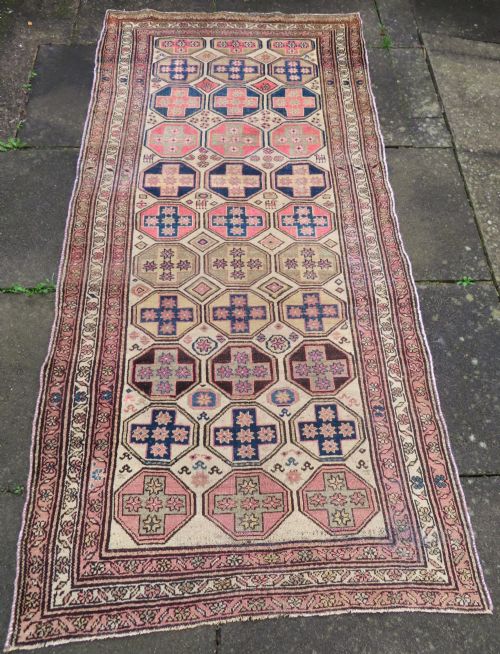
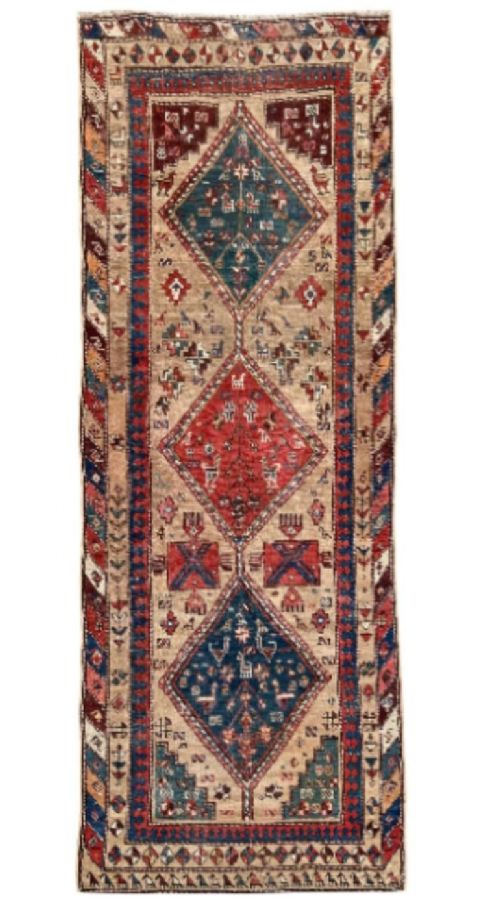
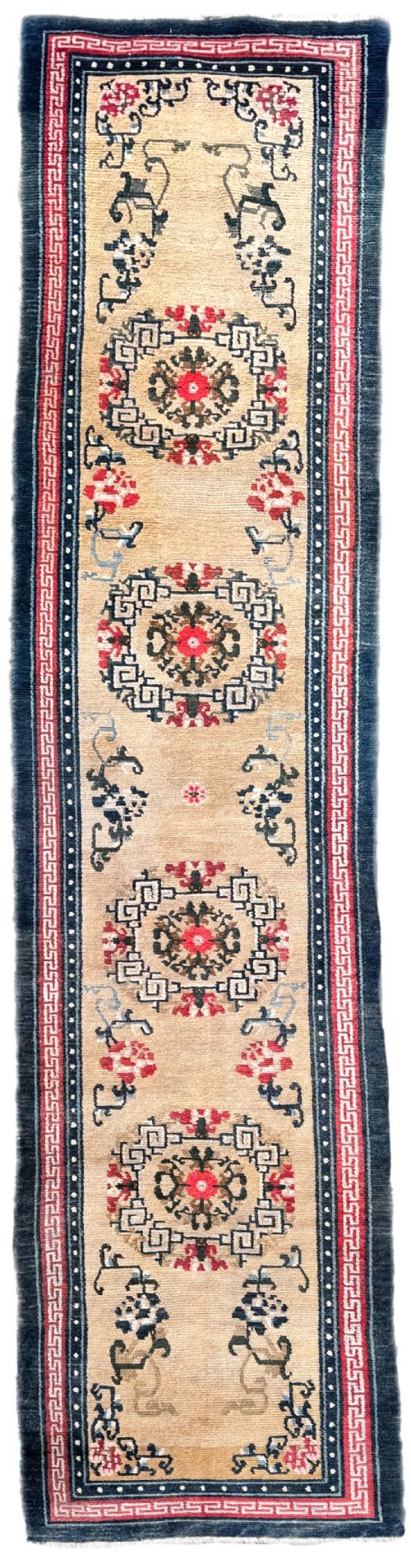
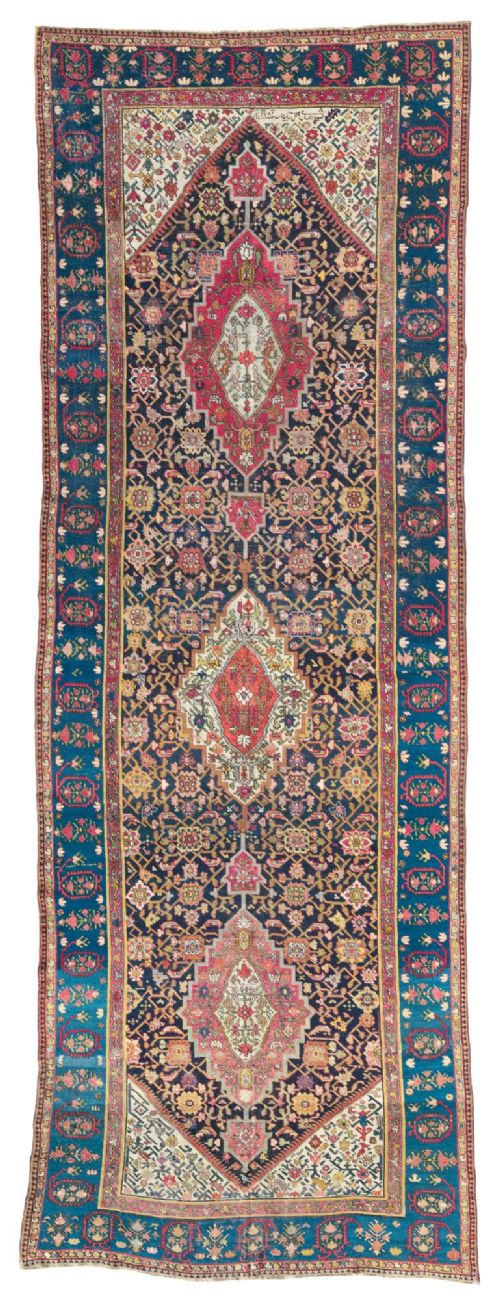
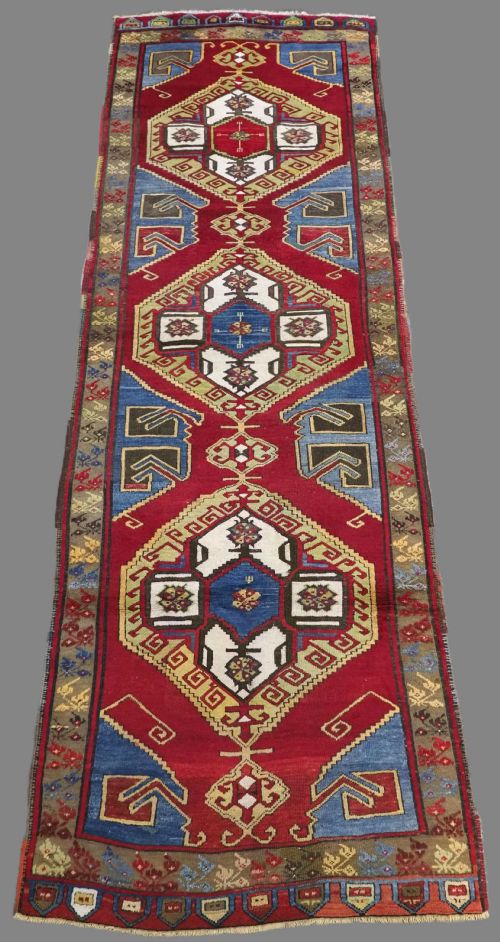
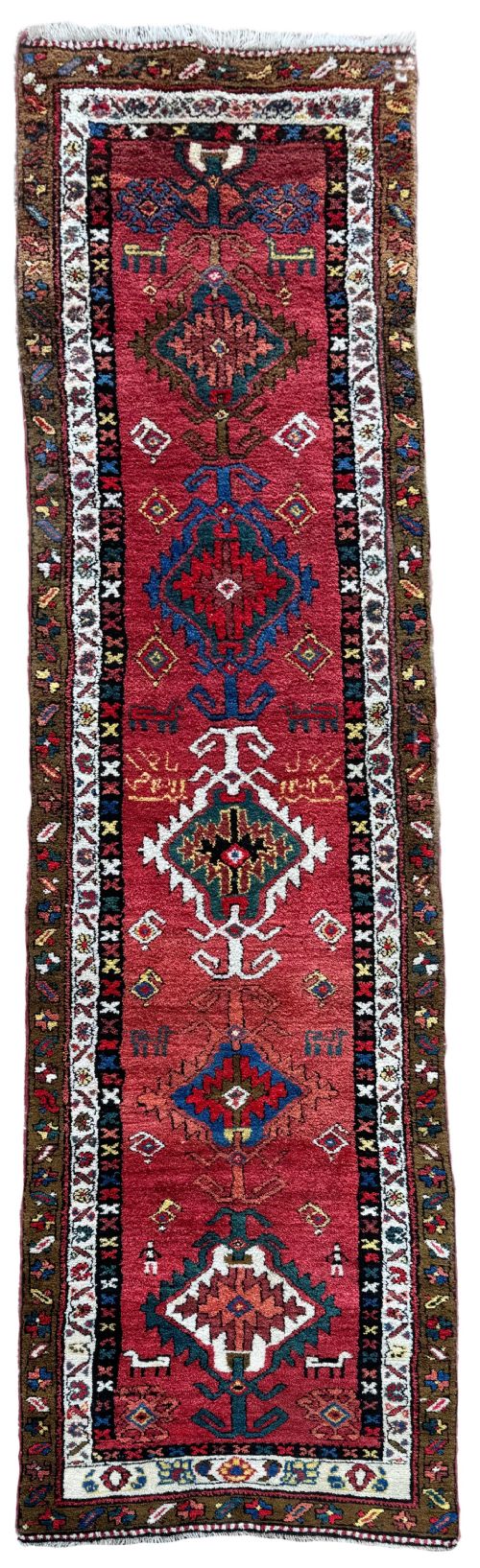
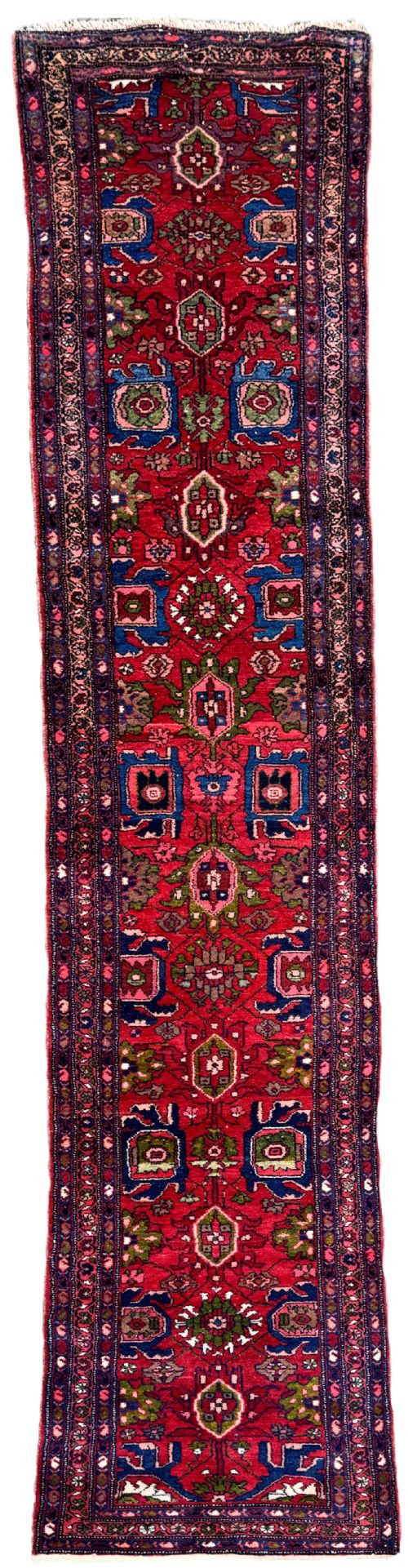

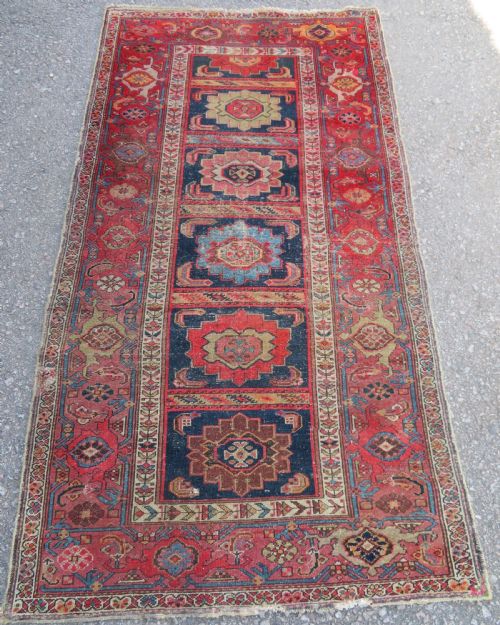
Traditional Long Rug
A traditional long rug brings warmth and linear rhythm to a hallway or landing, drawing the eye along historic woven paths.
Traditional Long Rug
A traditional long rug functions primarily as a runner or narrow carpet designed for corridors, halls, and extended spaces within a home. These textiles stretch across floors in lengths spanning from modest proportions to over thirty feet, offering substantial coverage for narrow architectural passages.
The pieces seen here span origins from Persian, Caucasian, Anatolian, and Kurdish weaving traditions, alongside Tibetan, Moroccan, and Afghan examples. Production dates range from the mid nineteenth century through the early twentieth century, showing formats such as village runners, kellehs, and long rugs.
Village and tribal workshops produced the majority of these examples, incorporating geometric medallions, repeat field patterns, and tribal motifs. Buyers encounter formats designed specifically for domestic foot traffic, balancing utility with decorative tribal artistry.
What varies in quality in traditional long rugs
Knot density and structural integrity determine the foundational calibre of an antique runner, influencing how crisply geometric motifs and curvilinear borders resolve. Finer knots permit more intricate drawing within medallions and field patterns, whereas looser weaves produce broader, more rustic interpretations.
The condition of the wool pile and the integrity of the original selvages and ends govern the longevity of a textile. Examples retain varying degrees of surface wear, from evenly patinated wool to distressed pile, altering the visual texture of the floor covering.
Traditional Long Rug Retail Price Guide 2026
Typical asking prices for traditional long rug among the pieces listed under this phrase on Sellingantiques today, from the lower quarter to the upper quarter. They describe what is for sale here now, not the wider market.
Regional styles represented include Persian Tribal, Caucasian, Anatolian, Kurdish, Heriz, and Oushak workshops.
The Traditional Long Rug Glossary
- Runner
- A long, narrow carpet format traditionally woven for hallways, stairs, and corridors. These rectangular textiles measure significantly longer than their width.
- Kelleh
- A large, room-size or extended carpet format that is longer than a standard rug but wider than a typical runner. These pieces often anchor major reception spaces.
- Warp
- The vertical foundation threads stretched lengthwise on a loom before weaving begins. Weavers tie knots around these stationary threads.
- Weft
- The horizontal threads passed across the warp threads after each row of knots to secure the pile in place. These structural threads bind the rows together.
- Gul
- A medallion or repeating octagonal motif commonly found in tribal and nomadic weaving traditions, particularly among Turkmen and Afghan carpets.
- Selvage
- The finished side edges of a rug, formed by wrapping the outermost warp threads. Proper binding prevents the sides from fraying.
Traditional Long Rug: Frequently Asked Questions
Where do people place traditional long rugs?
These runners fit naturally along hallways, corridors, and landings where narrow flooring requires length and warmth. They direct movement through a home while protecting timber boards or stone floors from heavy foot traffic.
Property owners also position them beside beds, in long kitchens, or across wide entrance vestibules to establish a distinct linear anchor. Their extended proportions suit spaces that reject square carpets.
How do I clean a vintage wool runner?
Routine maintenance requires gentle vacuuming without a rotating beater brush to protect the aged wool pile and foundation knots. Professional textile cleaning is necessary for deep washing to preserve the natural lanolin within the wool.
Harsh chemical detergents and excessive water damage historic dyes, so professional intervention ensures the fibres remain stable. Immediate blotting of spills prevents staining without saturating the cotton foundation.
How can I tell a tribal rug from a city piece?
Tribal rugs display geometric motifs, memory-woven designs, and bold, asymmetrical colour palettes reflecting nomadic or village production. Artisans worked without formal cartoon guides, resulting in charming irregularities across the field.
City carpets feature precise floral curves, balanced medallions, and refined curvilinear borders produced in organised workshops. The drawing in urban pieces tends towards symmetry and exact repetition.
What causes distress in antique runners?
Centuries of foot traffic naturally wear down the wool pile, revealing the foundation threads beneath in areas of heavy use. Sunlight exposure and regular washing gradually soften the saturated tones of natural dyes.
Edge abrasion and losses at the ends occur when binding threads weaken over generations of domestic habitation. This honest wear forms the characteristic patina prized by collectors.