
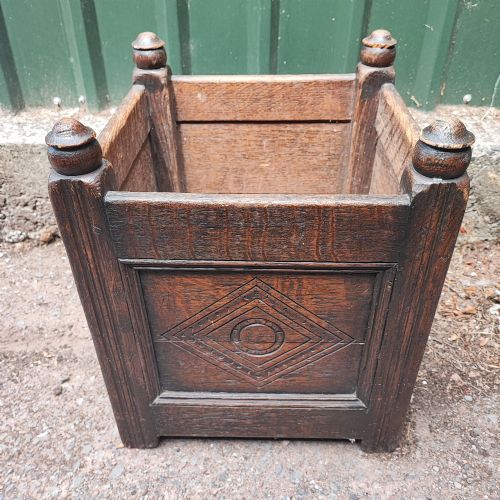
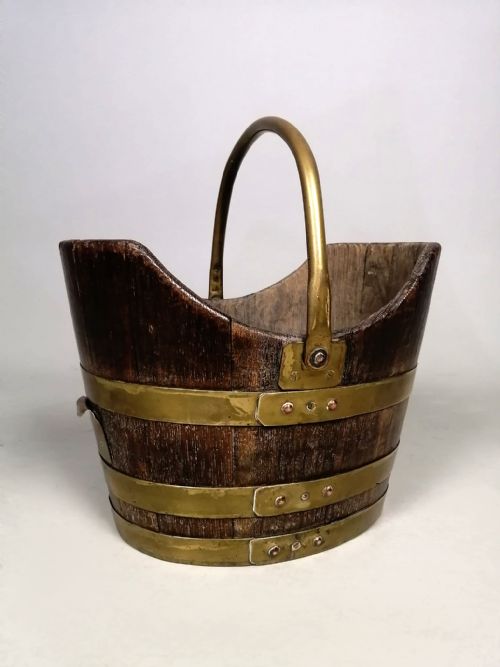


Traditional Log Store Bucket
These traditional log store bucket designs bring robust British fireside utility and enduring wood storage into a room.
Traditional Log Store Bucket
A traditional log store bucket serves as a sturdy receptacle for domestic fuel, sitting beside the hearth to hold logs, coal, or kindling. Buyers searching for a traditional log store bucket encounter robust timber vessels, coopered containers, and metallic coal bins dating from the eighteenth century through to the early twentieth century.
The selections available here showcase forms originally built for utilitarian garden or household duties, such as well buckets and waste bins, which now find a second life by the fireplace. Oak, elm, and fruitwood examples sit alongside brass and copper pieces, reflecting both rustic country craftsmanship and more formal period styling.
Georgian and Victorian periods dominate the examples seen here, often displaying classic coopered stave construction reinforced with metal bands. Buyers are most likely to meet oak and mahogany timber bodies fitted with heavy brass handles and liners, bridging the gap between practical storage and decorative fireside furniture.
Materials and construction methods
Traditional log store bucket examples rely heavily on traditional cooperage, where vertical wooden staves of oak, elm, or fruitwood are shaped and locked together to form a watertight or sturdy cylindrical vessel. These wooden bodies are typically secured by tight bands of brass or iron, hammered into place to hold the timber staves under constant tension.
Metal variations utilise sheet brass and copper, sometimes paired with iron swing handles and riveted seams to handle the heavy weight of coal or timber. Craftsmen shaped these materials by hand, leaving subtle working marks that distinguish period items from modern mass-produced storage.
Materials span oak, brass, iron, wrought iron, elm, metal, fruitwood, and copper across Georgian, Victorian, and early twentieth-century periods.
Distinguishing quality across periods
Quality in a traditional log store bucket rests on the integrity of the timber selection and the precision of the cooperage work. Superior pieces display closely fitted staves, well-matched grain in woods such as oak or mahogany, and substantial gauge metal banding that remains securely fastened to the body.
The refinement of the hardware, including heavy cast brass handles and period-appropriate fastenings, separates standard utility items from finer domestic furnishings. Original patination on both the timber and the metal surfaces indicates how well a piece has aged through centuries of fireside use.
The Traditional Log Store Bucket Glossary
- Coopered
- Method of construction where curved wooden staves are bound together with metal hoops to form a round container. This technique was traditionally used for barrels and well buckets before being adopted for fireside storage.
- Stave
- A narrow vertical strip of wood with edge bevels used to form the sides of a coopered bucket or bin. Skilled woodworkers shaped each stave individually to ensure a tight, durable joint.
- Patina
- The surface sheen and colour developed by wood and metal over decades and centuries of handling and exposure. It serves as an indicator of age and genuine period use.
- Fireside accessory
- Functional items designed for use around the hearth, encompassing coal buckets, log bins, and fire irons. These pieces combined practical utility with domestic decoration.
Traditional Log Store Bucket: Frequently Asked Questions
How do I date an antique log bucket?
Dating relies on examining the construction methods, nail types, handle mounts, and the overall wood patination seen across the piece.
Georgian and eighteenth-century examples often show hand-forged ironwork and simpler joinery, while Victorian items frequently feature heavier brass banding and mahogany timbers.
Can these buckets be used for actual logs?
They were originally designed to hold solid fuel such as coal, logs, or kindling for hearth maintenance.
Many sturdy oak and metal bins remain entirely practical for holding firewood beside a modern or traditional fireplace.
Were these always meant for the fireside?
Many items designed as garden well buckets or household waste bins were later repurposed for fireside storage due to their deep cylindrical forms.
Their robust construction made them suitable for carrying heavy loads of water, earth, or fuel regardless of their original workshop intention.