

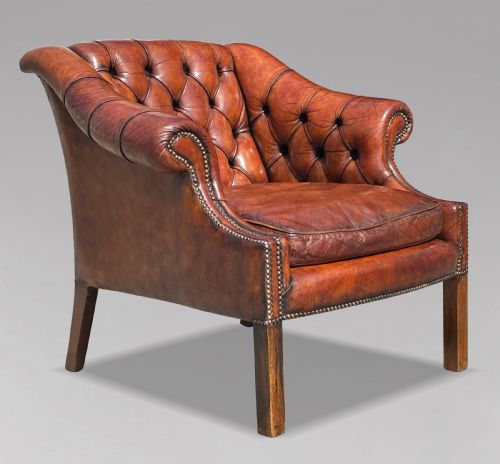
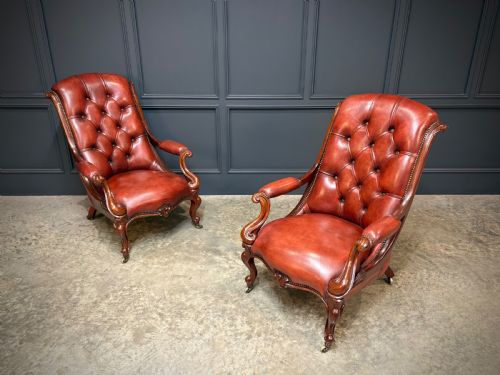
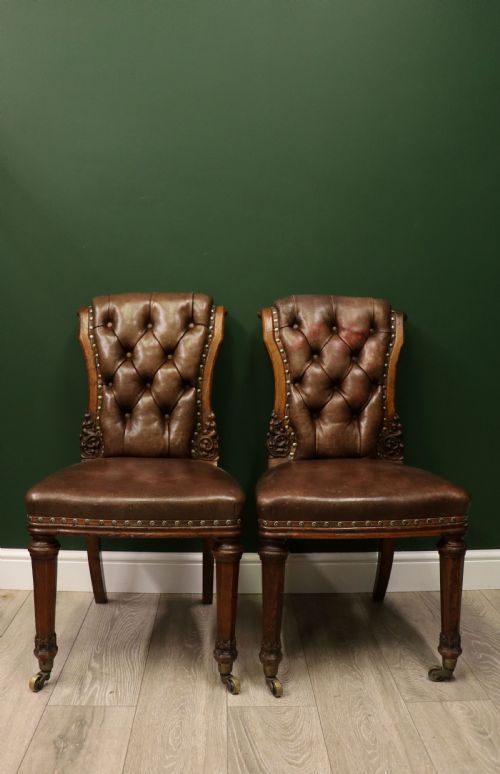


Traditional Leather Accent Chair
A traditional leather accent chair brings rich texture and enduring comfort to a room, drawing on centuries of skilled cabinet making.
Traditional Leather Accent Chair
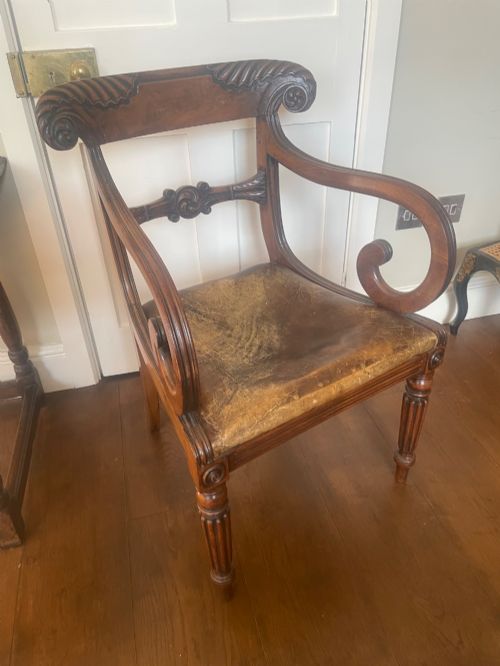
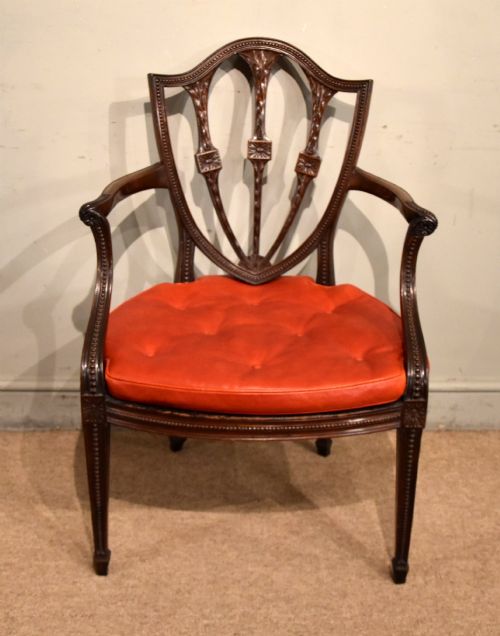
A traditional leather accent chair spans diverse forms from the 18th century onwards, including heavy club chairs, library armchairs, and elegant Gainsborough seats. These pieces range from substantial mahogany and oak frames to refined walnut and birch structures.
Buyers frequently encounter Edwardian and 19th-century club chairs alongside Georgian style mahogany armchairs and Art Deco sheep's hide designs. Side chairs, wingbacks, and desk chairs complete the selection, offering versatile seating options for various domestic interiors.
How they were made
Makers utilised solid timbers such as mahogany, oak, walnut, and birch to construct sturdy frames, frequently employing hand carving and turned wooden components. Brass details and buttoned upholstery techniques provide both structural definition and decorative finish.
Upholstery relies on traditional hide and leather, including sheep's hide and Spanish leather over willow, paired occasionally with velvet accents. Woodwork styles encompass Jacobean Revival, Queen Anne style, and Chippendale influences executed by hand.
Traditional Leather Accent Chair Retail Price Guide 2026
Typical asking prices for traditional leather accent chair among the pieces listed under this phrase on Sellingantiques today, from the lower quarter to the upper quarter. They describe what is for sale here now, not the wider market.
Listings feature 19th-century, Edwardian, and 1930s periods, utilising mahogany, oak, walnut, brass, and leather.
What varies in quality
The standard of timber framing differentiates the construction, with hand-carved mahogany and solid oak demonstrating superior cabinet work compared to simpler utilitarian builds. Timber selection ranges from figured walnut to standard pine or birch.
Leather quality and upholstery execution define the tactile experience, from supple sheep's hide to firm buttoned library chair padding. The depth of hand-carved detailing on arms and legs further marks out superior examples.
COOPER & HOLT
The Traditional Leather Accent Chair Glossary
- Gainsborough armchair
- A wide, upholstered armchair with open padded arms, short cabriole legs, and a high back, popular from the mid-18th century onwards. These seats were originally designed for writing desks or parlour use.
- Club chair
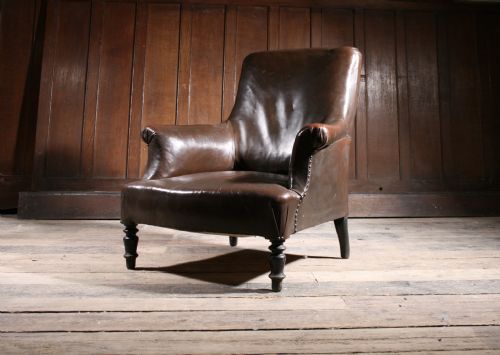
- A deep, comfortable armchair typically upholstered in heavy leather, originating in France and Britain during the early 20th century. The style prioritises deep cushioning and low, enveloping armrests.
- Wingback armchair
- A tall chair with side panels or 'wings' attached to the back frame, designed to shield the occupant from drafts. Early versions featured exposed wooden legs and leather upholstery.
- Turners chair
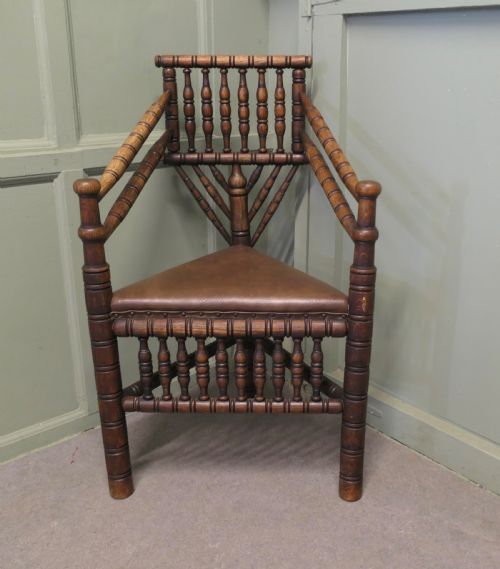
- A heavy wooden armchair constructed from turned spindles and posts, often associated with 17th-century vernacular traditions. These seats utilise simple geometric joinery rather than curved panels.
- Buttoned upholstery
- A technique where depressions are created in padded furniture by pulling twine or thread tightly through the stuffing to secure buttons. This method keeps internal fillings evenly distributed.
Traditional Leather Accent Chair: Frequently Asked Questions
What is a club chair?
A club chair is a deep, low-slung seating option heavily padded and traditionally covered in dark or tan leather. Originating in French and British clubs, it prioritises relaxed posture.
These pieces often feature sturdy internal wooden frames covered in sheep's hide or bovine leather, designed for prolonged sitting in libraries and studies.
How do I identify a Georgian armchair?
Georgian armchairs typically feature substantial mahogany or walnut frames with restrained carved details, such as ball and claw feet or scroll arms. The proportions favour formal elegance and upright posture.
Later Victorian and Edwardian iterations often borrow these classical outlines while incorporating softer padding and different hide textures.
Where should I place a leather accent chair?
These chairs suit studies, reading corners, and living rooms where rich textures balance softer fabrics and wooden furnishings. Their compact footprint as side chairs or club seats allows flexible placement.
Pairing a club chair with a matching desk or placing a wingback beside a bookshelf creates a dedicated, traditional seating zone.
What distinguishes Art Deco leather chairs?
Art Deco leather chairs from the 1930s favour smooth, rounded silhouettes and often utilise soft sheep's hide rather than stiff traditional leather. The design emphasises streamlined comfort over historical revivalism.
These models stand apart from Victorian buttoned library chairs through their minimalist frames and unadorned surfaces.