



Traditional Lady Writing Desk
These traditional lady writing desk examples are compact furniture pieces designed for correspondence, offering refined workspaces that suit intimate studies.
Traditional Lady Writing Desk
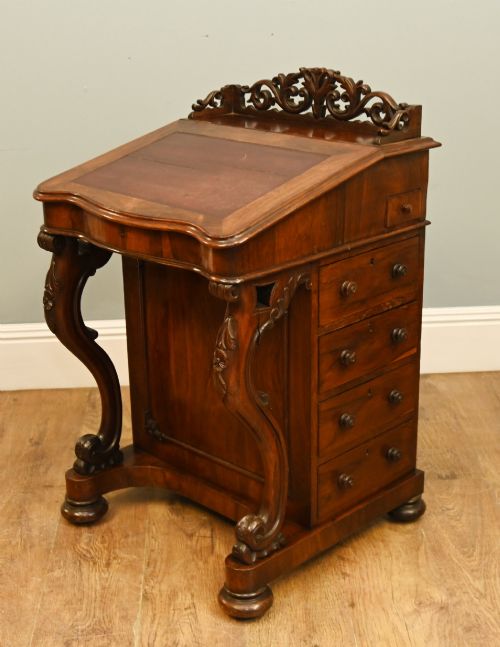
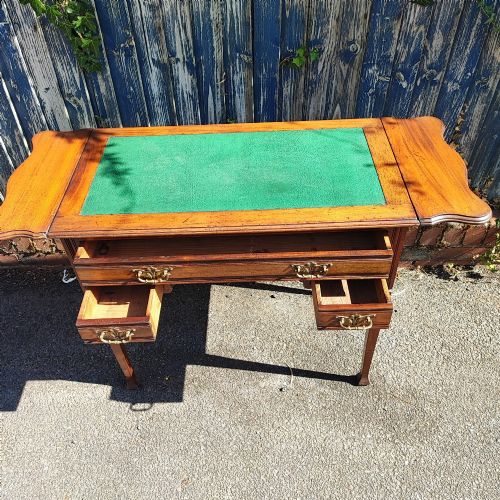
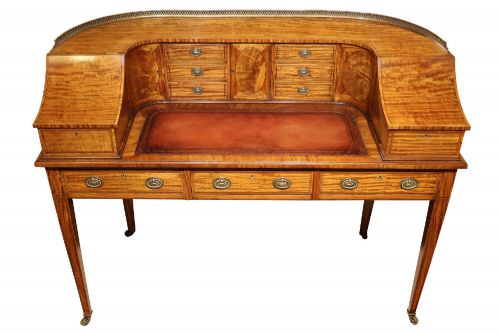
When you search for a traditional lady writing desk, you encounter compact writing furniture from the Victorian and Edwardian eras, alongside later revival pieces. These forms encompass davenports, bonheurs du jour, Carlton House desks, and drop-side tables designed for personal correspondence.
The pieces listed here frequently originate from the late nineteenth century and the early twentieth century, spanning periods like the Edwardian era and the 1930s. Mahogany and walnut dominate the selection, often enriched with satinwood and burr walnut veneers.
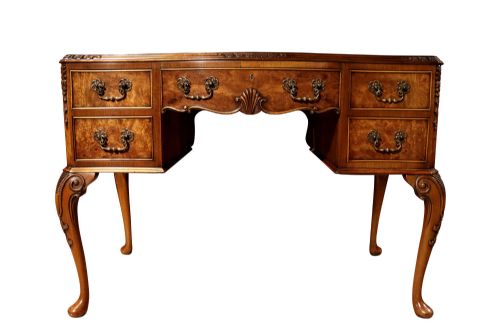
Revival styles such as Georgian Revival and Queen Anne style appear regularly alongside original Victorian and Edwardian pieces. Buyers meet both freestanding davenports with side compartments and delicate inlaid writing tables tailored for smaller rooms.
How they were made
Cabinet makers utilised solid mahogany and walnut as foundational timbers, frequently applying figured walnut, burr walnut, or satinwood veneers to visible surfaces. Marquetry and delicate string inlay decorate the finer surfaces of Edwardian and revival pieces.
Writing surfaces typically incorporate inset leather panels, often gold-tooled around the perimeter. Brass handles, galleries, and hinges provide functional hardware details across davenports and writing tables.
Traditional Lady Writing Desk Retail Price Guide 2026
Typical asking prices for traditional lady writing desk among the pieces listed under this phrase on Sellingantiques today, from the lower quarter to the upper quarter. They describe what is for sale here now, not the wider market.
Current listings span the Victorian and Edwardian eras alongside 1920 and 1930 revival pieces, constructed primarily in mahogany and walnut.
What varies in quality
Quality rests upon the selection of timber veneers and the precision of the marquetry inlay. Figured walnut and satinwood demand superior craftsmanship in cutting and matching compared to plain mahogany.
The Traditional Lady Writing Desk Glossary
- Davenport desk
- A compact box-form desk featuring a sloping writing surface and side drawers accessed from a pedestal. This form dates back to the early nineteenth century and remains popular in Victorian and Edwardian variations.
- Bonheur du jour
- A light lady writing desk featuring a small cabinet or set of pigeonholes upon the top surface. Originating in France, this form gained favour in English revival furniture.
- Carlton House desk
- A distinctive horseshoe-shaped writing desk fitted with a series of small drawers and compartments around the upper perimeter. Named after the London residence of the Prince Regent.
- Marquetry
- Decorative patterns formed by fitting together thin veneers of various coloured woods. This technique adorns the top surfaces of desks and tables.
Traditional Lady Writing Desk: Frequently Asked Questions
What is a davenport desk?
A davenport is a compact form of writing desk featuring a sloping, hinged writing surface above a pedestal of drawers. The drawers typically open to one side, while the upper portion often contains stationary compartments.
Cabinet makers designed these pieces for smaller sitting rooms and bedrooms where standard tables proved too large. Their enclosed storage kept writing materials tidy when not in use.
How do I use a lady writing desk today?
These desks serve well as compact laptop stations or dedicated spots for handwritten correspondence in modern homes. Their smaller footprints fit easily into alcoves or corners.
The fitted interior compartments and drawers accommodate modern stationery, pens, and small tablets while maintaining a traditional aesthetic.
What distinguishes Edwardian revival pieces?
Edwardian revival furniture draws inspiration from earlier eighteenth-century designs, particularly Georgian and Queen Anne styles. Makers during this period reinterpreted classic proportions using contemporary woodworking methods.
These pieces often feature lighter timbers, delicate inlay work, and refined brass hardware typical of the early twentieth century.
How do I care for leather desk tops?
Leather writing surfaces require gentle cleaning with a slightly damp cloth followed by a neutral leather cream to prevent drying. Avoid harsh chemical cleaners that strip the original dye and gold tooling.
Using blotting paper or leather pads during daily writing helps protect the vintage surface from ink marks and indentations.