




Traditional Japanese Bronze
Traditional Japanese bronze pieces are masterworks of metalwork and casting, bringing centuries of East Asian artistry and form into the modern interior.
Traditional Japanese Bronze
Traditional Japanese bronze items encompass a diverse range of historical metalwork, spanning utility and ornament from the Edo and Meiji periods. Collectors pursuing traditional japanese bronze frequently encounter decorative vases, garden urns, sake kettles, and table lamps.
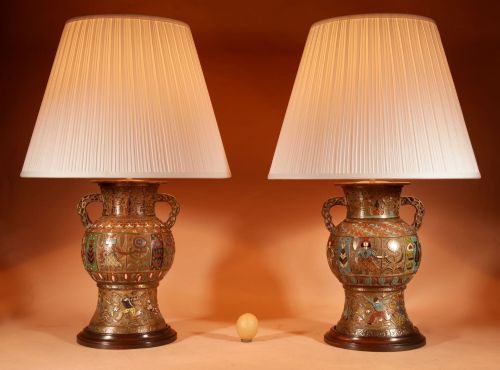
The selection on this page demonstrates the wide utility of these objects, moving from small sword guards and spectacle cases to large jardinières and figural statues. Many pieces bridge traditional forms with later domestic uses, such as bronze vessels adapted into Edwardian lamps.
Origins stretch across significant historical spans including the 18th century, the 19th century, and the early 20th century. The forms range from strict classical vessels to expressive figural works depicting musicians and geisha figures.
How they were made
Makers utilised traditional metal casting techniques to form the foundational body of each piece, often employing bronze and cast iron. Molten metal was poured into carefully prepared moulds to achieve intricate shapes and substantial weights suitable for garden urns and large vases.
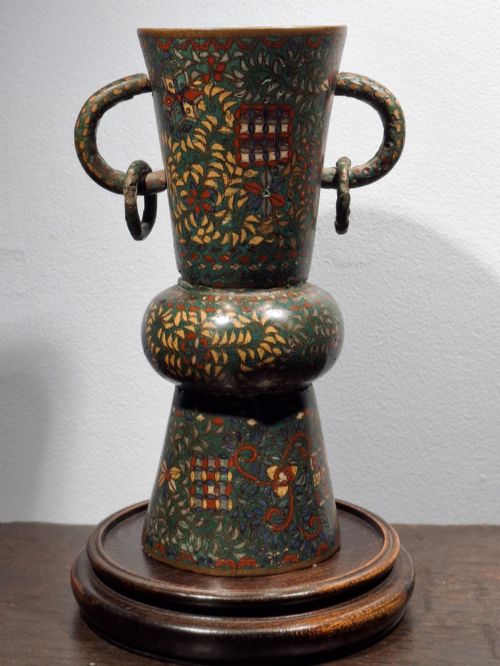
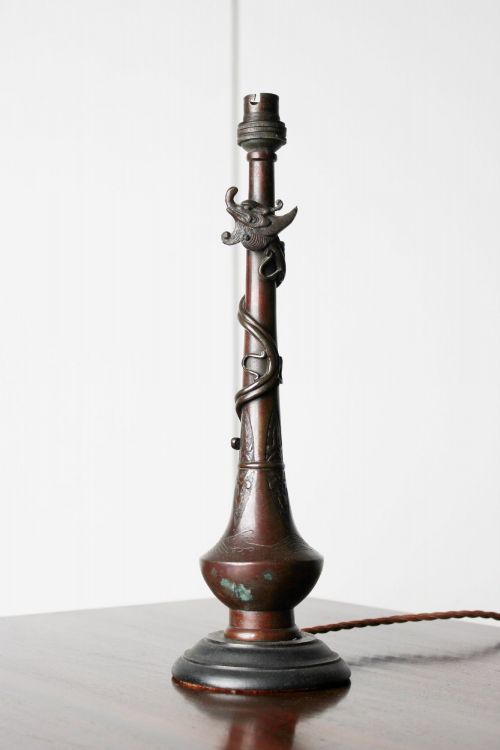
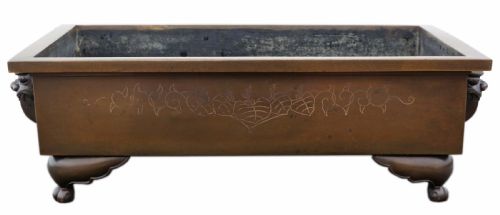
Surface ornamentation frequently incorporates intricate silver inlay and champlevé enamel work. Artisans enhanced the metallic texture by developing verdigris bronze patinas and applying detailed high-relief elements such as dragons and pearls.
Traditional Japanese Bronze Retail Price Guide 2026
Typical asking prices for traditional japanese bronze among the pieces listed under this phrase on Sellingantiques today, from the lower quarter to the upper quarter. They describe what is for sale here now, not the wider market.
Listings feature items from the Edo period, Meiji period, and Edwardian era, incorporating materials like bronze, brass, enamel, and silver inlay.
What varies in quality
The refinement of the casting and the depth of the relief work distinguish finer examples from simpler production. Superior pieces display crisp detailing in figural elements and precise execution in inlaid components.
The integrity and nuance of the surface patina contribute significantly to the character of a piece. Well-preserved verdigris surfaces and harmonious integration of enamel or silver inlay elevate the overall standard of the metalwork.
Miyao
The Traditional Japanese Bronze Glossary
- Edo Period
- A historical division of Japan spanning from 1603 to 1868. Metalwork from this era often reflects traditional craftsmanship before major western trade influences.
- Meiji Period
- The era from 1868 to 1912 characterised by rapid modernisation and a surge in decorative arts produced for international export. Pieces from this time frequently exhibit ambitious pictorial and sculptural details.
- Tsuba
- A traditional handguard mounted on Japanese swords, often elaborately decorated with metal inlay and high-relief carving. These small items showcase miniaturised metalworking skill.
- Champlevé
- An enamelling technique where troughs or cells are sunk into the bronze surface and filled with vitreous enamel before firing. This creates colourful decorative patterns across the metallic body.
- Suiban
- A shallow basin traditionally used for Japanese flower arrangement, or Ikebana. These heavy bronze vessels are designed to hold water and plant displays.
Traditional Japanese Bronze: Frequently Asked Questions
How do I date a bronze?
Dating relies on stylistic markers, historical periods such as the Edo or Meiji eras, and manufacturing techniques recorded in the piece. Subtle indicators like the composition of the alloy and the style of the base also provide chronological context.
Changes in export markets during the late nineteenth century introduced western adaptations, such as lamp fittings, which help distinguish later productions from earlier ritual items.
How were garden urns used?
Large bronze urns and jardinières served as ornamental focal points within traditional gardens and interior courtyards. They frequently held water plants or seasonal floral arrangements.
Their substantial weight and cast construction allowed them to withstand outdoor exposure while developing characteristic weathered patinas over time.
Are these pieces modified?
Certain traditional vessels, particularly vases and kettles, were converted into table lamps during the Edwardian period to suit western domestic lighting tastes. These adaptations integrated electrical components into the original Asian metalwork.
Examining the base and interior fittings reveals how the historical object was altered for contemporary utility.
What is champleve enamel?
Champlevé enamel involves carving recesses directly into the bronze surface to hold coloured glass paste. The piece is then fired to fuse the vitreous enamel into the metallic channels.
This technique produces vibrant decorative contrasts against the dark bronze background, frequently seen on ritual vases and decorative lamps.