


Traditional Hearth Companion
A traditional hearth companion keeps the fire burning cleanly, bringing functional brass, steel and iron into the main living space.
Traditional Hearth Companion
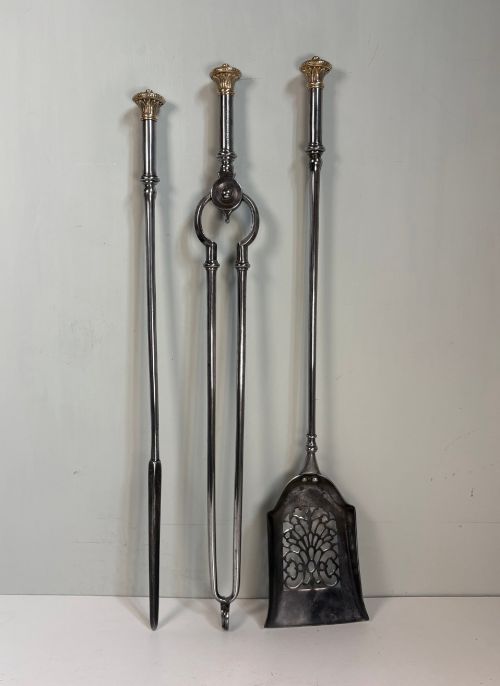
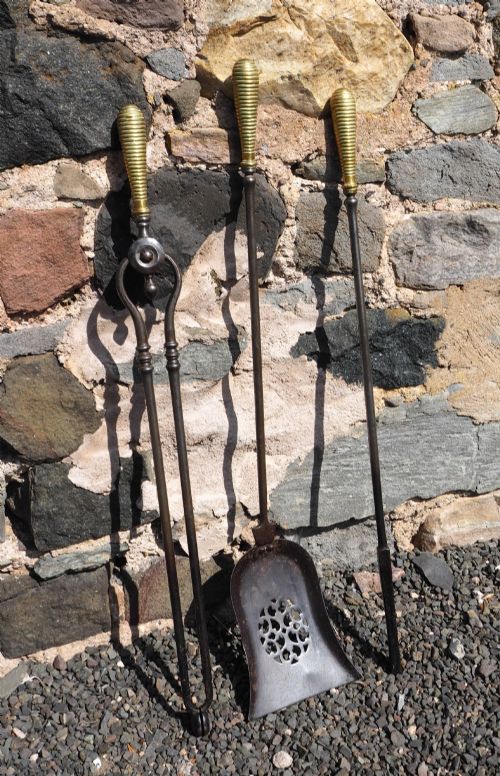
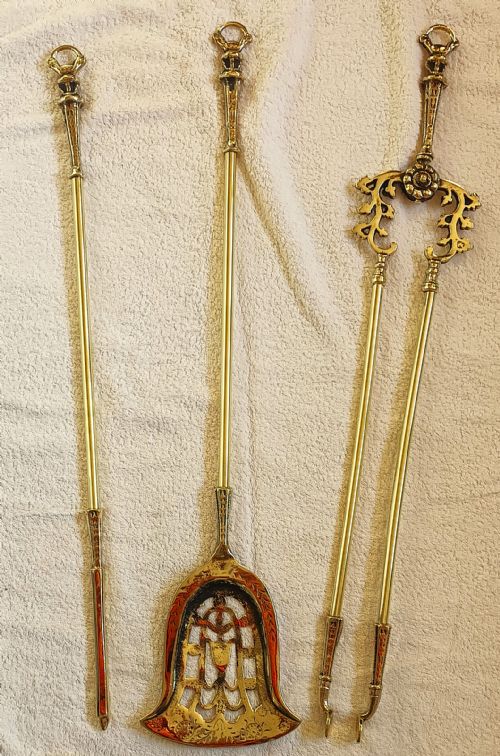
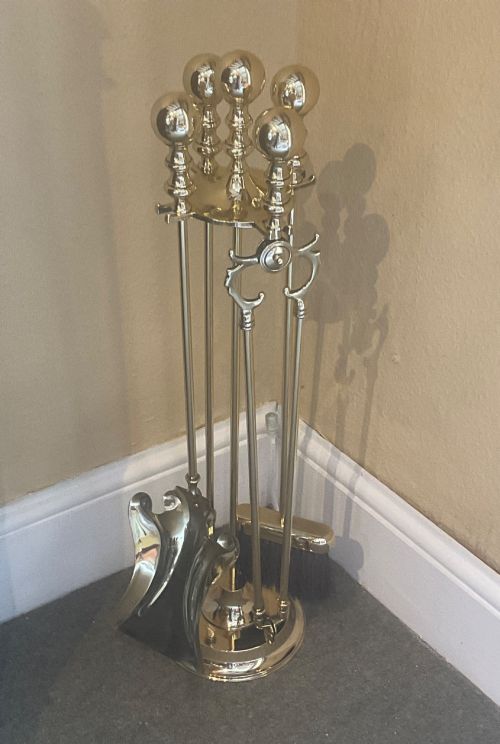
A traditional hearth companion encompasses sets of fireplace accessories designed to tend an open fire, appearing most frequently on this page as Victorian brass and steel fire tools.
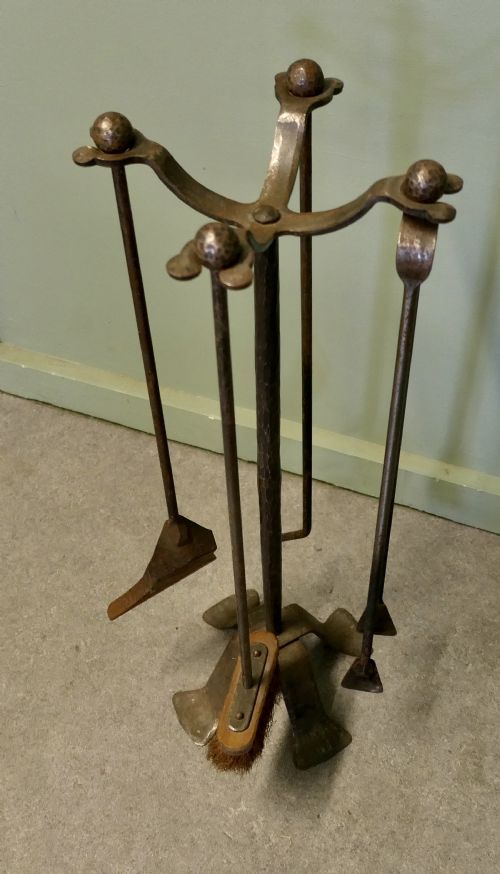
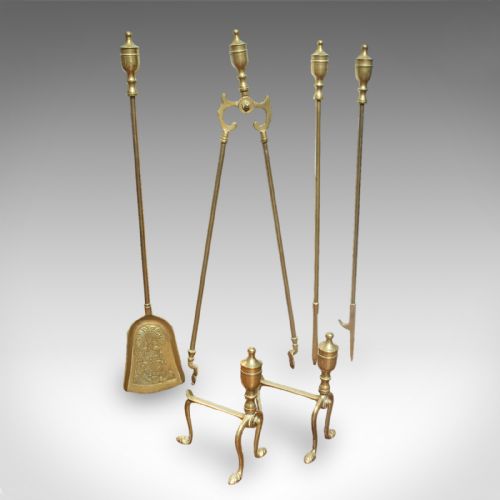
The objects take the form of companion sets, fire irons including pokers, shovels and tongs, and associated items like fire dogs and fenders originating across the eighteenth, nineteenth and early twentieth centuries.
English and French country house examples sit alongside formal Victorian and Edwardian suites, ranging from compact inglenook tools to large manor house iron sets.
Materials and construction methods
Makers utilised metals such as brass, polished steel, cast iron, wrought iron and copper to forge and cast durable implements capable of withstanding intense hearth heat.
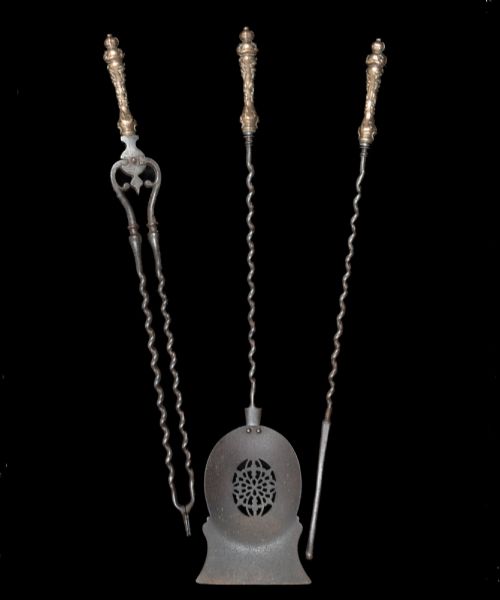
Individual pieces combine resilient iron or steel shafts for strength with decorative brass elements, sometimes incorporating rope twist handles or gun metal finishes.
Distinctions in quality
Subtleties in casting precision, weight and metal selection separate robust everyday hearth equipment from finer decorative suites produced during the Victorian and Edwardian periods.
The refinement of handle details, such as rope twist patterns, and the integration of matching fire dogs or fenders indicate the original ambition of the set.
The Traditional Hearth Companion Glossary
- Companion set
- A matched group of fireplace tools, usually including a shovel, poker and tongs, held together on a dedicated stand or resting place.
- Fire irons
- Individual metal implements designed for tending a coal or wood fire, comprising pokers, tongs and shovels.
- Fire dogs
- Metal supports placed on the hearth to hold logs or support fire irons, frequently rendered in brass or cast iron.
- Fender
- A low metal guard placed around the hearth perimeter to contain embers and ash, often matching the accompanying fire tools.
- Inglenook
- A deep fireplace recess designed for warmth, where heavy country house fire tools traditionally resided.
Traditional Hearth Companion: Frequently Asked Questions
What tools are included in a companion set?
A standard set comprises a poker for adjusting logs, tongs for placing fuel, and a shovel for clearing ash from the hearth.
Additional pieces such as brushes or accompanying fire dogs occasionally complete the ensemble depending on the period.
How do I date a brass fire iron set?
Stylistic indicators such as Rococo revival curves or Arts and Crafts simplicity help place sets within Victorian, Edwardian or earlier eras.
Material choices, including polished steel combined with heavy brass, also point towards specific nineteenth-century manufacturing shifts.
Were these tools meant for daily use?
Most surviving items were forged from robust iron, steel and brass specifically to manage active coal and wood fires in period homes.
Heavier sets served large manor house inglenooks, while lighter brass variations suited formal nineteenth-century drawing rooms.
How do I style a hearth companion at home?
Placing a matching set of fire irons beside the fireplace anchors the hearth visually while keeping essential tending tools within arm reach.
Pairing brass tools with a coordinating fender or fire dogs creates a cohesive nineteenth-century aesthetic.