




Traditional Folk Art Spoon
These traditional folk art spoon examples are hand-carved treen and display regional styles from the eighteenth and nineteenth centuries.
Traditional Folk Art Spoon
When you search for a traditional folk art spoon, you encounter hand-carved treen, wall racks, and serving utensils originating from Welsh, Scandinavian, Swiss, Dutch, and Central European traditions. These objects encompass functional kitchenalia alongside decorative love tokens created from local timber and horn.
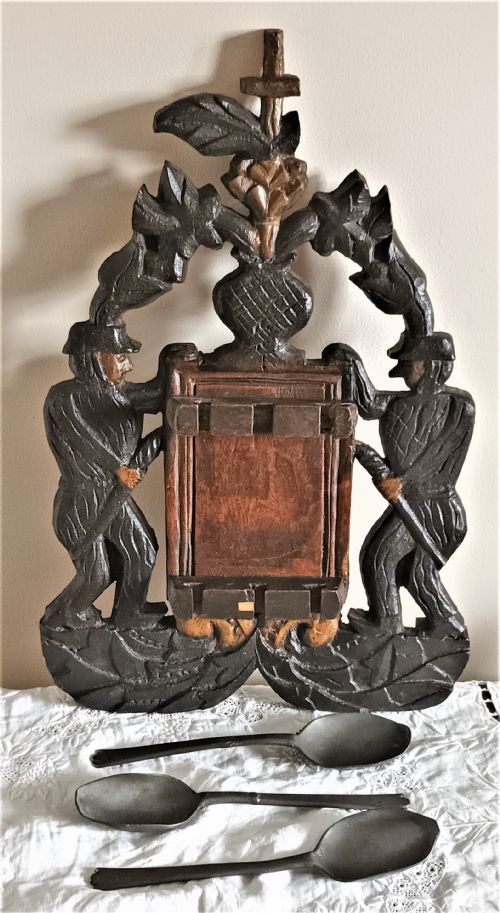
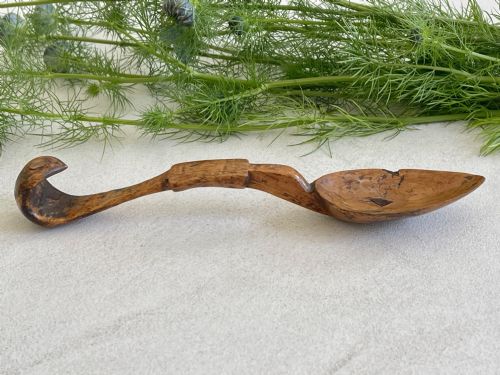
The most common examples on this page are nineteenth-century lovespoons carved from fruitwood, oak, sycamore, and yew-wood. Alongside these domestic presentation pieces, you find eighteenth-century oak spoon racks complete with pewter trefid spoons, as well as painted Dutch wall racks.
How they were made
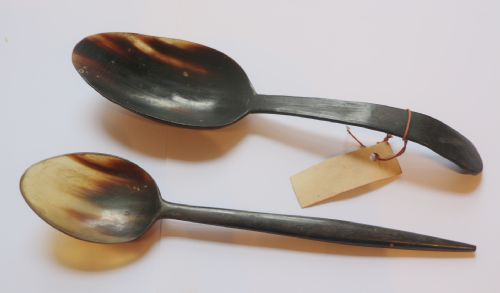
Carvers shaped these traditional folk art spoon pieces using native hardwoods such as fruitwood, oak, sycamore, and yew-wood, alongside organic materials including horn and stag horn. Many examples rely purely on hand-carved detail like vine leaves and engraved decoration to create texture across the timber.
Certain pieces incorporate surface embellishment beyond simple carving, utilising polychrome wax-decoration and original paintwork. Metal components also appear where pewter trefid spoons accompany oak racks or where brass and glass elements form part of the wider decorative objects.
Someone carved a stag horn into a love token.
What varies in quality
The distinction between standard domestic kitchenalia and superior pieces rests on the depth and ambition of the carving. Items featuring intricate cut-outs, initialled dates, and botanical motifs like carved vine leaves demonstrate greater hand skill than plain utilitarian utensils.
Material choice and surface preservation further differentiate the range. Examples retaining original polychrome wax-decoration, early painted surfaces, or uncommon substances such as stag horn command stronger interest than plain weathered wood.
The Traditional Folk Art Spoon Glossary
- Treen
- Small handmade wooden domestic objects and utensils produced before the widespread adoption of modern plastics. This term covers everything from carved spoons to small treen tokens.
- Lovespoon
- A traditionally decorated wooden spoon carved as a token of affection or courtship. These pieces often feature symbolic motifs and presentation dates.
- Trefid Spoon
- An early form of dining spoon featuring a three-lobed flattened terminal handle. These pewter examples frequently populate eighteenth-century oak spoon racks.
- Spoon Rack
- A wall-hanging wooden fixture designed to display dining spoons in a kitchen or living space. Examples range from plain oak formats to painted Dutch designs.
- Kitchenalia
- Utensils and functional objects formerly used in domestic food preparation and household life. These items are now collected primarily for their rustic aesthetic.
Traditional Folk Art Spoon: Frequently Asked Questions
What is a traditional folk art spoon?
A traditional folk art spoon is a hand-carved wooden utensil or decorative lovespoon produced within regional European craft traditions during the eighteenth and nineteenth centuries.
These pieces range from functional domestic items to symbolic courtship tokens featuring carved initials, dates, and botanical motifs.
How were lovespoons used?
Lovespoons were traditionally carved by young men and presented to women as tokens of romantic affection and courtship intentions.
Rather than serving food, these elaborate wooden spoons were hung on walls as decorative displays of the carvers skill and devotion.
What materials are these spoons made from?
These pieces are predominantly carved from regional European hardwoods including fruitwood, oak, sycamore, and yew-wood.
Selected examples also utilise alternative organic materials such as horn and stag horn, sometimes enhanced with polychrome wax-decoration or paint.
How do I date an antique spoon rack?
Dating a spoon rack involves examining the construction methods, timber ageing, and the accompanying pewter trefid spoons.
Eighteenth-century examples typically feature heavy oak construction with pegged joints, whereas later nineteenth-century pieces display different regional decorative painting styles.
Where do these folk art spoons originate?
The pieces originate from distinct European folk art traditions, with strong representation from Welsh workshops as well as Scandinavian, Swiss, Dutch, and Central European makers.
Each region developed specific decorative vocabularies and timber choices that distinguish their domestic treen.