



Traditional Fishing Picture
A traditional fishing picture captures coastal harbours, quiet rivers and the steady work of anglers across centuries of British painting and printmaking.
Traditional Fishing Picture
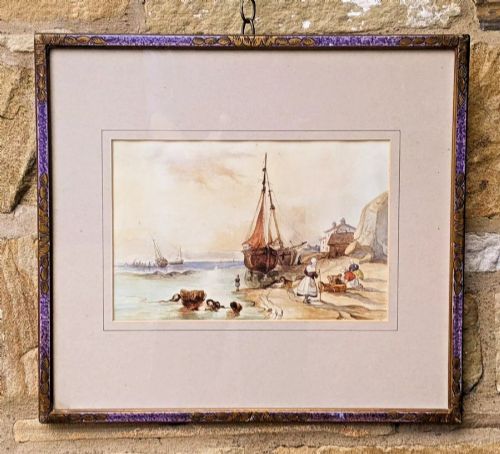
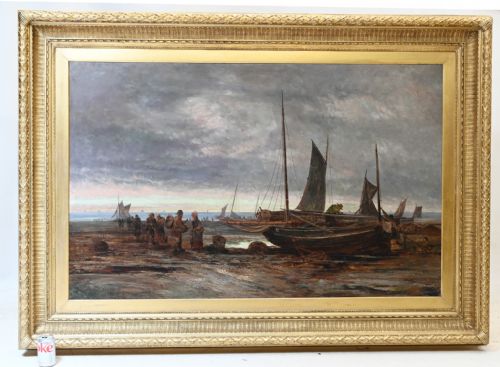
A traditional fishing picture encompasses oil paintings, watercolours and antique prints focusing on maritime scenes, river landscapes and angling subjects. When searching for a traditional fishing picture, buyers frequently encounter works executed on canvas or paper depicting coastal harbours, boats and fishermen.
The selections range across the nineteenth and twentieth centuries, taking in Victorian marine art, Edwardian pastoral scenes and mid-century British compositions. Framed formats in wood and giltwood dominate the current offerings, presenting historical views of shores and streams.
How they were made
Makers applied oil paint or watercolour pigment to canvas, wood panels or paper to build these coastal and river scenes. Canvases received layers of pigment to capture maritime light and water, while works on paper utilised delicate washes.
Framing involved traditional wood and giltwood surrounds, often contemporary to the paintings, which protected the edges of the canvas or paper. Artists utilised these mediums to render the textures of fishing boats, coastal rocks and riverbanks.
Traditional Fishing Picture Retail Price Guide 2026
Typical asking prices for traditional fishing picture among the pieces listed under this phrase on Sellingantiques today, from the lower quarter to the upper quarter. They describe what is for sale here now, not the wider market.
Listings feature works spanning the 1800s to 1950, utilising oil on canvas, watercolour pigment, wood and giltwood.
What varies in quality
Quality separates works by the precision of the brushwork and the artist's ability to render light upon water and sky. Stronger compositions demonstrate careful handling of atmosphere in marine and river settings.
The condition of the canvas, paper and the original wood or giltwood frame influences the overall integrity of the piece. Works bearing clear signatures and documented artist attributions carry distinct character compared to anonymous examples.
Frank Hyde·George Henry Knight·Paul H Ellis·James Russell·Benjamin CALLOW·Robert Leslie Howey
The Traditional Fishing Picture Glossary
- Oil on Canvas
- Pigment mixed with drying oil applied to a stretched canvas support. This technique allows for rich colour blending and textured brushwork.
- Watercolour Pigment
- Water-soluble colour applied in transparent washes to paper. It creates luminous effects suited to river and coastal views.
- Giltwood
- Wood carved and coated with a thin layer of gold leaf or gilt paint. It is commonly found on traditional picture frames from the nineteenth century.
- Marine Art
- Artwork depicting ships, shipping, coastal views and maritime activities. This genre forms a significant portion of historical fishing imagery.
Traditional Fishing Picture: Frequently Asked Questions
What periods do these fishing pictures date from?
The works span from the early nineteenth century through to the mid-twentieth century, with a strong representation of Victorian and Edwardian examples.
Paintings and prints reflect the artistic styles of their respective decades, ranging from nineteenth-century marine scenes to mid-century British watercolours.
What materials are used in these frames?
Many pieces are housed in traditional wood or giltwood frames that complement the painting style of the period.
These frames often feature decorative mouldings and gold leaf finishes designed to protect and enhance the artwork.
How do I care for an oil painting on canvas?
Keep the painting away from direct sunlight and damp environments to protect the canvas and the oil pigments.
Dust the surface gently with a soft, dry brush and avoid using liquid cleaners on the paint or the giltwood frame.
What subjects appear in these artworks?
Subjects include coastal harbours, fishing boats on the sea, quiet rivers with anglers and figures working by the water.
Artists captured both the maritime trade of the coast and the leisure of river fishing across various British locations.