
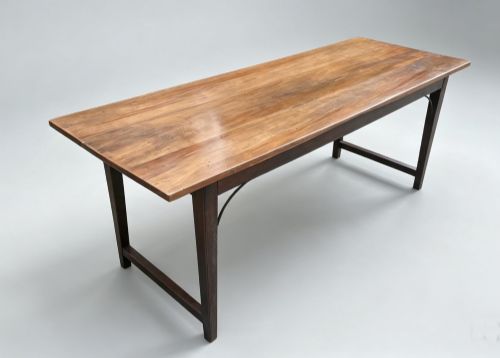
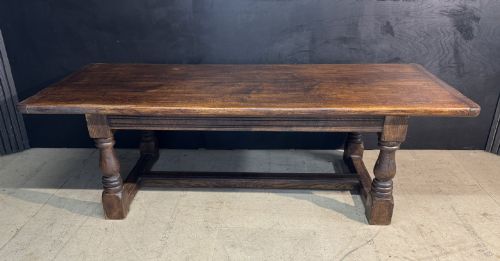
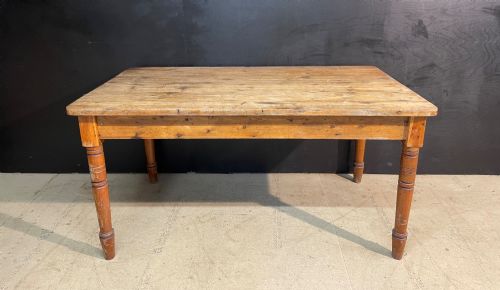
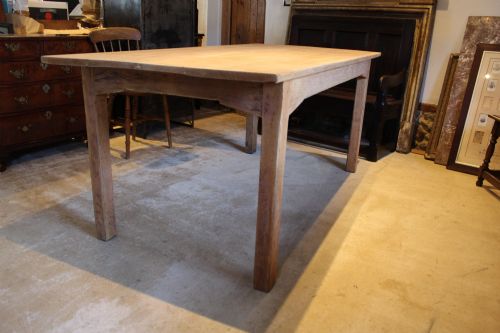
Traditional Farmhouse Kitchen Table
A traditional farmhouse kitchen table is a sturdy, working surface built to anchor a home, offering decades of daily use.
Traditional Farmhouse Kitchen Table
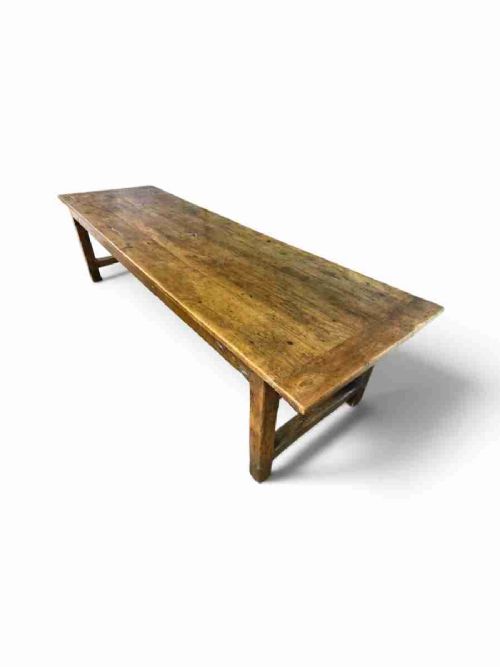
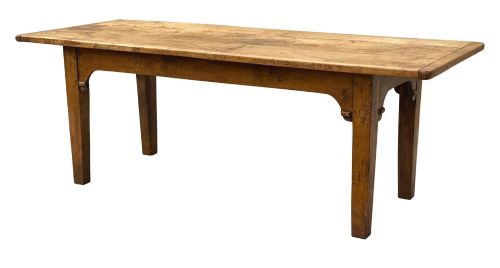
A traditional farmhouse kitchen table brings together heavy wooden construction and straightforward utility, designed originally for daily domestic labour and communal meals. These pieces span several distinct eras, drawing from Georgian, Victorian, and early twentieth-century workshops.
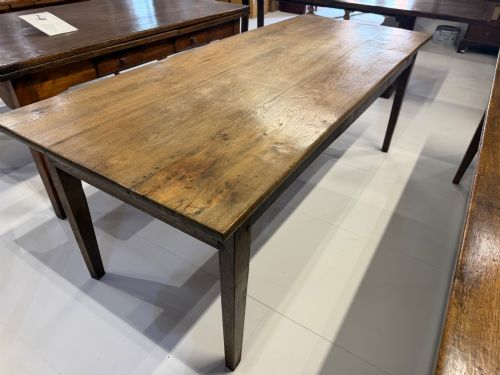
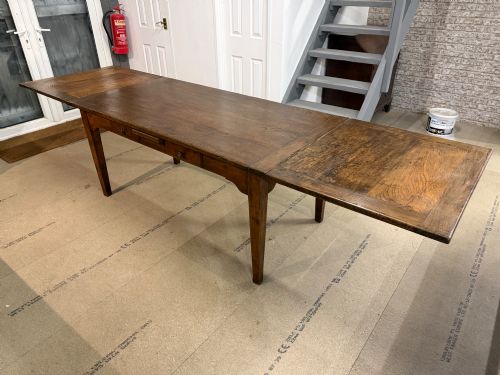
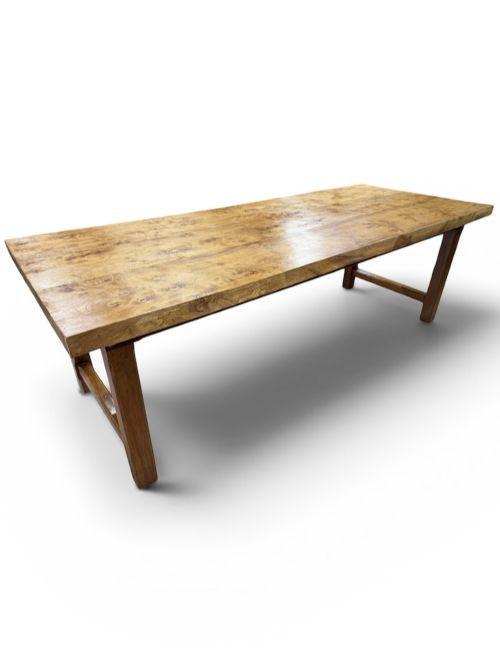
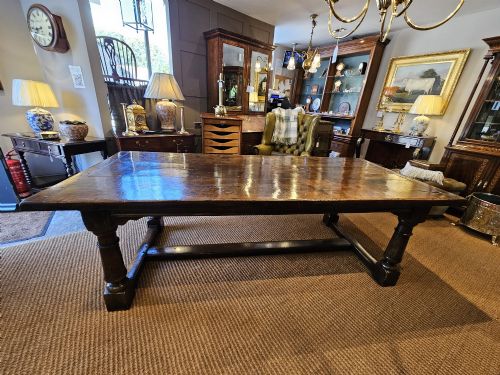
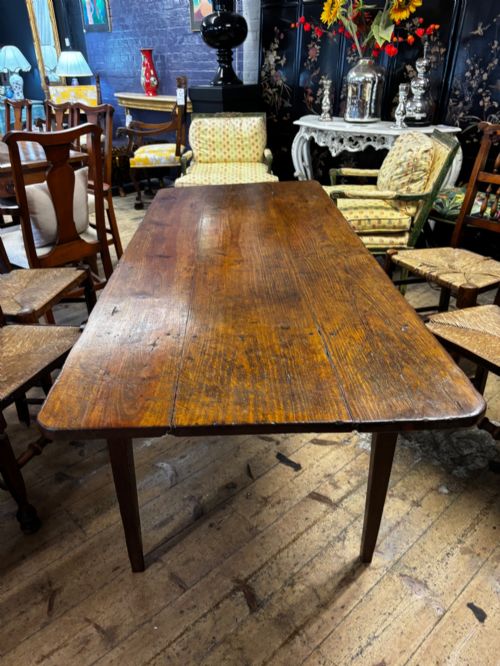
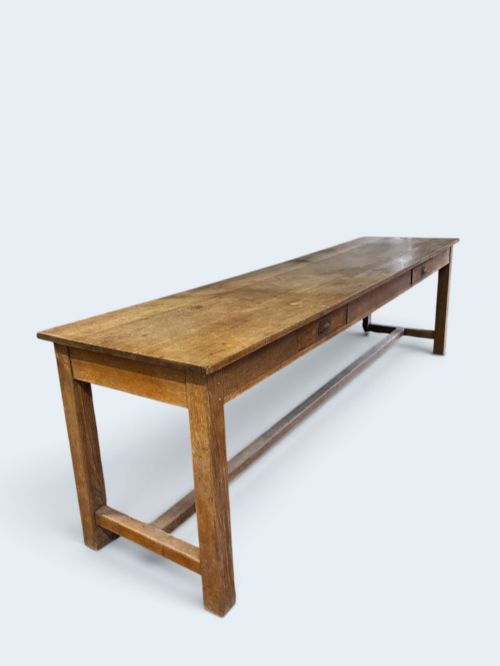
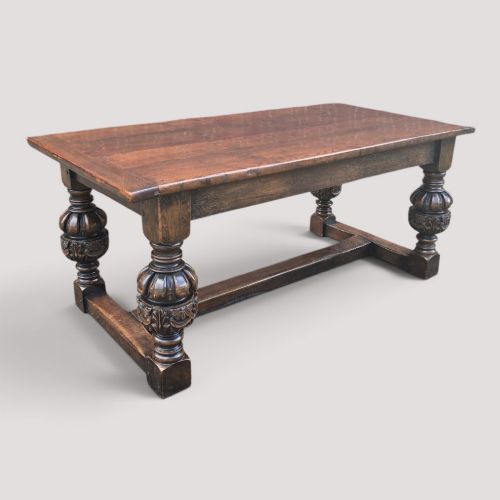
The versions most commonly met on this page are constructed from oak or pine, often taking the form of a long dining or refectory format. They serve as the central gathering place in a room, showing the generous proportions needed for large households.
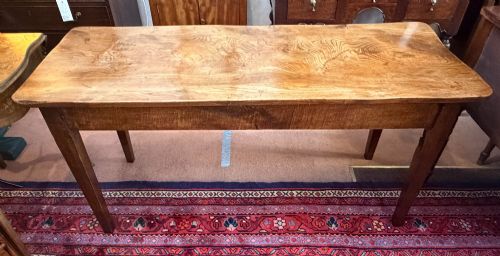
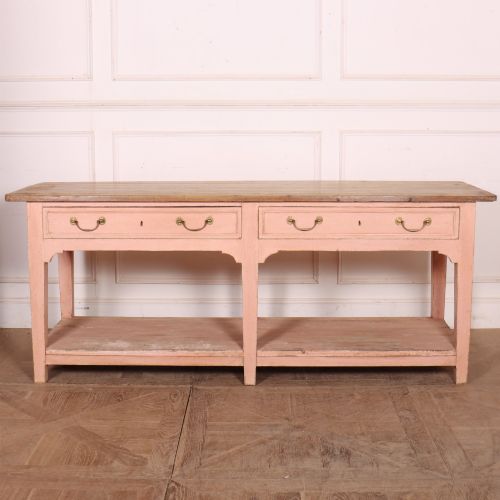
Origins vary between English country houses and continental European provinces, introducing regional differences in timber choice and leg placement. Dining tables and kitchen tables dominate the selection, accompanied by occasional serving tables and dresser bases.
Materials and Technique
Makers relied heavily on solid hardwoods like oak, fruitwood, and beech, alongside softer timbers such as pine, selecting each for local availability and structural strength. Heavy planks formed the top, secured to robust framing to withstand heavy kneading and daily preparation tasks.
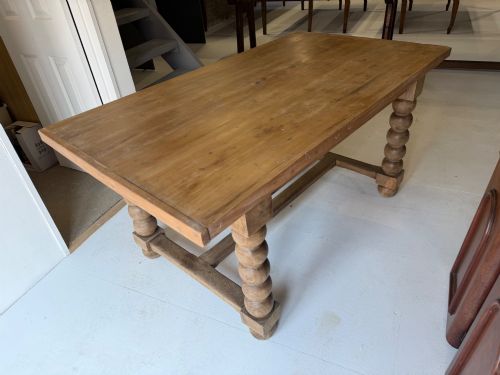
Joinery methods prioritized durability, utilising pegged mortise and tenon joints to keep the frame rigid under pressure. Legs range from tapered and bobbin-turned supports to substantial square posts, depending on the period and regional style.
Listings feature pieces spanning the 18th, 19th, and early 20th centuries, constructed from oak, pine, fruitwood, and beech.
Proportion and Construction
The distinction between ordinary and exceptional examples rests in the choice of timber and the integrity of the original construction. Tables built from thick, quarter-sawn solid oak or mature fruitwood possess a visual weight and resistance to warping that lighter or later pieces lack.
Subtlety in proportion and the retention of original surface treatments dictate the standing of a piece. Tables that preserve their uncompromised timber boards and authentic structural joints command greater interest than those altered by later cutting or heavy restoration.
The Traditional Farmhouse Kitchen Table Glossary
- Dresser base
- A low sideboard or cabinet with drawers and sometimes a potboard shelf beneath, used for storing kitchen provisions and tableware. These pieces share the sturdy timber construction of related dining tables.
- Quarter-sawn
- A method of cutting logs radially through the growth rings, producing timber with greater dimensional stability and prominent grain patterns. This cut was favoured for high-quality table tops.
- Potboard
- An open slatted lower shelf fitted between the legs of a table or dresser base, originally intended for storing heavy pots and pans. It provides structural bracing to the lower frame.
- Stretchers
- Horizontal wooden rails connecting the legs of a table near the floor to prevent outward spreading. They often show wear from years of resting feet.
Traditional Farmhouse Kitchen Table: Frequently Asked Questions
How do I clean a wooden farmhouse table?
Wipe surfaces down using a damp cloth and mild soap, avoiding harsh chemical sprays that strip historic finishes. Regular application of natural wax helps nourish the timber and maintain a soft sheen.
Keep tables away from direct heat sources and excessive moisture to prevent the wood from splitting or warping over time. Promptly blot up spills to protect the grain of older pine or oak boards.
Can I use a kitchen table for daily dining?
These pieces were built precisely for heavy daily use, making them well-suited as active dining or workspace hubs. Their solid timber construction handles family meals and routine kitchen tasks with ease.
Using protective pads underneath hot dishes or heavy serving platters helps preserve the antique surface finish. Embracing minor marks as part of the table's history allows it to continue its working life naturally.
What is the difference between oak and pine tables?
Oak provides a dense, heavy hardwood surface with a prominent grain that resists deep bruising and stands up to centuries of wear. Pine offers a softer, lighter alternative that often displays a paler tone and absorbs the patina of daily handling more quickly.
While oak tables usually suggest a formal country or refectory origin, pine versions lean towards a more casual domestic aesthetic. Both materials require similar basic care but age with distinct visual characteristics.
How do I date an antique table?
Examine the construction methods underneath, looking for hand-sawn board marks, wooden pegs, and the specific shape of the legs. Georgian and Victorian pieces carry distinct proportions and turning styles that set them apart from twentieth-century reproductions.
Check the type of wood and the nature of the wear patterns around the edge where people sat. Hardware, drawer construction, and tool marks offer further clues to the era of manufacture.