





Traditional Farmhouse Armchair
When you want a traditional farmhouse armchair, you are looking for solid timber seating built for endurance in country kitchens.
Traditional Farmhouse Armchair
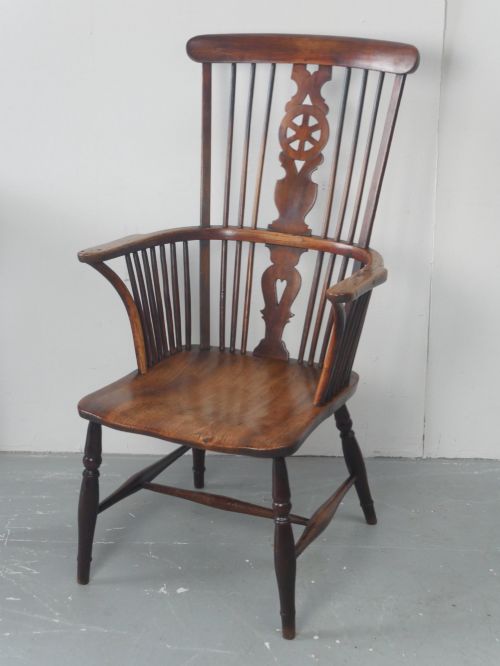
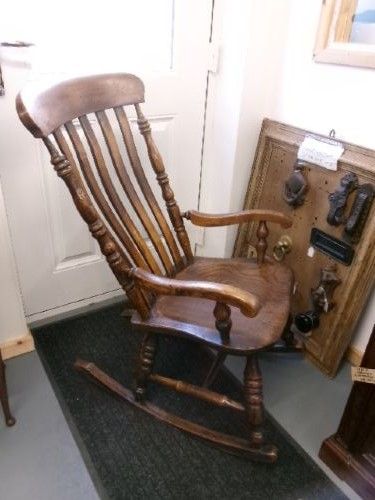
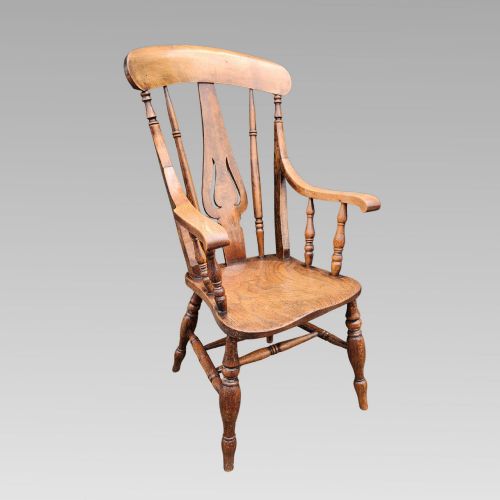
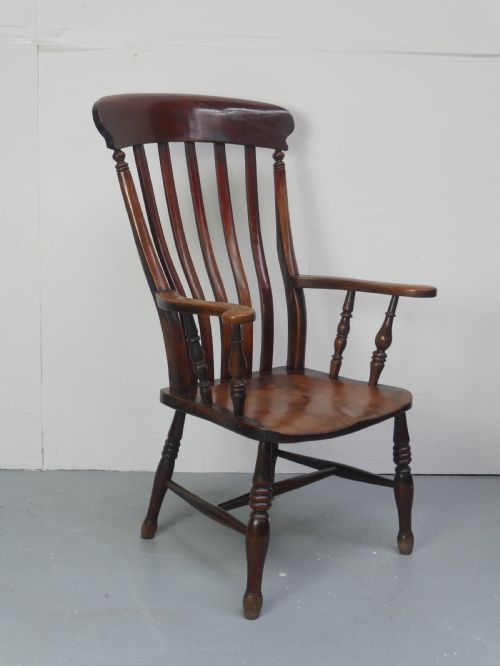
A traditional farmhouse armchair delivers sturdy utility through deep seats and robust timber construction designed for daily domestic use. The versions you meet most often on this page date from the nineteenth century into the early twentieth century, spanning Victorian and Arts and Crafts influences.
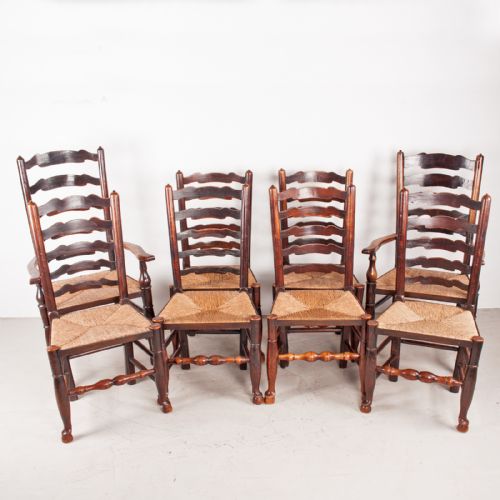
Forms divide primarily between Windsor armchairs with turned spindles and hoop backs, and ladderback or spindleback chairs with rush seating. These pieces originate from regional English workshops, utilising local woods such as elm, ash, beech, and fruitwood.
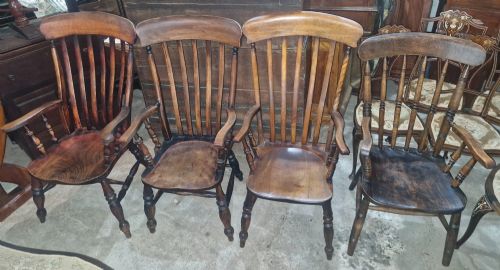
Makers built these chairs for farmhouse kitchens and dining spaces, prioritising comfort and longevity over delicate ornament. Surviving examples demonstrate heavy solid kitchen seating, ranging from standard proportions to extra tall or extra large formats.
How they were made
Craftsmen built these traditional farmhouse armchairs using a combination of turned wood and solid timber slabs. Seats typically consist of carved elm planks shaped for the sitter, mounted with legs and spindle backs turned from ash, beech, or fruitwood.
Makers employed traditional joinery methods including wedged tenons and steam bending to create resilient hoop backs and spindle frames. Rush seating appears on ladderback and spindleback variants, woven tightly into wooden chair frames for resilient support.
Traditional Farmhouse Armchair Retail Price Guide 2026
Typical asking prices for traditional farmhouse armchair among the pieces listed under this phrase on Sellingantiques today, from the lower quarter to the upper quarter. They describe what is for sale here now, not the wider market.
Several listings specifically note extra large or extra tall proportions, proving that nineteenth-century farmers also appreciated extra head room.
What varies in quality
The distinction between ordinary utility seating and superior examples rests in timber selection and structural integrity. Chairs featuring richly grained elm seats combined with contrasting ash or fruitwood turnings display greater visual depth.
Proportion and scale also define the tier of a piece, with extra large formats and deep seats demonstrating more ambitious rural carpentry. The crispness of turned spindles and the tightness of rush weaving reveal the original maker's skill.
The Traditional Farmhouse Armchair Glossary
- Windsor
- A chair built with a solid wooden seat into which the legs and back spindles are directly inserted. This construction method provides notable strength and stability.
- Rush seat
- A seating surface woven from dried marsh grass or rushes around a wooden frame. This technique yields a resilient and supportive platform.
- Ladderback
- A chair back constructed from horizontal wooden slats set between two vertical posts. This design appears frequently in regional dining seating.
- Spindle and lyre back
- A decorative arrangement of turned vertical wooden rods, sometimes shaped like a musical lyre. It adds ornamental detail to rural seating.
- Hoop back
- A continuous curved wooden bow that forms the top rail and armrests of a Windsor chair. Steam bending allows the timber to curve smoothly.
Traditional Farmhouse Armchair: Frequently Asked Questions
What is a traditional farmhouse armchair?
A traditional farmhouse armchair is a robust wooden seat built for domestic utility in nineteenth and early twentieth century kitchens.
These pieces use regional timbers like elm, ash, and beech, featuring Windsor or spindle back designs.
How were these kitchen armchairs used?
Households used these heavy solid chairs daily around farmhouse dining tables and near kitchen hearths.
Their deep seats and supportive backs provided comfort during long hours of work or rest.
How do I identify a Victorian farmhouse chair?
Victorian farmhouse chairs display nineteenth-century regional craftsmanship, visible in turned wooden spindles and solid elm plank seats.
Makers built them to withstand heavy daily wear, resulting in durable construction and practical forms.
Are rush seats durable?
Rush seats woven from dried marsh grass offer surprising resilience and comfort for daily dining use.
Traditional weaving methods create a tight structural surface that supports regular sitting over generations.
What woods were used for farmhouse chairs?
Craftsmen utilised accessible local timbers such as elm for carved seats and ash, beech, or fruitwood for turned parts.
Oak also appears in later Arts and Crafts regional dining seating.