



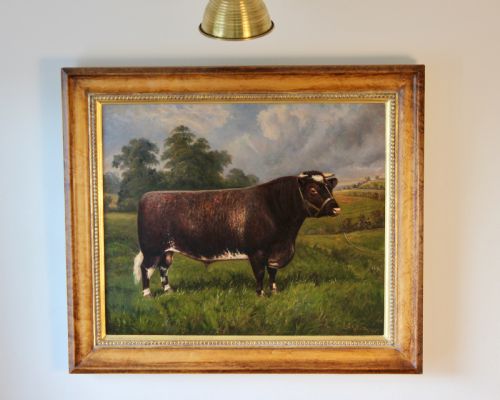
Traditional Farm Painting
Traditional farm painting brings pastoral land and livestock onto canvas, capturing rural working life with enduring charm.
Traditional Farm Painting
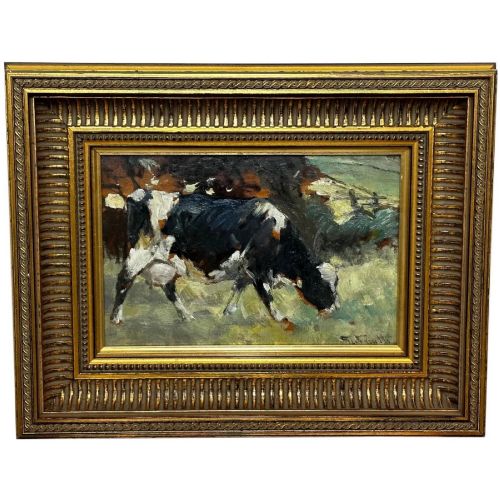
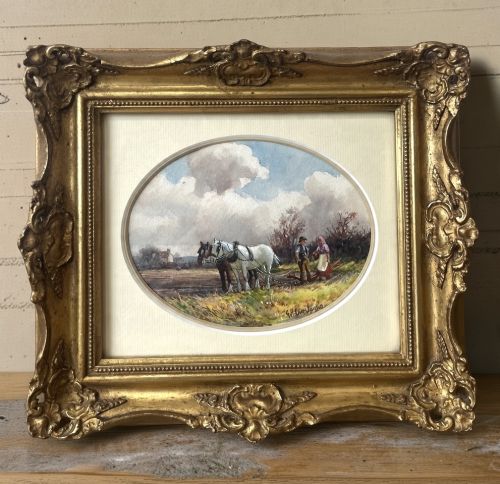
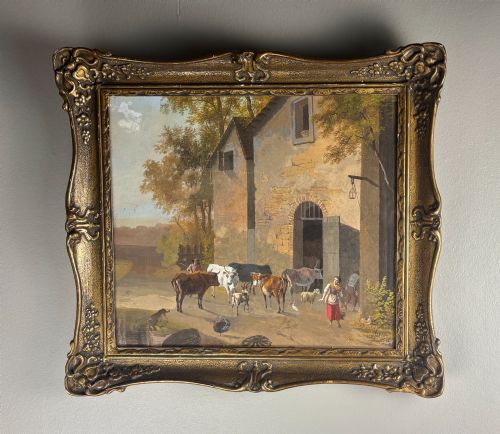
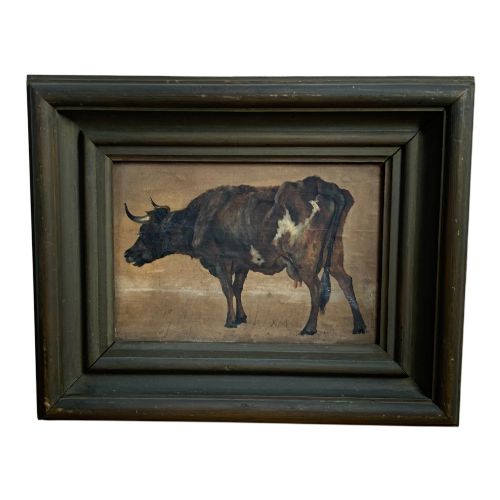
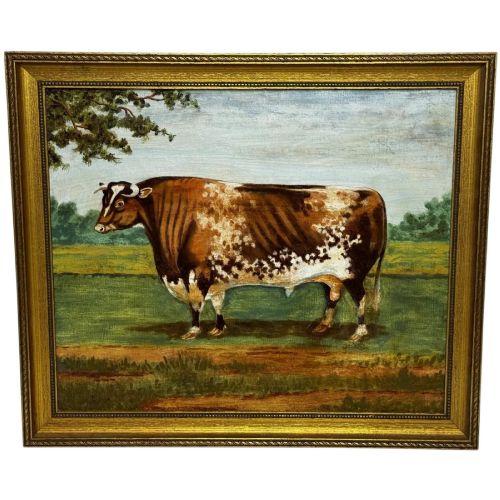
When searching for traditional farm painting, collectors encounter rural scenes executed primarily in oil paint on canvas, alongside watercolours on paper. These works celebrate agricultural life, featuring livestock such as cattle, sheep, horses, and poultry, often set within working farmyards or expansive countryside landscapes.
The pieces span from the 19th century into the early 20th century, reflecting Victorian and Edwardian sensibilities towards the countryside. Works range from intimate depictions of poultry by specialists like Claude Cardon to sweeping pastoral landscapes by artists such as Herbert Royle and Owen Bowen.
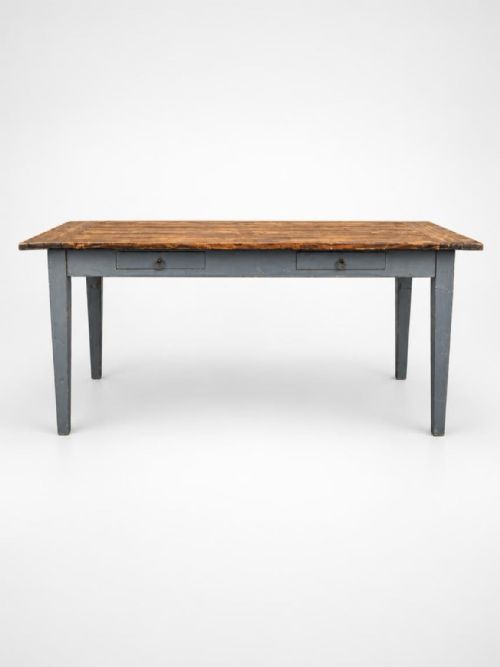
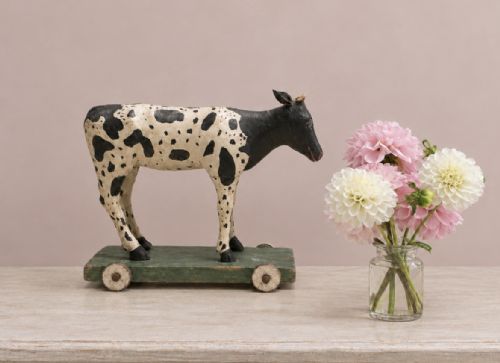
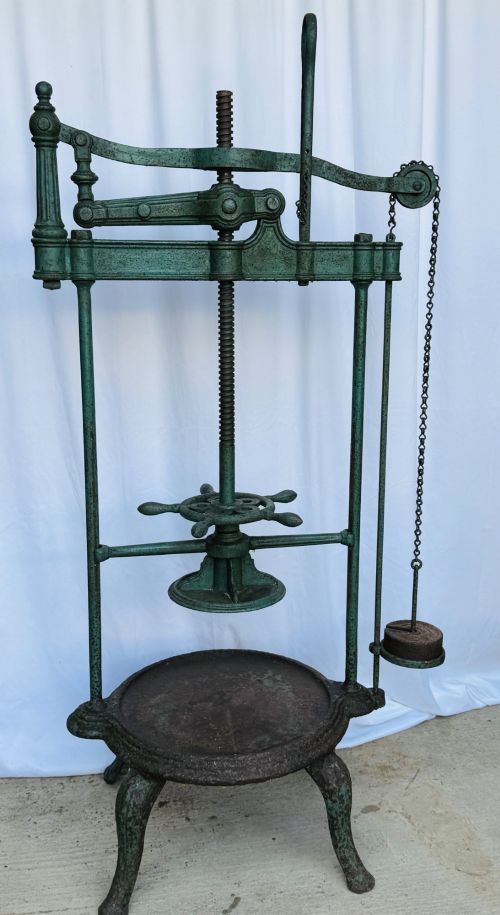
Alongside framed fine art, the selection occasionally incorporates related material culture from the period, including handmade wooden models, utilitarian tables, and ironwork associated with agricultural settings. Buyers find that these objects collectively document the visual history of British and European farming communities.
How they were made
Painters applied oil colours to stretched canvas or watercolour pigments to paper, utilising traditional brushes to build up rich textures for animal coats, plumage, and weathered farm buildings. Giltwood frames frequently enclose these canvases, adding a formal presentation border that complements the earthy tones of the rural subjects.
Artists often worked en plein air or developed studio compositions from detailed sketches of agrarian life, capturing the play of natural light across fields and farmyards. The physical components reflect standard 19th and early 20th-century studio practices, ensuring the pigments and supports remain stable over generations.
Traditional Farm Painting Retail Price Guide 2026
Typical asking prices for traditional farm painting among the pieces listed under this phrase on Sellingantiques today, from the lower quarter to the upper quarter. They describe what is for sale here now, not the wider market.
Listings feature works from the 19th century and early 20th century, executed in oil paint and watercolour on canvas or paper.
What varies in quality
Quality in these rural scenes rests upon the artist's ability to render animal anatomy convincingly and capture atmospheric light within the landscape. Superior examples display confident brushwork and accurate observation of livestock behaviour, distinguishing accomplished hands from more formulaic studio output.
Condition and original framing also differentiate pieces, with well-preserved canvases retaining their luminous pigments and original giltwood surrounds commanding greater appreciation among collectors.
Claude Cardon·John Frederick Herring Jnr·Herbert Royle·Charles Vickers·Pierre Emmanuel Dielmans·Arthur Winter Shaw·Owen Bowen·Thomas Sidney Cooper·Gustav Goemans·Edgar Hunt·John R. K. Duff·John Percy Cooke·Henry Birtles·Samuel Towers·Ernest Higgins Rigg·George Cole·Georgina Lara·William Greaves·Adrian Jones
The Traditional Farm Painting Glossary
- Oil on Canvas
- A painting medium where pigments are suspended in drying oils and applied to a woven fabric support. This technique allows for rich colour blending and textured impasto work.
- British Impressionism
- An artistic approach focusing on light and loose brushwork applied to domestic and rural subjects. Practitioners sought to capture transient effects of weather and sunlight.
- Pastoral
- Pertaining to rural life, agriculture, and domesticated animals in an idealized or scenic landscape setting. These subjects emphasise the tranquility of country living.
- Watercolour Painting
- Pigments mixed with water applied to paper supports for a translucent effect. This medium requires precise control and creates delicate atmospheric qualities.
- Giltwood
- Wood carved and coated with a thin layer of gold leaf or metallic powder. It provides traditional decorative framing for fine art paintings.
Traditional Farm Painting: Frequently Asked Questions
What subjects appear in these paintings?
These works focus primarily on agricultural scenes, featuring farmyards, plough teams, and shepherds tending flocks.
Animals such as cattle, horses, chickens, and pigs frequently take centre stage alongside rustic barns and rolling fields.
How do I date these artworks?
Dating relies on stylistic clues, artist signatures, and framing materials typical of the 19th and early 20th centuries.
Many pieces carry specific attribution or period markers that place them securely within the Victorian or Edwardian eras.
Where should I hang a rural painting?
These pieces suit traditional living spaces, studies, or dining rooms where natural wood tones and classic decor prevail.
Keeping them away from direct sunlight preserves the oil pigments and the integrity of the canvas.
What is British Impressionism?
This style reflects the influence of French plein air painting adapted by British artists working around the turn of the century.
It prioritises visible brushstrokes and natural outdoor lighting over rigid academic finish.