



Traditional Dog Painting
Traditional dog painting captures canvas portraits of spaniels, terriers, and gun dogs across Victorian and twentieth-century periods.
Traditional Dog Painting
A traditional dog painting brings together nineteenth-century canvas art and twentieth-century canine portraiture. These works range from Victorian sporting scenes to intimate individual studies on canvas or board.
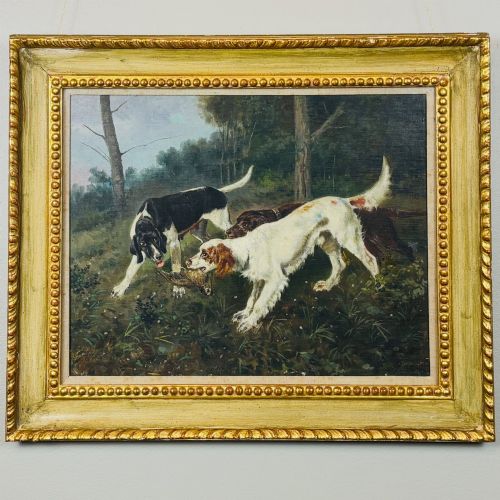
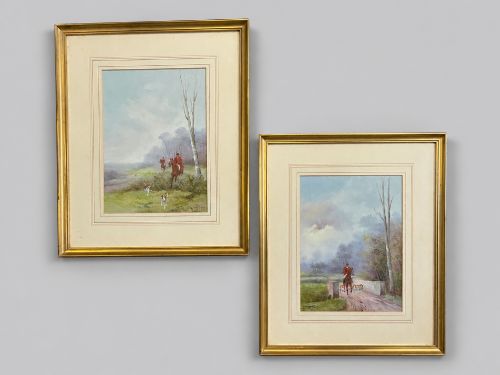
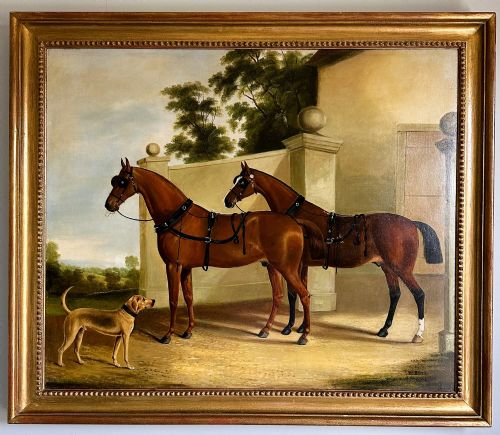
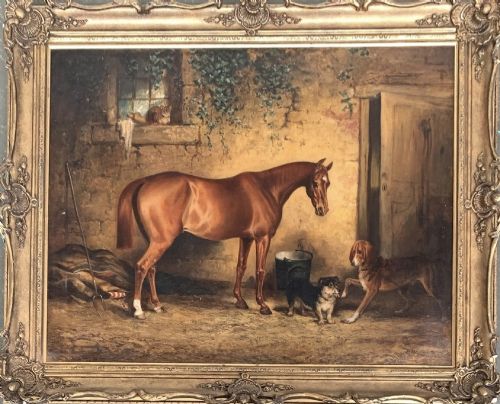
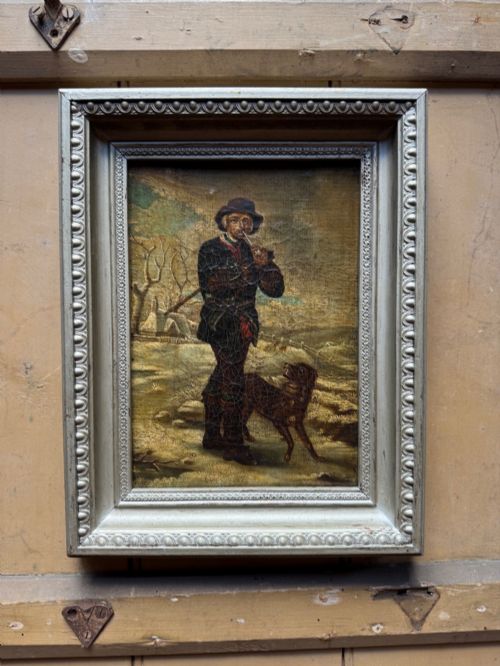
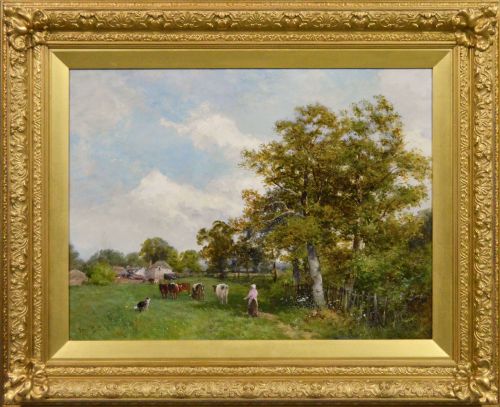
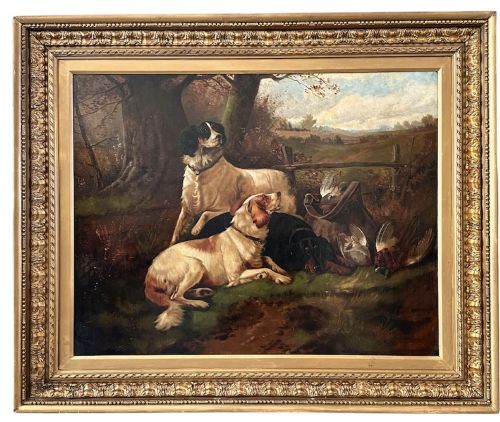
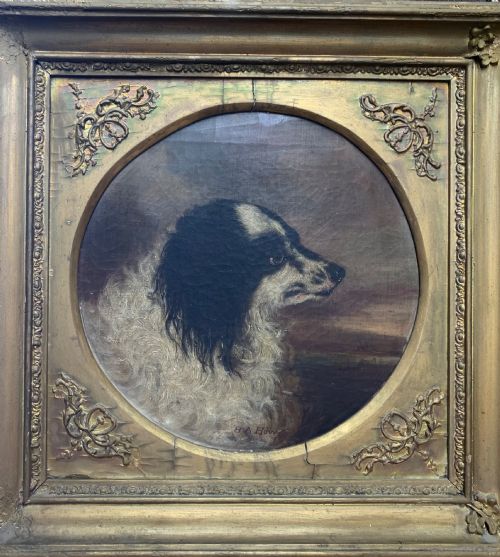
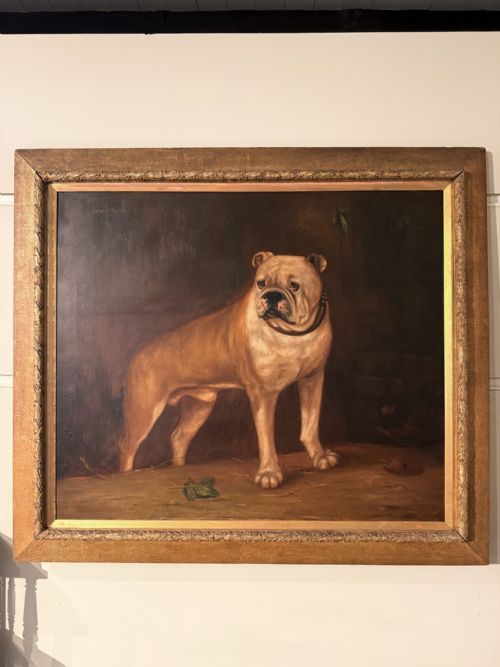
Nineteenth-century examples dominate the selections here, frequently recording spaniels, setters, and hounds in oil paint. Painters often placed these animals within landscape settings or alongside hunting parties.
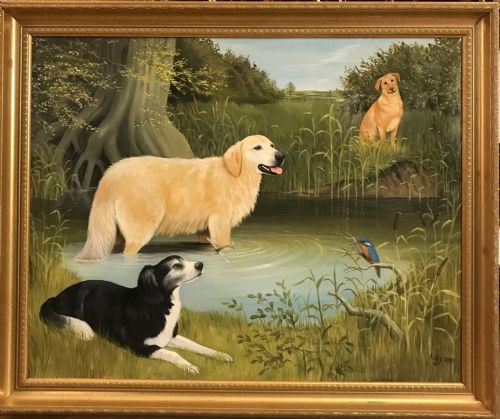
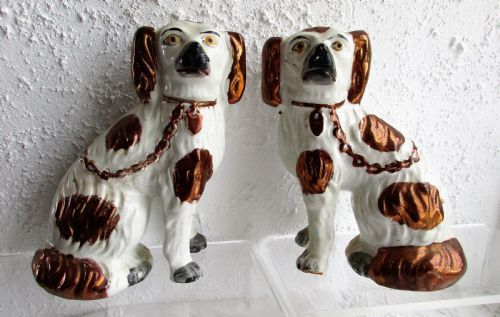
The phrase also encompasses mid-century oils and Staffordshire pottery figures depicting seated spaniels. Buyers encounter diverse scales, from large sporting canvases to framed board portraits.
Materials and methods
Makers applied oil paint to stretched canvas, wooden panels, or board supports, often finishing the works within gilt wood frames. Brushwork ranges from precise realist detail to loose Victorian sporting treatments.
Pottery examples utilise ceramic fabrication with hand-painted glaze details to render pairs of comforter spaniels.
Traditional Dog Painting Retail Price Guide 2026
Typical asking prices for traditional dog painting among the pieces listed under this phrase on Sellingantiques today, from the lower quarter to the upper quarter. They describe what is for sale here now, not the wider market.
Listings feature canvas, wood, oil paint, and gilt wood across Victorian, Georgian, and mid-century periods.
Assessing quality
Quality rests upon the artist's ability to render canine anatomy, posture, and expression accurately within the painted medium. Superior canvases display careful handling of light across coats and landscape backgrounds.
Framing and provenance further distinguish the works, as original gilt wood frames and documented artist signatures elevate historical standing.
Henry Barraud·David Bates·John Sargent Noble·Claude Cardon·Frans Snyders·LM Webb·William Barraud·George E Sharpe·Fannie moody·Edwin Frederic Holt·Colin Graeme Roe·John Charles Tunnard·Henri Schouten·M.E.Hankinson·John Emms·Daniel Pasmore·Valentine Thomas Garland·Thomas Blinks
The Traditional Dog Painting Glossary
- Oil on canvas
- Pigment suspended in drying oil applied to a woven fabric stretched across a wooden frame. This surface supports most nineteenth-century works.
- Sporting art
- Depictions of rural pursuits, horses, and gun dogs in field settings. These compositions record historical hunting and racing subjects.
- Naive school
- Art produced by self-taught painters working outside academic traditions. These pieces show direct observation with simplified perspective.
- Gilt wood
- Carved timber treated with a thin layer of gold leaf or metallic gilt. This finish decorates the period frames housing the paintings.
- Comforter spaniels
- Ceramic mantelpiece figures modeled after specific dog breeds. Victorians displayed these pairs symmetrically on either side of a fireplace.
Traditional Dog Painting: Frequently Asked Questions
What periods do these paintings span?
The listed works span from the seventeenth century through the Victorian era and into the mid-twentieth century.
Nineteenth-century examples form the core of the selection, alongside early and mid-twentieth-century pieces.
How were these canine portraits originally displayed?
Owners hung large sporting canvases in country houses and smaller oil portraits in domestic reception rooms.
Pottery figures sat upon mantelpieces in symmetrical pairs flanking household hearths.
Are all the works painted on canvas?
While canvas is the primary support, artists also utilised wooden panels and rigid boards for their oil paintings.
Ceramic items appear in the selection as moulded and painted pottery figures rather than flat art.
How do I identify a sporting dog painting?
Sporting works typically depict gun dogs, setters, spaniels, or hounds operating within expansive rural or moorland landscapes.
These compositions often incorporate hunting accessories, game bags, or equestrian figures alongside the animals.