




Traditional Dining Suite
A traditional dining suite brings together matching tables and seating to anchor the room for gathering.
Traditional Dining Suite
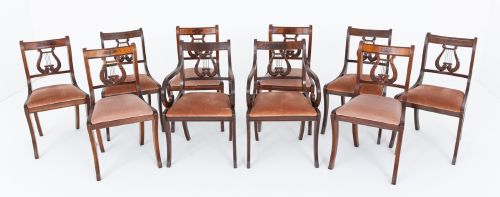
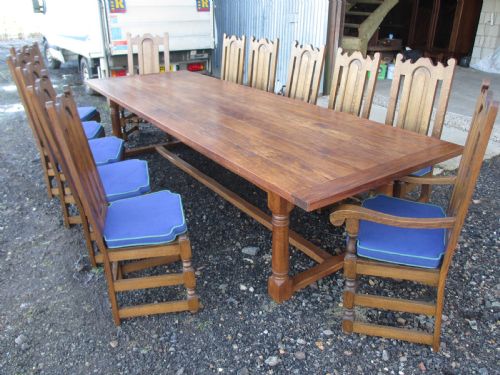
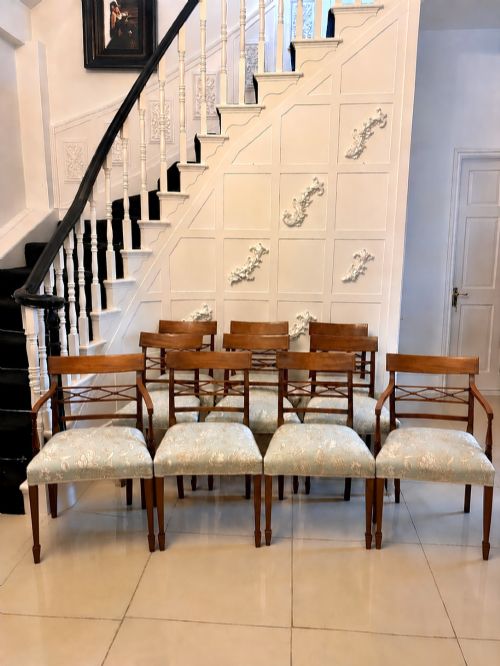
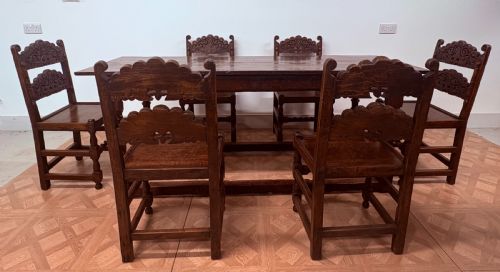
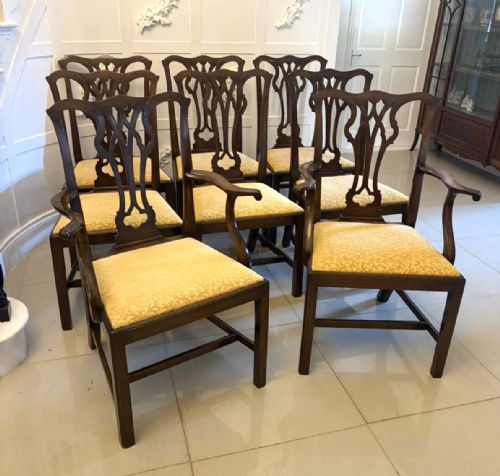
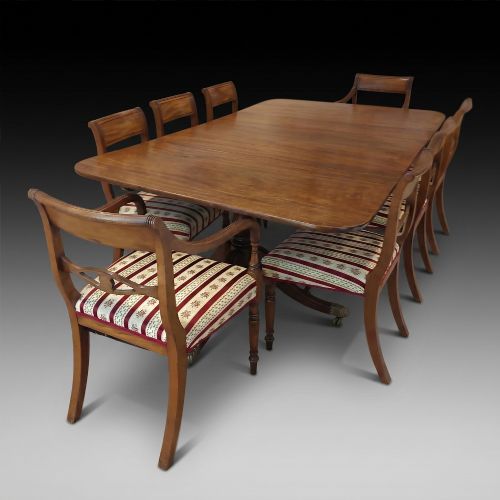
A traditional dining suite encompasses matched tables and chairs designed for formal or everyday dining across multiple centuries. Buyers searching for a traditional dining suite encounter large sets of seating alongside extending tables originating from periods such as the Victorian, Georgian, and Regency eras. Many examples draw on historical design revivals including Georgian Revival, Chippendale Style, and Queen Anne Style.
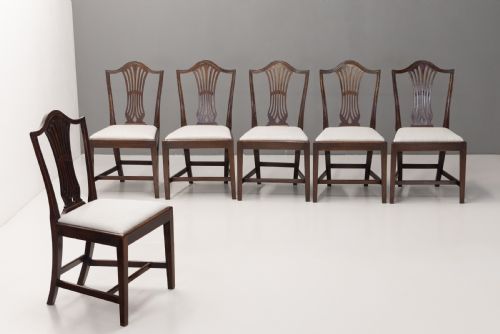
The most common configurations on this page pair an extending mahogany dining table with sets of eight or ten chairs, frequently including carver armchairs. These suites span oak refectory tables from earlier periods to refined mahogany settings from the nineteenth and early twentieth centuries. Sets often distinguish between single chairs and carvers to accommodate seating at the head and foot of the table.
How they were made
Cabinet makers constructed these tables and chairs primarily using solid hardwoods such as mahogany and oak, valuing timber for durability and grain pattern. Joinery methods relied on traditional techniques to support heavy use during meals and gatherings.
Seating frames incorporated upholstery materials including leather, velvet, brass details, and various woven fabrics. Carved ornamentation on chairs and table edges reflects the stylistic preferences of Georgian, Victorian, and revival periods.
Traditional Dining Suite Retail Price Guide 2026
Typical asking prices for traditional dining suite among the pieces listed under this phrase on Sellingantiques today, from the lower quarter to the upper quarter. They describe what is for sale here now, not the wider market.
Some chairs arrive with claws firmly gripping balls, proving that imaginary beasts make surprisingly dependable footrests for centuries of dinner guests.
What varies in quality
Quality in a traditional dining suite rests upon the selection of timber and the precision of the joinery linking table leaves and chair frames. Superior sets maintain structural integrity across large numbers of matching chairs while preserving crispness in carved details.
The sophistication of the design revival influences the overall standard, with finer suites demonstrating careful proportion in both carver and single chair forms. Harmony between the extending table and its accompanying chairs distinguishes a cohesive suite from assembled groupings.
The Traditional Dining Suite Glossary
- Carver armchair
- A dining chair featuring arms, traditionally placed at the head and foot of the table. These chairs often match a larger set of single chairs.
- Extending table
- A dining table equipped with a mechanism or removable leaves to increase surface length. This feature allows the table to accommodate larger sets of matching chairs.
- Refectory table
- A long, narrow wooden table historically used for communal dining. Examples from the seventeenth century feature robust oak construction and stretcher bases.
- Balloon back
- A chair back style shaped in an oval or rounded contour resembling a balloon. This form gained popularity during the Victorian period on mahogany dining chairs.
- Claw and ball
- A furniture foot design depicting a bird talon grasping a ball. This decorative motif appears on the legs of various period seating and tables.
Traditional Dining Suite: Frequently Asked Questions
How many chairs come with these suites?
Listings typically include sets ranging from six to twelve chairs, often combining single chairs with carver armchairs. Larger sets frequently accompany extending tables designed to seat substantial gatherings.
Buyers should verify the exact count of single and carver chairs within a suite to ensure it meets their seating requirements.
How do I care for leather upholstery?
Leather upholstery requires regular dusting and occasional conditioning to maintain suppleness and prevent cracking over time. Keeping suites away from direct sunlight and heat sources preserves both the hide and the underlying wooden frame.
Gentle cleaning with appropriate leather care products ensures the material ages gracefully.
What is a Georgian revival suite?
A Georgian revival suite reproduces or reinterprets the furniture styles of the eighteenth century during later periods such as the Edwardian era. These pieces emulate the proportions and carving details associated with original Georgian cabinet making.
Craftsmen utilised traditional mahogany and oak materials to achieve a classic aesthetic with nineteenth or twentieth century construction.