





Traditional Curved Couch
A traditional curved couch offers deep comfort and grand presence, anchoring a room with sweeping lines and historic upholstery.
Traditional Curved Couch
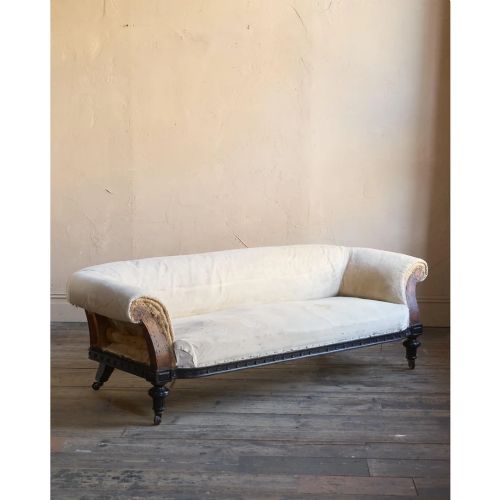
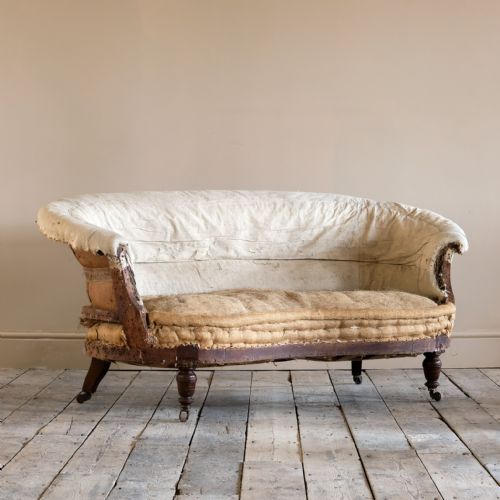
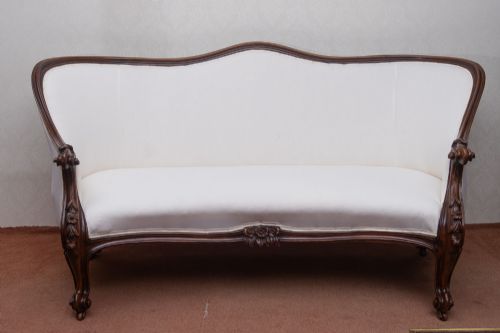
When you search for a traditional curved couch, you are looking at large seating forms designed with rounded silhouettes, crescent shapes, or gentle sweeps. The listings here bring together nineteenth-century library pieces, Edwardian camel backs, and eighteenth-century George III designs.
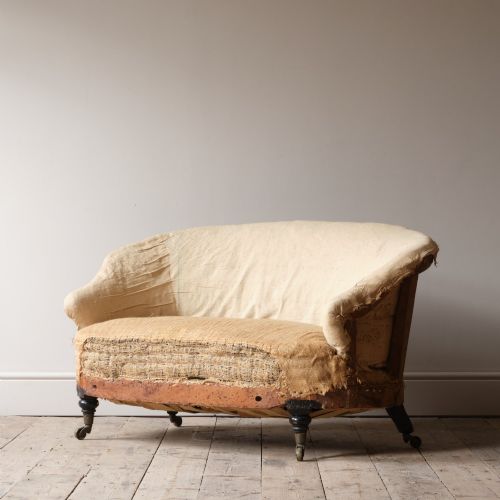
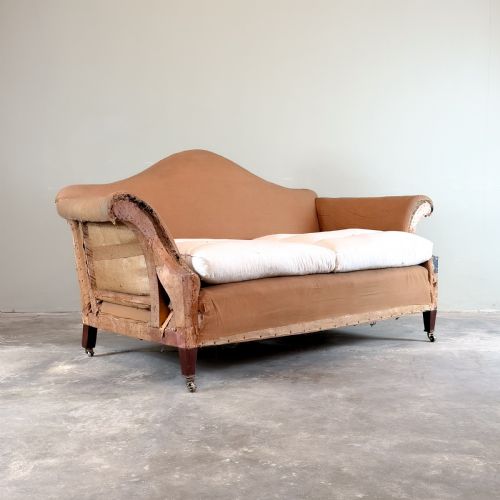
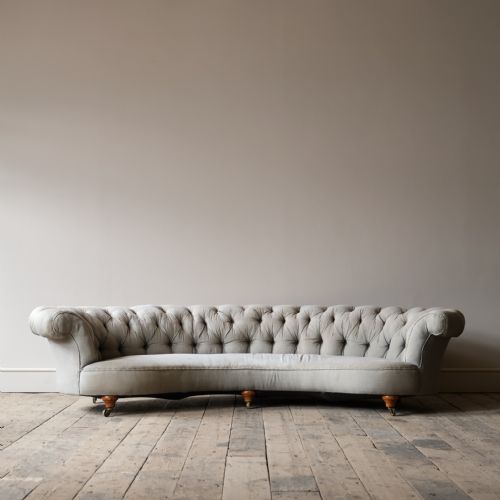
You are most likely to meet Victorian chesterfields, button-back canapes, and nineteenth-century framework sofas on this page. These pieces span walnut, mahogany, and hardwood frames, often upholstered in leather, hessian, or calico.
Originating across British and French workshops, these items serve as substantial focal points in large drawing rooms and studies. The selection ranges from straightforward provincial seating to elaborately framed revival pieces.
How traditional curved couch pieces were made
Maker workshops built these frames using robust hardwoods like mahogany and walnut to support the complex geometry of a curved or crescent shape. Joinery relied on traditional pinned and doweled joints to withstand the outward tension of deep-sprung upholstery.
Upholstery techniques involved horsehair stuffing, webbed foundations, and heavy calico or hessian interlinings before the final leather or fabric cover was applied. Button-tufting secured the deep padding across curved backs, while brass castors often finished the foot of heavier wooden legs.
Traditional Curved Couch Retail Price Guide 2026
Typical asking prices for traditional curved couch among the pieces listed under this phrase on Sellingantiques today, from the lower quarter to the upper quarter. They describe what is for sale here now, not the wider market.
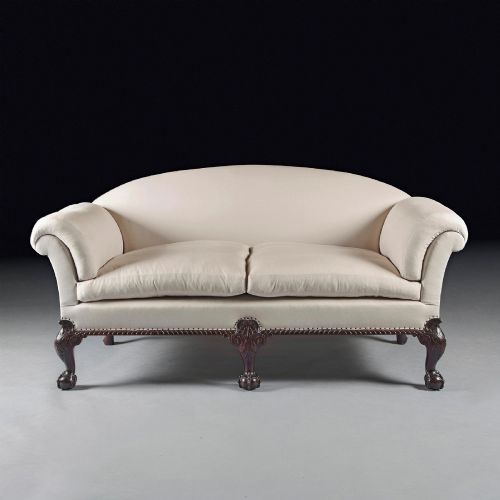
Several pieces on this page share a fondness for ball and claw feet, proving that even a sofa likes to stand on its toes.
What varies in quality
The integrity of the underlying hardwood frame and the originality of the structural woodwork set the baseline for a piece's standing. Frames that retain their original timber curves without extensive reinforcement demonstrate superior joinery.
The refinement of the upholstery work, from the crispness of button-tufting to the grade of the leather or woven fabric, separates standard workshop output from exceptional commissions. Maker attribution, particularly pieces bearing workshop stamps on the castors or frame, elevates the standing of the seating.
Howard and Sons·Hampton and Sons
The Traditional Curved Couch Glossary
- Canape
- An ornamental sofa or settee, typically featuring an exposed wooden frame and an upholstered back and seat, often influenced by French design.
- Chesterfield
- A large upholstered sofa characterised by arms and back of the same height, traditionally featuring deep button-tufting.
- Camel back
- A sofa style featuring a graceful, convex curved backrest that rises in a hump or double hump toward the centre.
- Hessian
- A coarse woven fabric, typically made from jute fibres, used historically as the foundational webbing and stuffing cover beneath final upholstery.
- Ball and claw
- A furniture foot design consisting of a bird's talon clutching a ball, popular in eighteenth-century and revival cabinet making.
Traditional Curved Couch: Frequently Asked Questions
What is a traditional curved couch?
A traditional curved couch is a historic upholstered seating piece featuring a rounded, crescent, or serpentine silhouette. These large sofas were built in British and European workshops during the eighteenth and nineteenth centuries.
They serve as prominent focal points in large living spaces, offering deep seating and expressive period shapes. The category includes chesterfields, camel backs, and canapes.
How do I identify a Victorian sofa?
Victorian sofas often feature dense mahogany or walnut frames, deep button-tufting, and substantial proportions. Makers of this era favoured robust construction methods and heavy sprung interiors.
Look for design indicators such as scrolling arms, turned wooden legs, and the use of materials like leather, hessian, and calico beneath the outer upholstery.
Where were these couches used?
Historically, these couches were placed in grand drawing rooms, libraries, and formal parlours of large country houses and urban residences. Their substantial size and curved silhouettes allowed them to anchor open spaces or sit comfortably within large bays.
In modern interiors, they function well as central seating pieces in spacious living rooms, studies, or reception halls where their historic character can be appreciated.
How do I care for antique leather?
Antique leather requires gentle cleaning using specialised saddle soaps or damp cloths to remove surface dust without stripping natural oils. Avoid placing leather furniture in direct sunlight or near heat sources to prevent cracking.
Periodic application of appropriate leather balms helps maintain the suppleness of nineteenth-century hides found on chesterfields and club sofas.