

Traditional Crystal Lighting
Traditional crystal lighting brings genuine sparkle to a room through heavy cut glass pendants and polished metal frames.
Traditional Crystal Lighting
Traditional crystal lighting encompasses grand multi-light chandeliers, wall lights, table lamps and ceiling plafonniers designed to catch and refract light. These pieces emerge predominantly from the early twentieth century, spanning Edwardian examples alongside French and Italian designs.
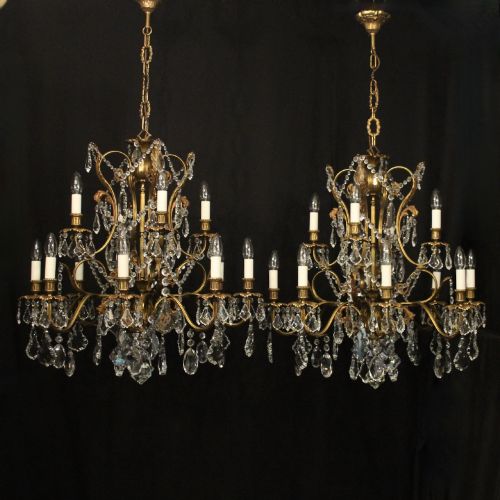
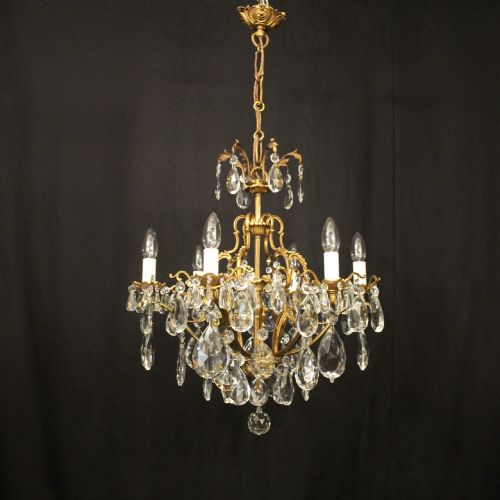
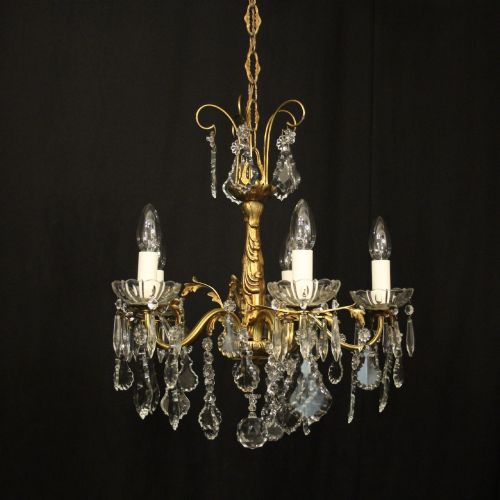
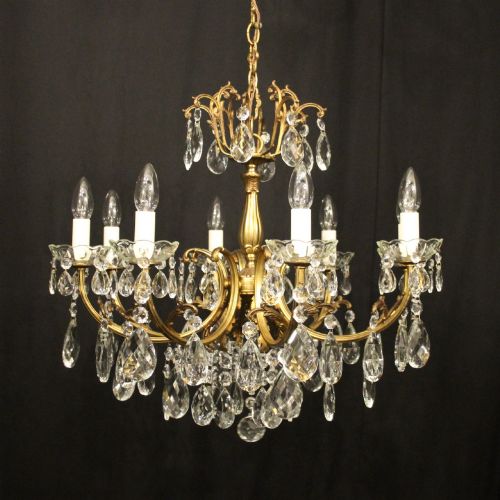
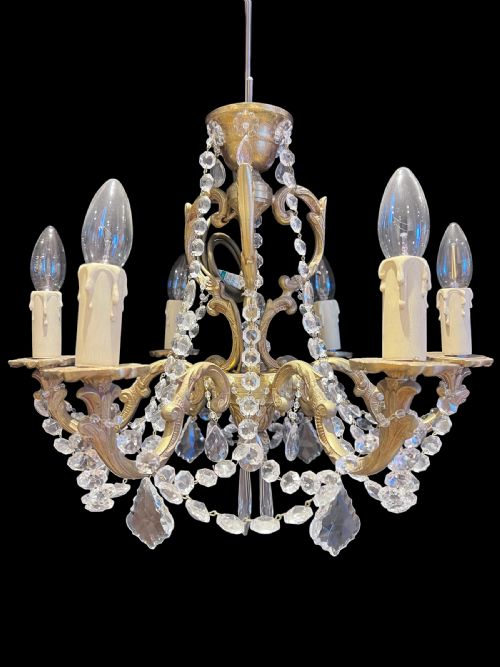
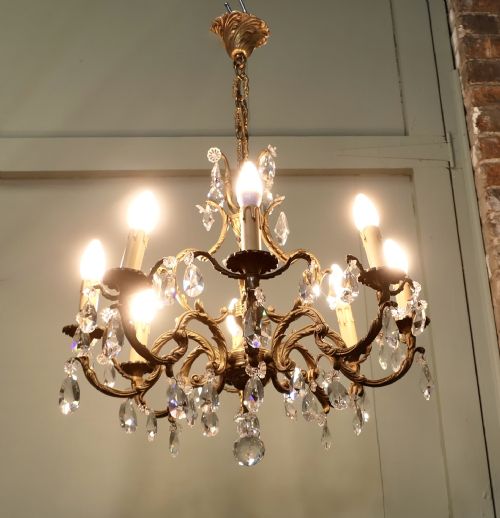
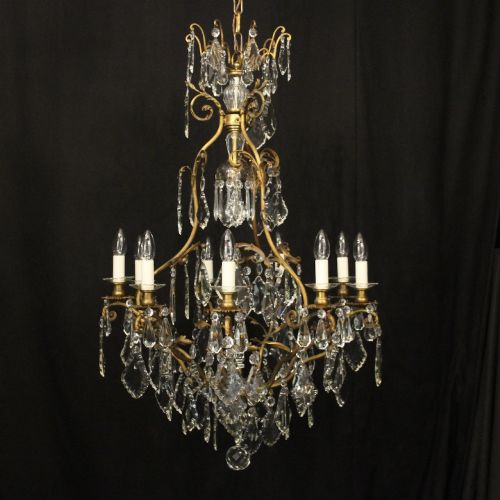
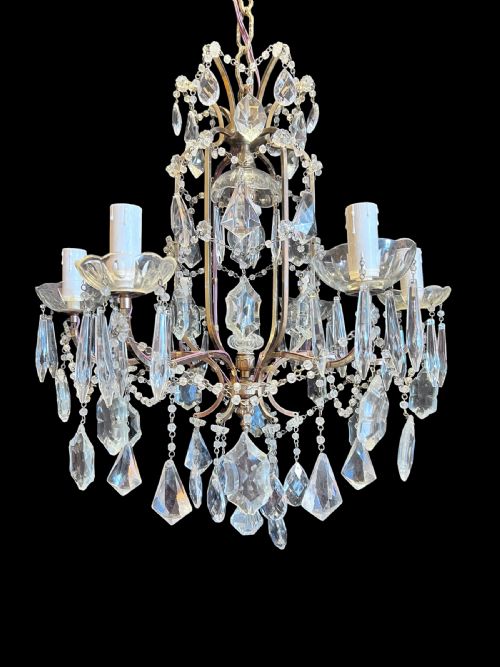
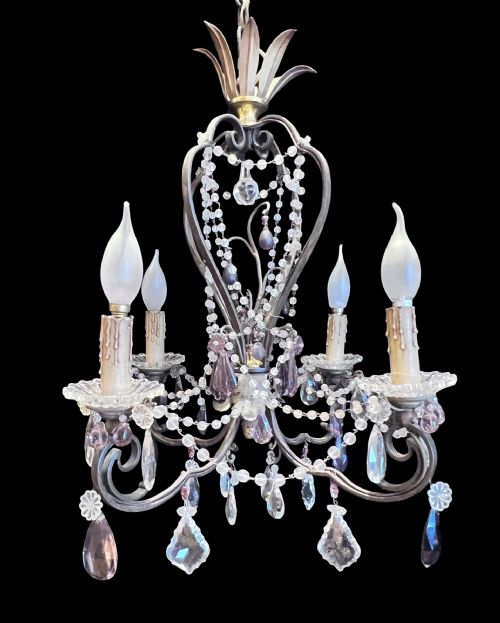
The most common form on this page is the multi-arm chandelier featuring brass or gilt metal frames hung with cut crystal drops. Buyers also encounter table lamps and flush-mounted ceiling fixtures built from moulded cut glass.
Origin styles lean heavily toward French Empire, Louis Revival and Italian Florentine aesthetics. These decorative objects suit high ceilings and traditional reception rooms where their refractive qualities dominate the space.
Materials and Construction
Frames rely on cast brass, gilt bronze and gilded brass to provide structural support for numerous candle arms. Metals receive polished or silvered finishes depending on the intended decorative scheme.
Glass and crystal elements undergo intricate cutting and moulding by hand to create facets that scatter illumination effectively. Lustres, teardrops and beads attach via small wire loops to frame members.
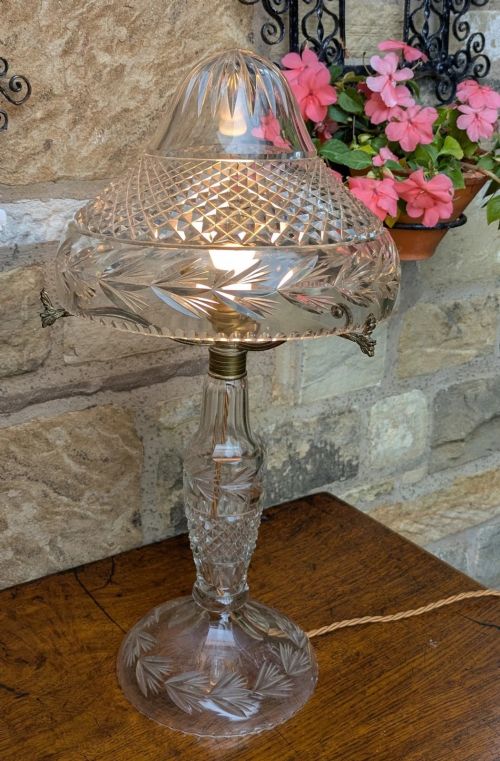
Table lamps utilise solid cut crystal bodies fitted with internal wiring and weighted bases for stability. Ceiling fixtures incorporate heavy glass bowls and plafonniers secured in metal galleries.
Listings for traditional crystal lighting span the Edwardian era through to the nineteen-fifties, featuring brass, gilt bronze and cut crystal.
Evaluating the Pieces
Differentiation across these items rests upon the depth of the glass cutting and the clarity of the crystal itself. Superior pieces exhibit sharp, clean facets that refract light brilliantly without cloudiness.
The weight and casting quality of the brass or gilt bronze frame dictate overall durability. Heavier metalwork supports complex multi-light configurations securely and maintains rigidity over decades of suspension.
Stuart Crystal·F. and C. Osler
The Traditional Crystal Lighting Glossary
- Plafonnier
- A ceiling-mounted light fixture with a glass bowl or shade held close to the ceiling surface. These often feature cut glass patterns typical of the early twentieth century.
- Lustre
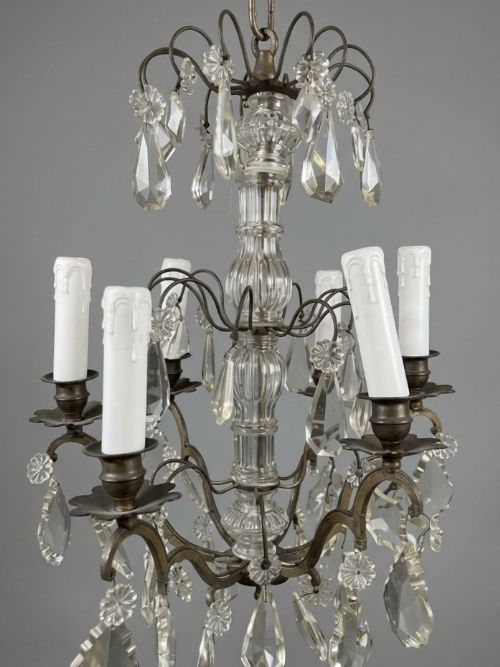
- A cut crystal pendant or drop hung from the arms and frame of a chandelier to increase light refraction. Lustres appear in various shapes including teardrops and acorns.
- Tent and Waterfall
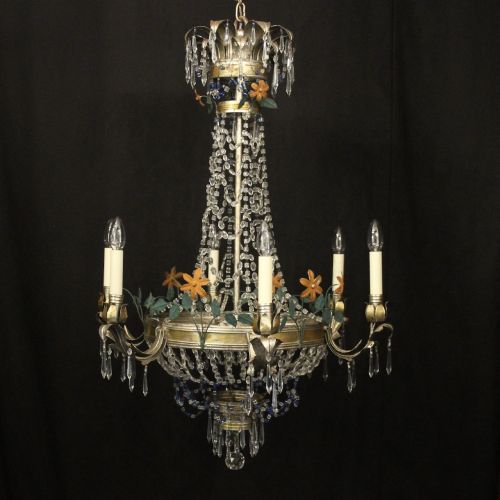
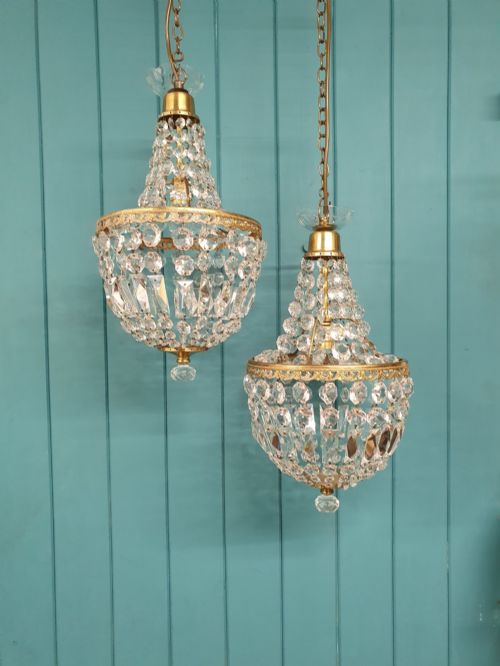
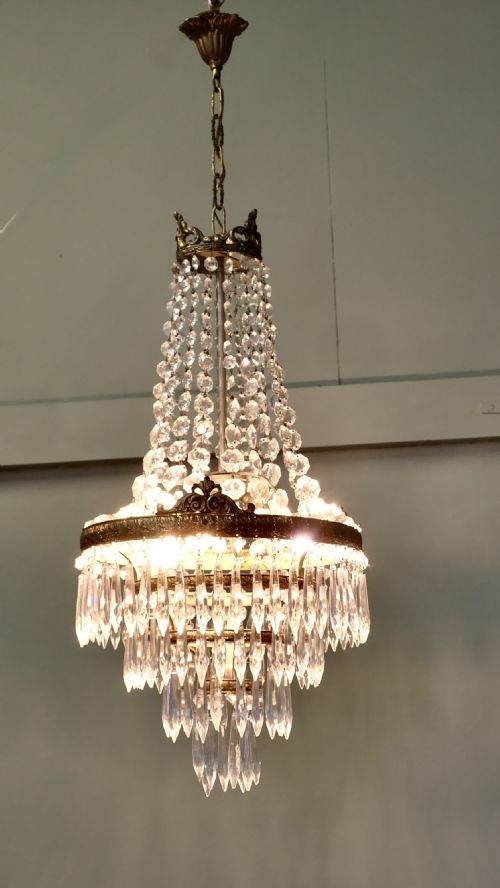
- A chandelier design featuring an upper conical tent of crystal beads falling into a wider cascading lower section. This arrangement creates a dense curtain of sparkling glass.
- Bag Chandelier
- A lighting fixture shaped like a flat-bottomed bag or basket entirely covered in small crystal beads and droplets. Light emanates from internal burners or bulbs shining through the mesh.
- Marie Therese
- A style of chandelier characterised by a flat glass-clad metal frame where the central body remains largely hidden beneath intricate glass scrolls and drops.
Traditional Crystal Lighting: Frequently Asked Questions
How do I hang a heavy chandelier safely?
Suspension requires fixing directly into ceiling joists using a steel hook and load-bearing chain rated well above the weight of the metal and glass assembly. Electricians should check that the ceiling wiring box supports the fixture independently of the electrical connection.
Professional installation is standard practice for multi-arm fixtures weighing significant amounts. Ensuring the structural integrity of the ceiling prevents accidents and protects fragile crystal components from sudden stress.
What is a tent and waterfall chandelier?
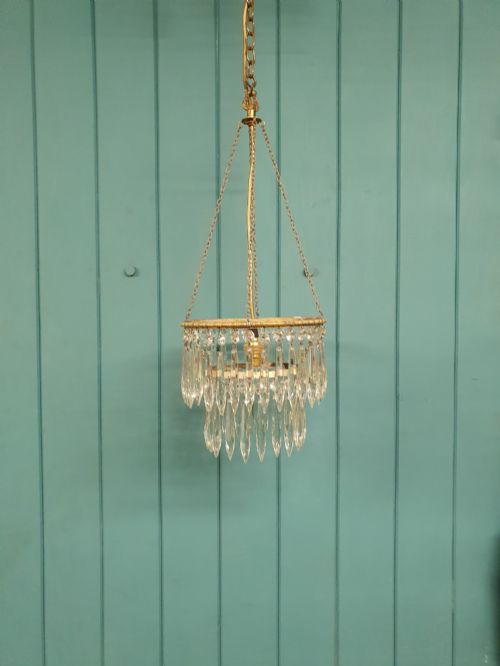
This specific configuration uses a crown or ring at the top from which strings of crystal beads stretch downward in a tent shape. Below this upper section, further strands cascade in a waterfall effect over the frame.
Such designs originated during the neoclassical era and reappeared in early twentieth-century variations. They maximise the surface area of glass to refract maximum light across formal rooms.
How do I clean crystal lighting safely?
Maintenance involves wiping individual drops and frame elements with a lint-free cloth dampened in a mild solution of warm water and isopropyl alcohol. Leaving pendants attached during cleaning prevents accidental breakage of the delicate wire hooks.
Removing the entire fixture for washing is unnecessary and risky. Regular dusting preserves the brilliance of the cut glass without disturbing the historical wiring or structural joins.
Are these lights compatible with modern bulbs?
Most antique fixtures accept standard modern bulb sizes provided the candle tubes and shade fitments match standard screw or bayonet cap dimensions. Contemporary low-energy LED bulbs produce less heat, which protects fragile nineteenth and twentieth-century materials from thermal stress.
Rewiring may be necessary for older pieces to meet current electrical standards. A qualified restorer can adapt internal fittings while preserving the external appearance of the brass and crystal components.