
French Metal Ceiling Light
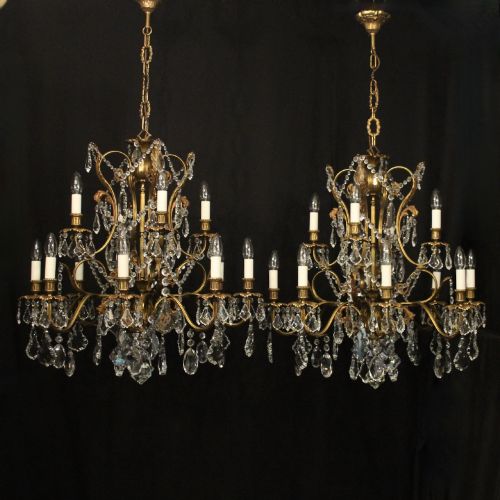
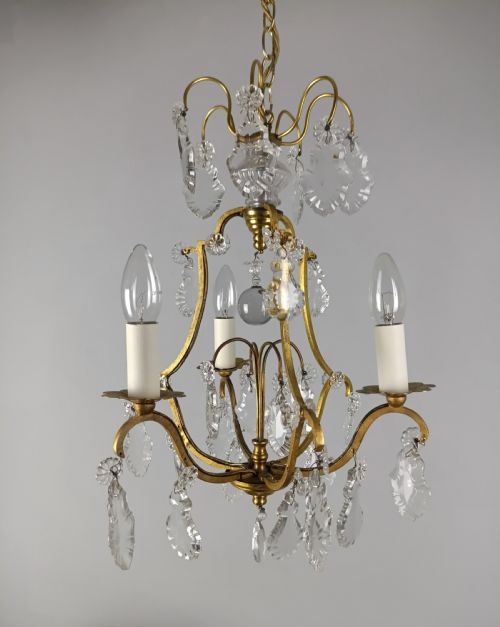
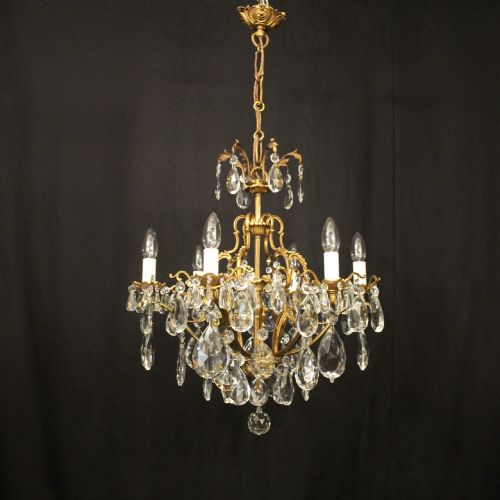
A french metal ceiling light brings the weight and presence of cast bronze, gilded brass and cut crystal directly into a room.
French Metal Ceiling Light
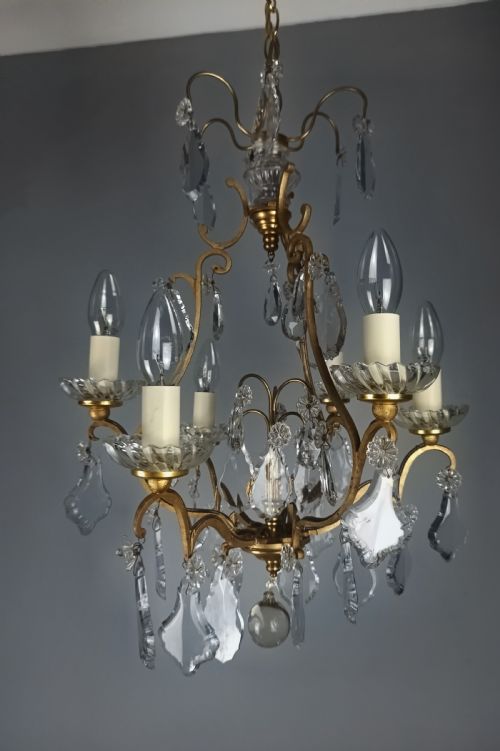
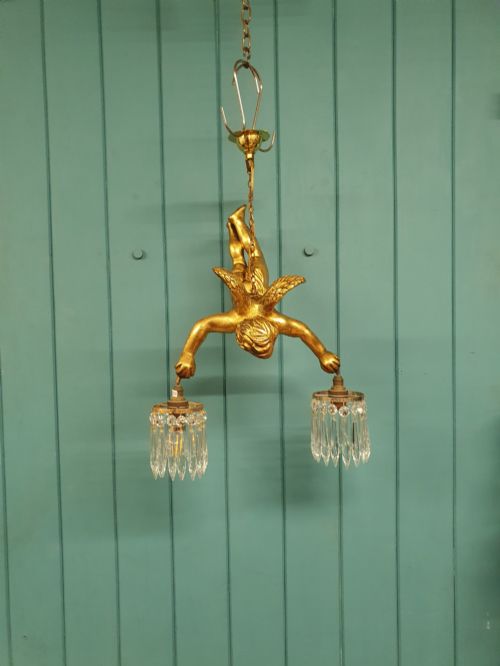
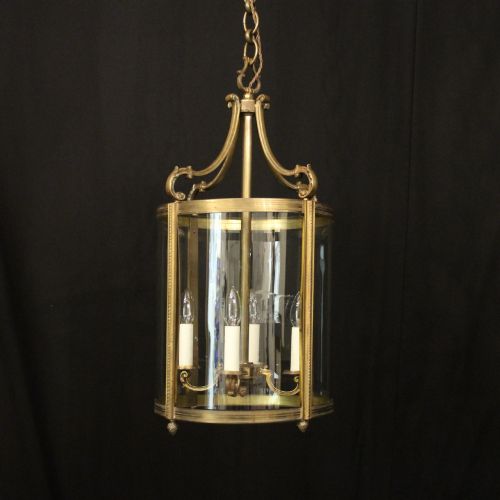
A french metal ceiling light encompasses chandeliers, hall lanterns and pendant lights spanning the nineteenth century up to the nineteen-thirties. Buyers seek these pieces for their intricate metalwork and decorative hanging crystal.
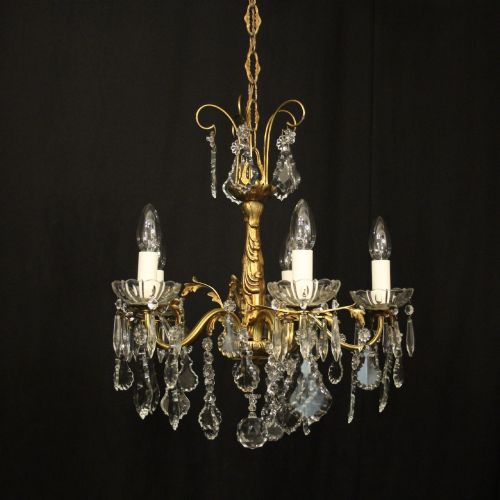
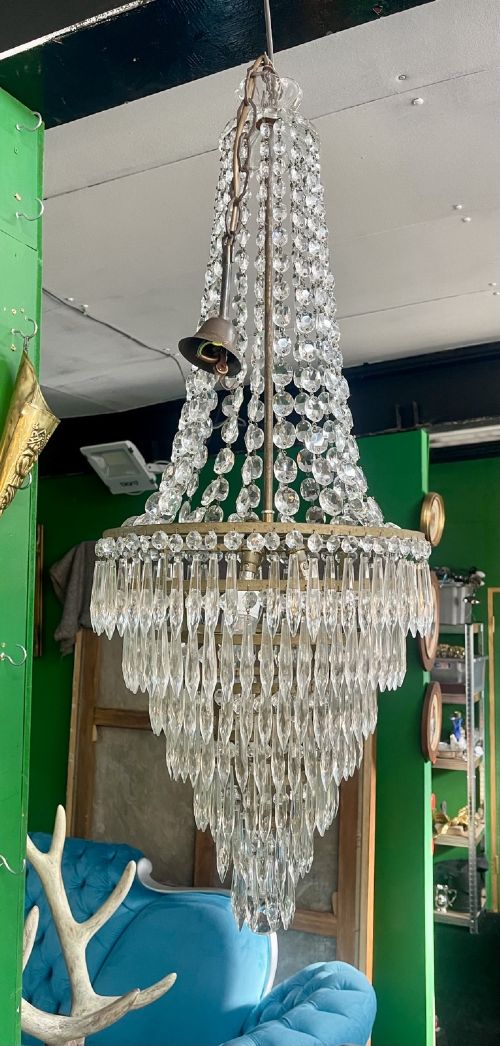
The selections here lean heavily toward the early twentieth century, particularly the nineteen-twenties and nineteen-thirties, alongside nineteenth-century examples. Common formats include birdcage chandeliers, tent and waterfall designs, and substantial hall lanterns.
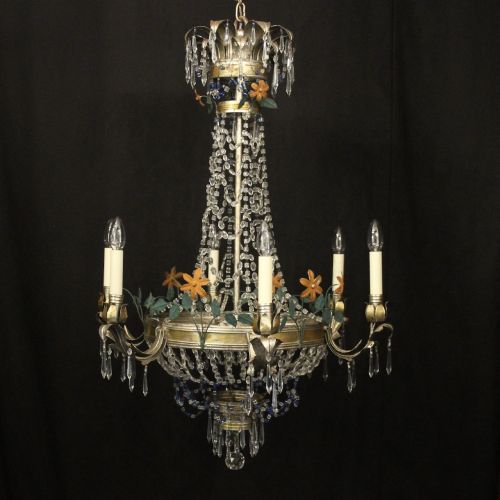
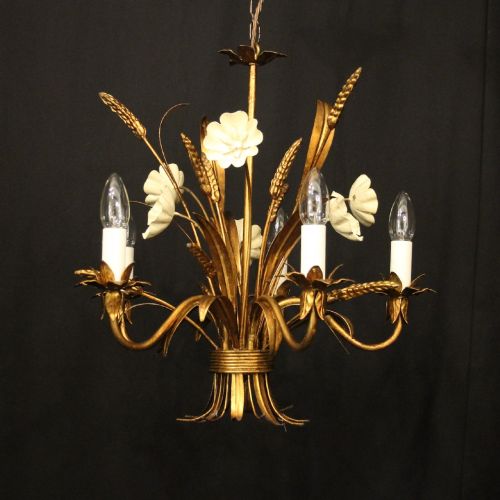
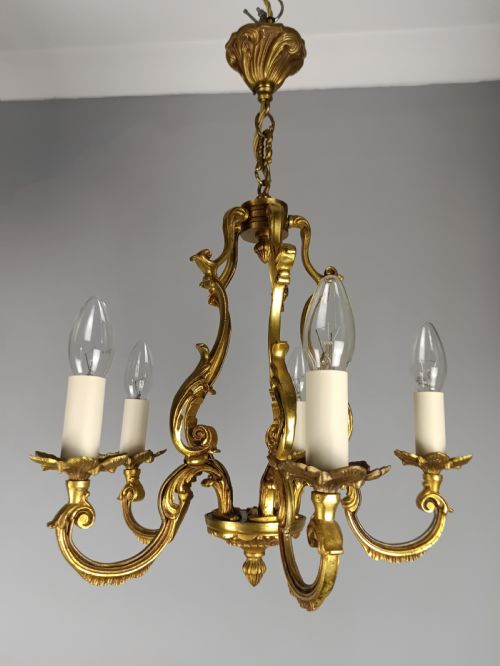
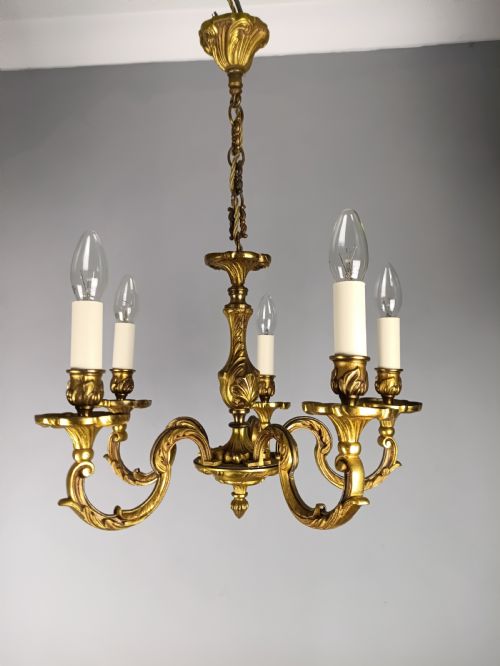
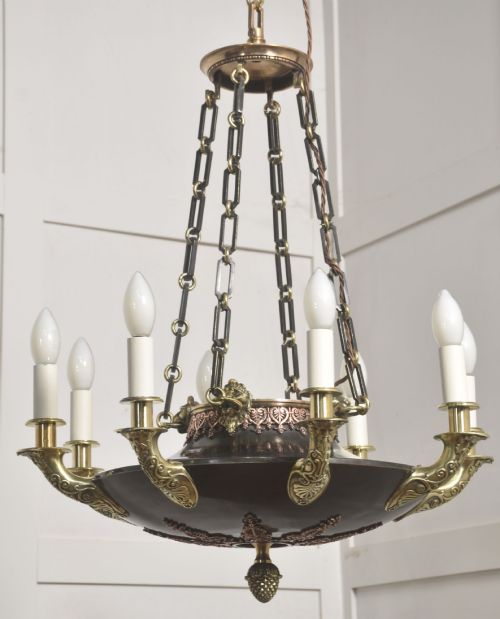
Stylistic influences range from the grandeur of the French Empire and Rococo revivals to the softer floral motifs of toleware and ceramic work. Pieces emerge in brass, gilt bronze, and copper, often enriched with amethyst, amber or clear crystal drops.
Materials and construction
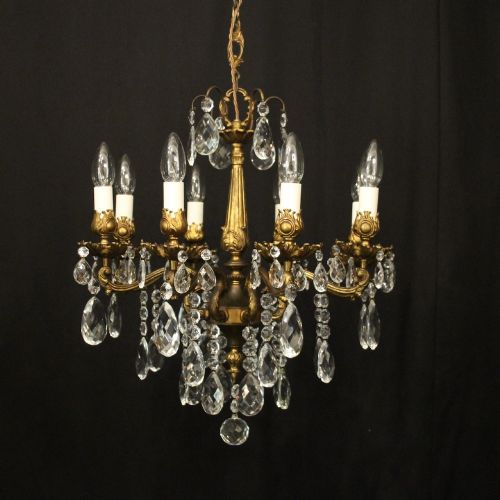
Metalwork forms the backbone of these fixtures, utilising cast bronze, gilt metal, spun brass and painted toleware. Many pieces combine gilded finishes with structural iron or copper frames to support heavy glass drops.
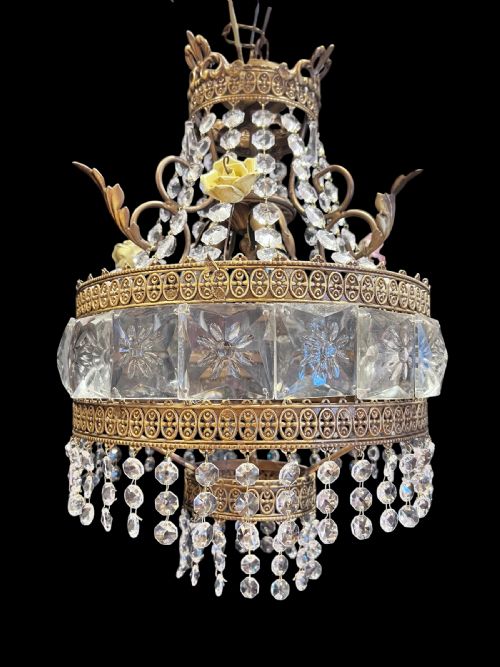
Glass and crystal components are integrated through wire ties or pin fixings, suspending prisms, beads and teardrops from central metal crowns and rings. Ceramic flowers and hand-painted elements appear on toleware branches, adding colour and texture to the metallic frames.
Listings feature pieces spanning the nineteenth century through the nineteen-thirties, using brass, gilt bronze, crystal and painted toleware.
Assessing craftsmanship
Quality reveals itself in the crispness of the metal casting and the depth of the gilding. Finer pieces display sharply chased bronze or brass mounts, while simpler examples rely on stamped sheet metal.
The clarity and cut of the crystal elements distinguish finer fixtures from standard productions. Hand-cut prisms and coloured glass drops reflect light with greater precision than moulded glass alternatives.
Charles Schneider
The French Metal Ceiling Light Glossary
- Plafonnier
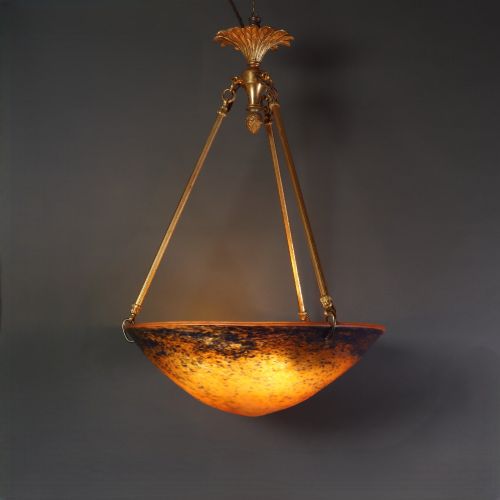
- A bowl-shaped glass or crystal ceiling light mounted flush or close to the ceiling. These fixtures distribute ambient light evenly across smaller spaces.
- Toleware
- Painted or lacquered sheet metal, often shaped into floral or leafy motifs. This technique introduces vibrant polychrome colour to antique light fittings.
- Birdcage chandelier
- A metal frame constructed with curved vertical straps resembling an avian cage. This form organises tiers of crystal drops and central candles.
- Tent and waterfall
- A chandelier style featuring an upper canopy of strung beads forming a tent shape, dropping into a cascading skirt of crystals. This configuration maximises light refraction.
- Spelter
- An alloy of zinc and lead used as a less costly substitute for bronze. It frequently receives a gilt finish to mimic heavier metals.
French Metal Ceiling Light: Frequently Asked Questions
How do I hang a heavy antique chandelier safely?
Suspension requires fixing directly into ceiling joists using a rated metal hook capable of holding the substantial combined weight of bronze and crystal. Professional installation ensures the electrical wiring meets modern standards while supporting the physical load.
Heavier fixtures often necessitate independent chain supports rather than relying solely on the electrical cord. Consulting a qualified electrician guarantees the ceiling structure accommodates the mass of these metal fittings.
What is the difference between an empire style and a rococo light?
Empire style fixtures draw on neoclassical symmetry, incorporating laurel wreaths, urns and strict geometric proportions. They emphasise military and classical motifs derived from nineteenth-century design.
Rococo lights favour asymmetrical scrolls, organic leaf curves and playful ornamentation. These pieces embrace naturalistic floral shapes and flowing metalwork rather than rigid symmetry.
Can I clean the crystal drops without removing them?
Surface dust accumulates on glass prisms over time, dulling their sparkle during daily use. Wiping individual crystals with a lint-free cloth dampened in a mild cleaning solution restores their clarity.
For thorough cleaning, delicate metal frames benefit from having crystals unhooked and washed separately. Keeping the metal dry prevents tarnishing of the underlying gilt bronze or brass.
How do I date a french metal ceiling light?
Dating relies on examining the casting techniques, wiring channels and fastening methods used on the metal frame. Nineteenth-century examples often display hand-cut crystal and heavy bronze construction, while later twentieth-century pieces incorporate different wiring entry points and machine-pressed components.
Stylistic cues such as toleware floral ceramics or art deco glass bowls provide further chronological markers. Comparing the patination of the brass and gilt surfaces against known period standards narrows the era of production.