
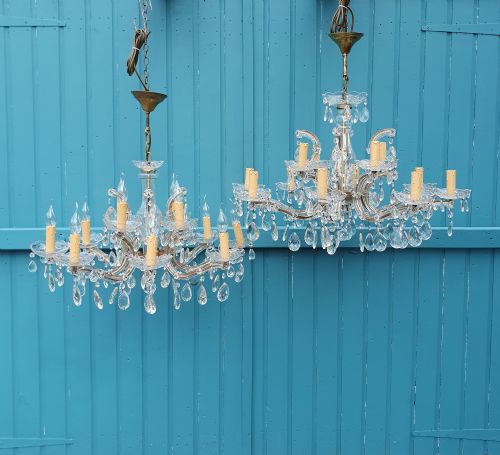
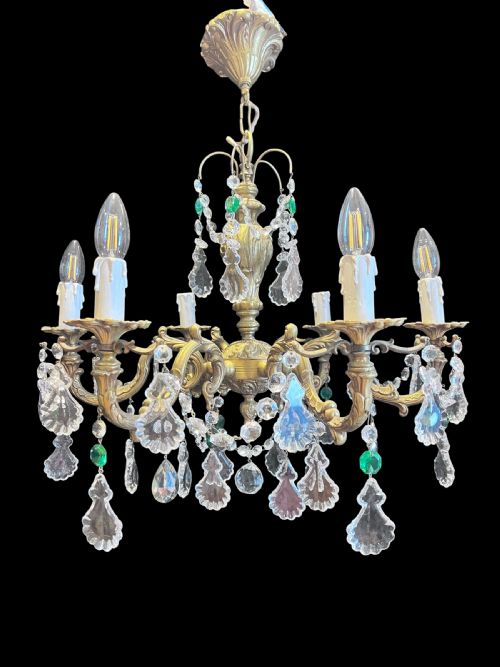
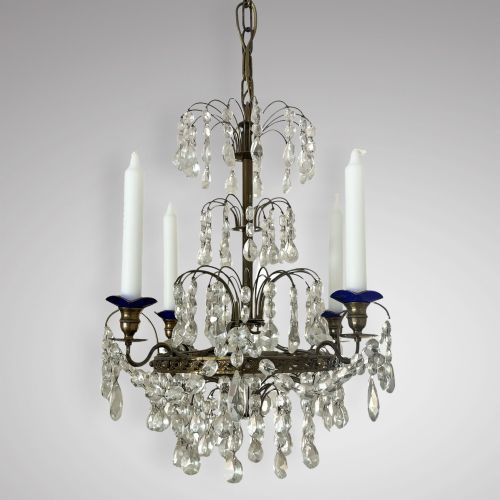
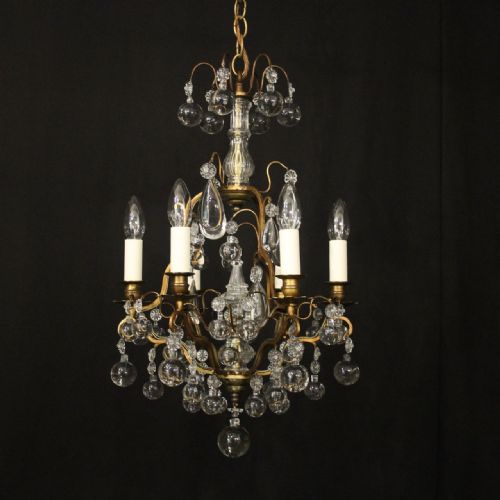
Traditional Crystal Drop Light
A traditional crystal drop light suspends weight and prisms from a ceiling, catching light through cut glass and metal arms.
Traditional Crystal Drop Light
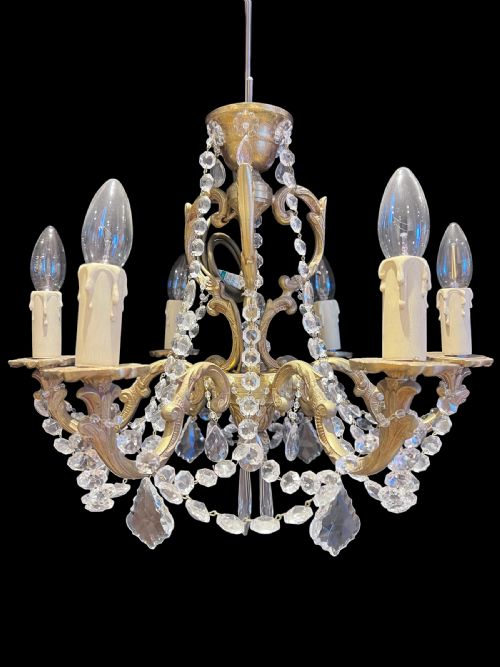
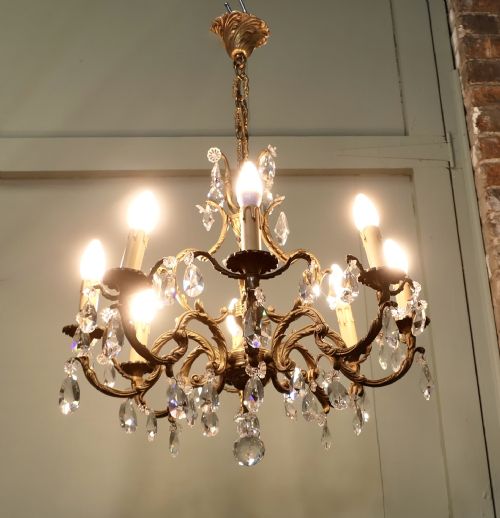
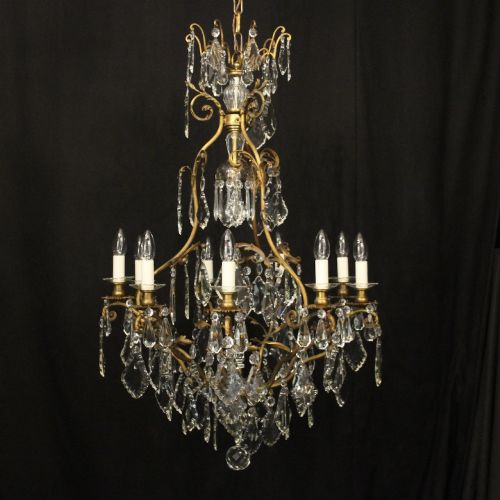
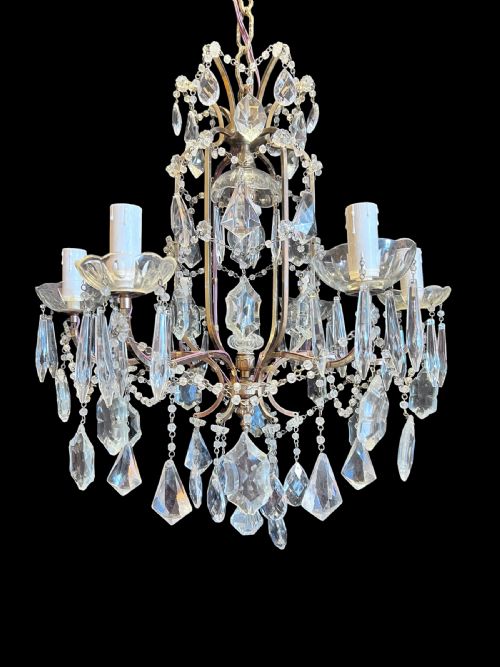
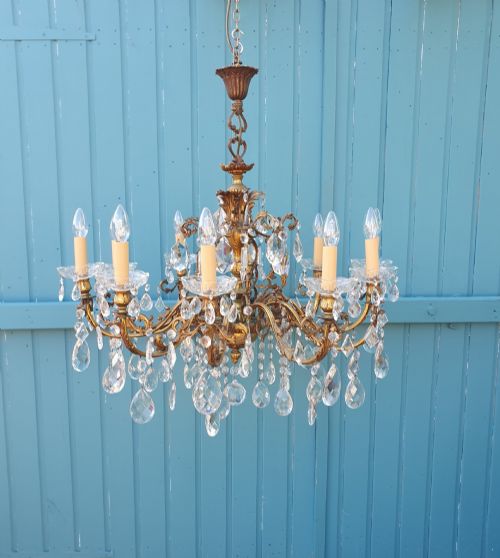
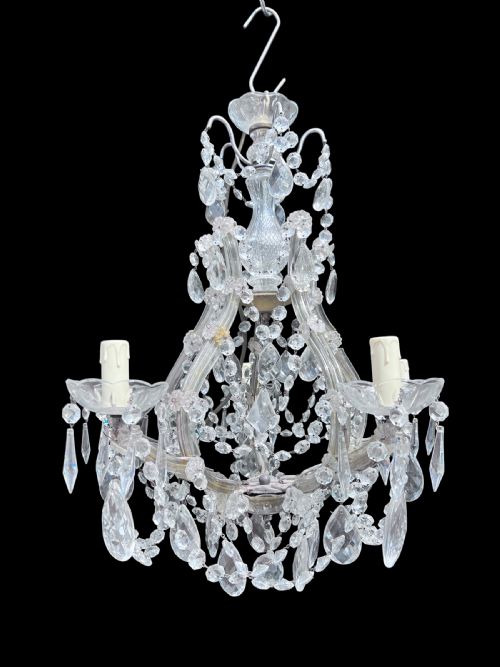
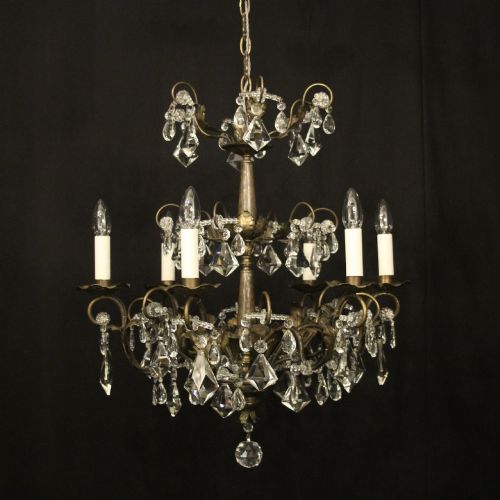
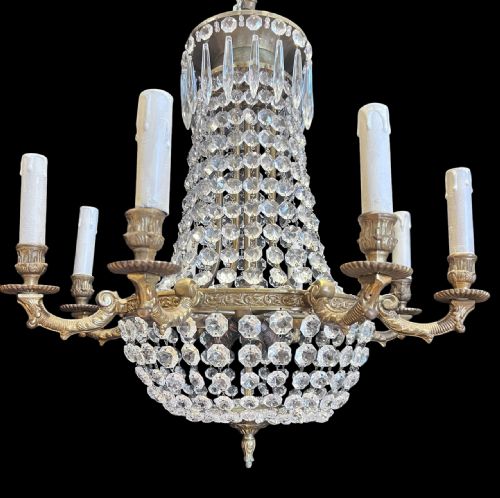
A traditional crystal drop light brings historic illumination into a room through hanging prisms, faceted beads, and tiered frames. When searching for this phrase, a buyer encounters ceiling fittings primarily originating from the late nineteenth and early twentieth centuries, spanning Edwardian and various continental European styles.
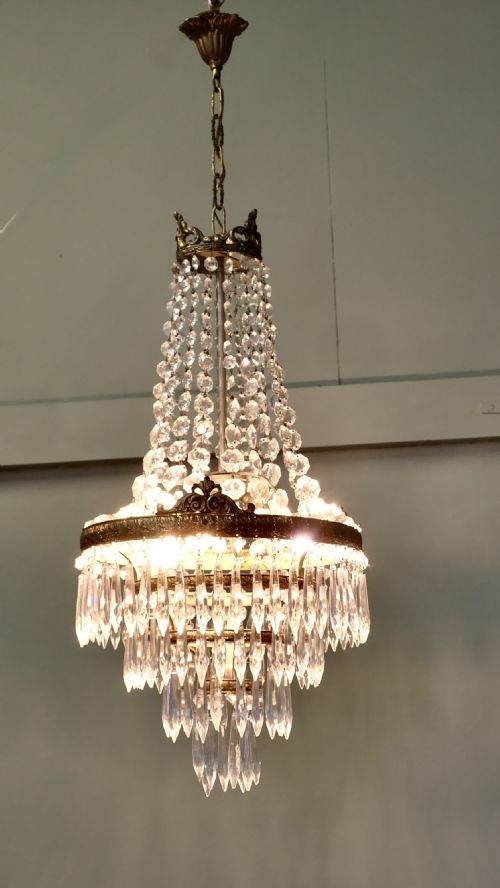
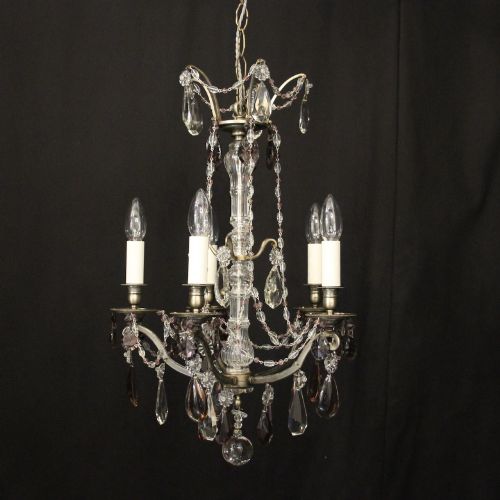
The pieces on this page lean heavily towards French and Italian designs, notably French empire, rococo, and Venetian or Florentine variants. Chandeliers dominate the selection, offering multiple light arms paired with cascades of glass drops.
Makers and workshops of the period produced everything from intimate four-light fixtures to grand eighteen-arm centrepieces. The selection reflects domestic grandeur adapted for high ceilings and principal reception rooms.
Construction and Materials
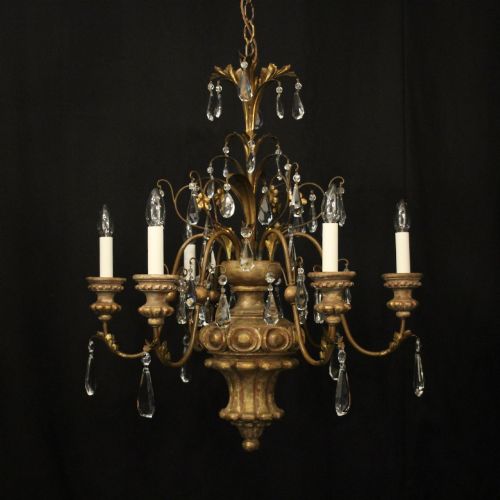
Frames rely on cast brass, gilt bronze, iron, and toleware to provide structural integrity for the heavy glass components. Metalwork is often gilded, silvered, or left in a dark patinated finish.
Pendants, lustres, and teardrops consist of cut crystal, glass, and occasional coloured crystal elements wired or pinned to the metal armature. These refractive components require hand-cutting and careful manual suspension.
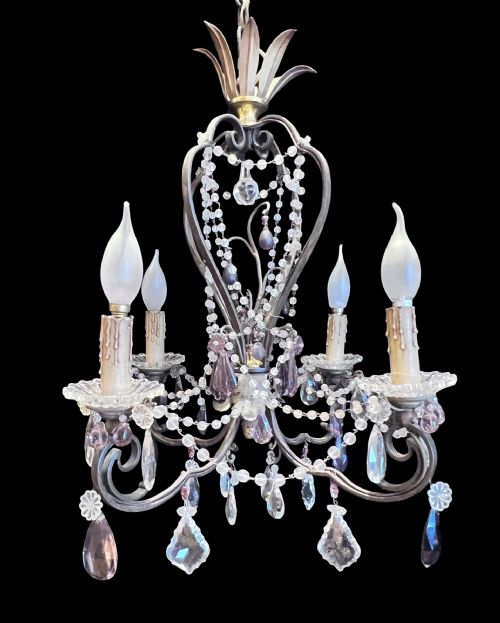
Some Edwardian chandeliers include hidden coloured crystal teardrops tucked discreetly behind clear tiers to cast unexpected flashes of pink.
Assessing Quality
Quality rests in the weight and clarity of the crystal drops, the crispness of the bronze or brass casting, and the integrity of the internal wiring and frame construction. Higher grade pieces feature hand-cut crystal with deep facets that scatter light cleanly, rather than pressed glass with soft edges.
The complexity of the design also separates standard pieces from finer examples, with multi-tiered tent-and-waterfall configurations or beaded arms demanding greater skill from the original metalworker and glass-cutter.
The Traditional Crystal Drop Light Glossary
- Lustre
- A cut glass pendant or drop hung from a chandelier to refract light. These hang from the arms or crown of the fitting.
- Tent and waterfall
- A specific configuration where strings of beads form a tent shape at the top, cascading down into a wider waterfall of crystals below. This style creates significant visual depth.
- Gilded bronze
- Metal cast from copper and tin alloys, then treated with a gold leaf or mercury gilt finish. It provides a warm, durable base for crystal fixtures.
- Bag chandelier
- A light fitting featuring a basket or bag-shaped lower section densely packed with crystal drops. The design conceals the inner frame entirely behind glass.
- Toleware
- Painted or lacquered sheet metal utilised in specific frame designs. It adds colour and a matte contrast to the surrounding crystal elements.
Traditional Crystal Drop Light: Frequently Asked Questions
How do I hang a heavy crystal chandelier?
Installation requires fixing directly into ceiling joists using a steel hook and patress capable of supporting the combined weight of metal and glass. Professional electrician support ensures the weight load is safely distributed.
Electrical wiring inside older fixtures often requires updating to meet current safety standards while preserving the original brass or gilt arms.
What rooms suit a traditional crystal drop light?
These fixtures suit high-ceilinged drawing rooms, dining spaces, and entrance halls where proportion allows the suspended prisms to catch natural and artificial light effectively. Smaller multi-light versions can also anchor a bedroom or study.
Placement should account for clearance beneath the lowest hanging crystal drops to maintain comfortable headroom.
How do I clean an antique chandelier?
Cleaning involves wiping individual crystal drops with a mild cleaning solution while they remain on the frame, or removing them entirely for immersion. Support the metal arms carefully during the process.
Harsh chemical cleaners should be avoided to protect the original brass patina and gilt surfaces.
How do I date a crystal ceiling light?
Dating relies on examining the metal casting techniques, screw threads, wiring channels, and the cut of the glass drops. Edwardian and early twentieth-century pieces often display specific wiring methods and gilt finishes characteristic of that era.
Stylistic cues such as Marie Theresa frames or empire tent configurations also point to specific manufacturing decades.