

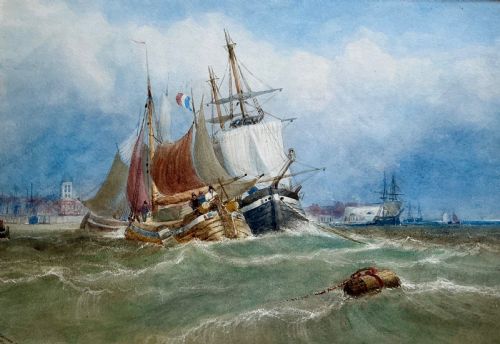


Traditional Coastal Landscape Artwork
Traditional coastal landscape artwork captures harbours, shores and maritime scenes through the eyes of Victorian and twentieth-century painters.
Traditional Coastal Landscape Artwork
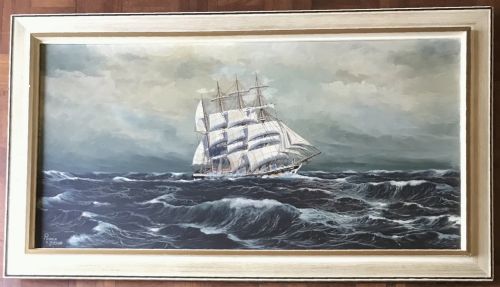
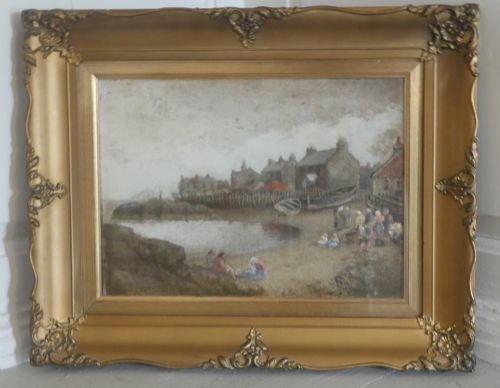
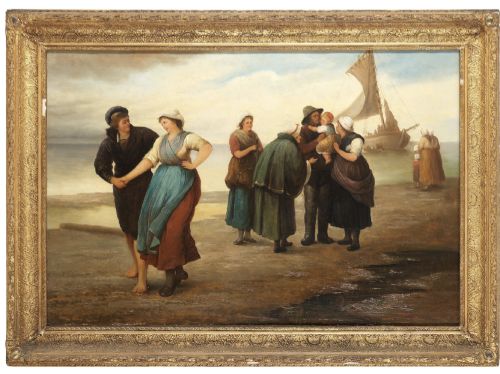
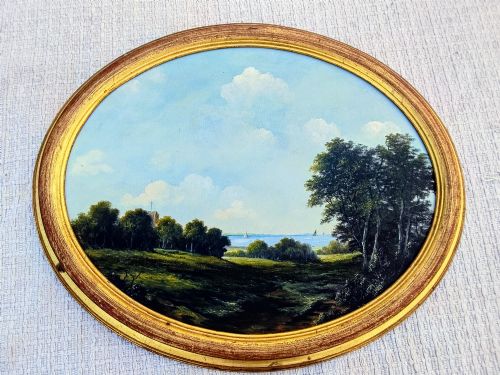
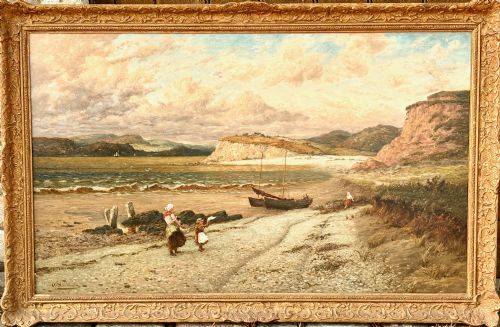
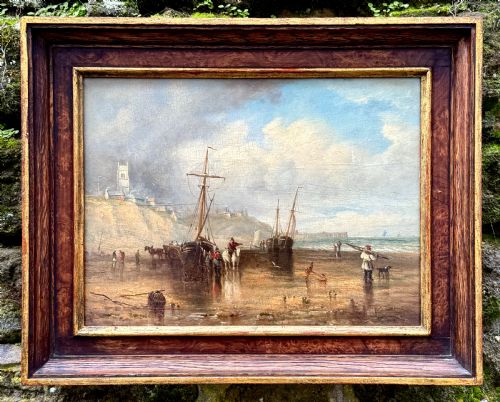
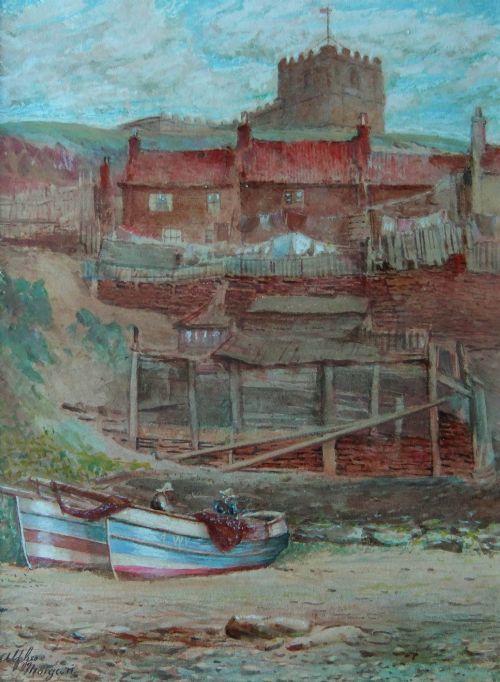
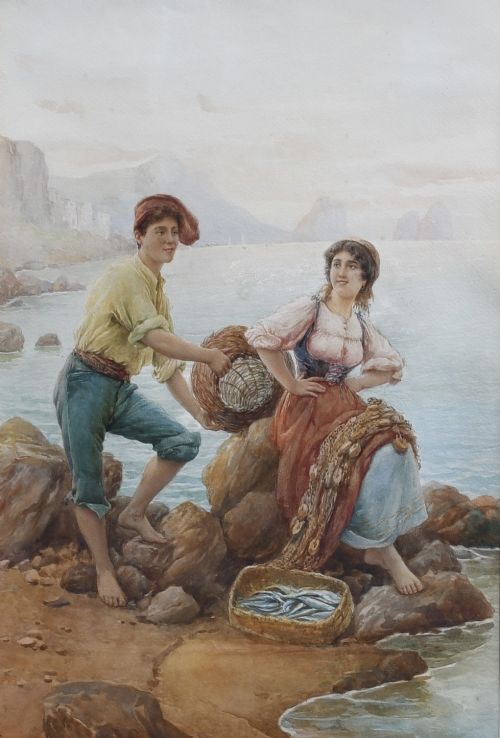
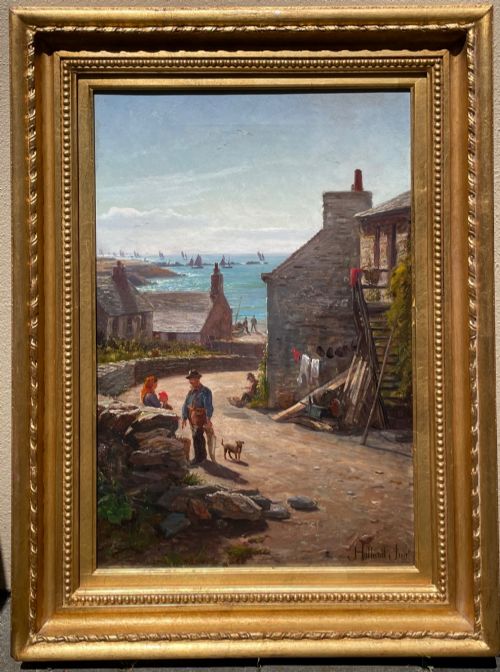
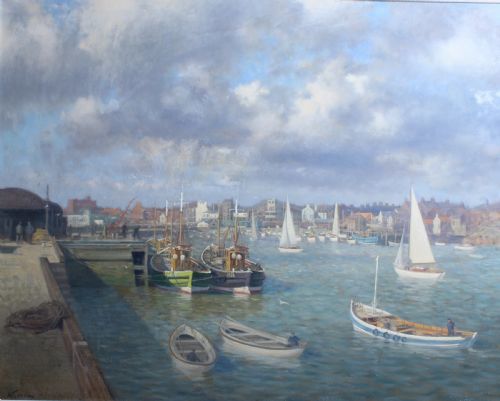
Traditional coastal landscape artwork spans nineteenth-century canvases and twentieth-century watercolours depicting harbours, fishing boats, and shorelines. These pieces record maritime life and coastal topography across Britain, Europe, and New Zealand through recognised styles like Victorian realism and British impressionism.
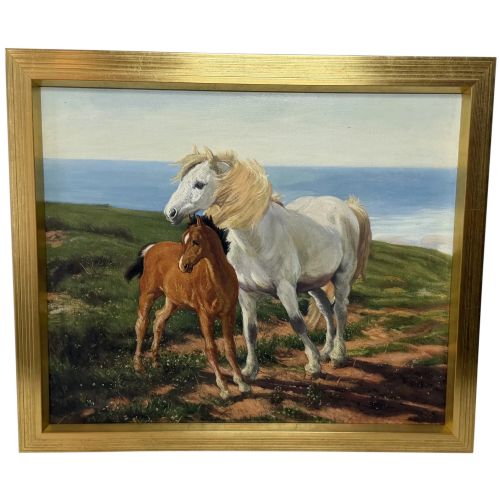
Buyers encounter oil paintings on canvas or board alongside delicate watercolours on paper, often housed in period gilt wood frames. Subjects range from busy Cornish fishing ports to quiet estuaries and open sea views.
The selection includes signed works by established nineteenth-century and early twentieth-century painters, alongside evocative unsigned regional views from the Victorian era and subsequent decades.
How they were made
Painters applied oil paint to stretched canvas, wooden board, or prepared paper, building rich textures for sea spray, vessel hulls, and rugged cliffs. Watercolour artists worked on paper support, using washes and fine brushwork to capture transparent light across tidal flats and harbours.
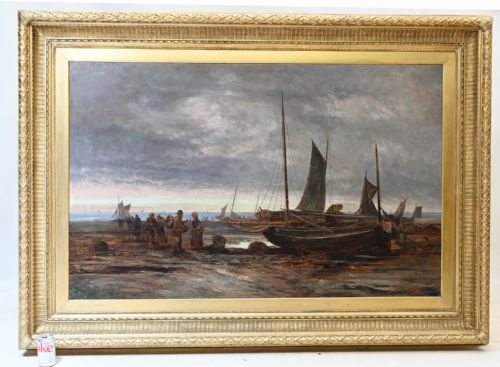
Finished works were secured in wooden frames, frequently finished with gold leaf or gilt composition, which protected the edges of the canvas and completed the presentation of the wall art.
Several artists clearly braved very choppy seas to capture the local fishing fleet coming home with dinner.
What varies in quality
The strength of composition and confident handling of light and atmosphere separate accomplished maritime paintings from standard topographical records. Superior hands capture the movement of choppy seas and the specific quality of coastal air with assured brushwork.
Condition and originality also influence the standing of a piece, particularly the preservation of the original paint surface and the appropriateness of the period frame.
Edward Mills·William Banks Fortescue·Thomas Creswick·Alfred G Morgan·Carlo Ferranti·John Holland·Walter Goodin·Henry Barlow Carter·William Edward Webb·Arthur Tucker·Herbert Royle·Thomas Bush Hardy·Stanley Leader·Eugene Joseph Verboeckhoven·John McDougal·C Caldwell·Hendrik Willebrord Jansen·George Hamilton Constantine·John Bell·William Pitt·James Webb·John Douglas Perrett·Frank Wood·Harry Pennell·Alfred Henry Vickers
The Traditional Coastal Landscape Artwork Glossary
- Seascape
- A work of art depicting the sea, ships, or coastal views. These pieces often focus on maritime activity and coastal weather.
- Watercolour
- A painting method where paints are made of pigments suspended in a water-based solution. Artists use this medium on paper to achieve translucent effects.
- Gilt wood
- Wood covered with a thin layer of gold leaf or gold paint. This finish is typical of traditional picture frames.
- Impressionism
- A style of painting that focuses on capturing the visual impression of the moment, especially regarding shifting light. British practitioners applied these principles to coastal landscapes.
Traditional Coastal Landscape Artwork: Frequently Asked Questions
What is traditional coastal landscape artwork?
These pieces are oil paintings and watercolours depicting shorelines, harbours, and maritime scenes from the nineteenth and twentieth centuries.
They record coastal topography and fishing communities through historical artistic styles.
How were these paintings displayed?
Most works were mounted in wooden frames, often highlighted with gilt finishes suited to domestic interiors of the period.
Original frames help preserve the historical context of the artwork.
How do I identify the period?
Period indicators include the type of canvas or paper support, framing methods, and signatures associated with recorded nineteenth and twentieth-century painters.
Subject matter and costume details within the scenes also point to specific decades.
Where were these scenes painted?
Artists worked across British coastal locations such as St Ives, Whitby, and Scarborough, as well as European and Mediterranean ports.
Many pieces document specific local topography and working harbours.