


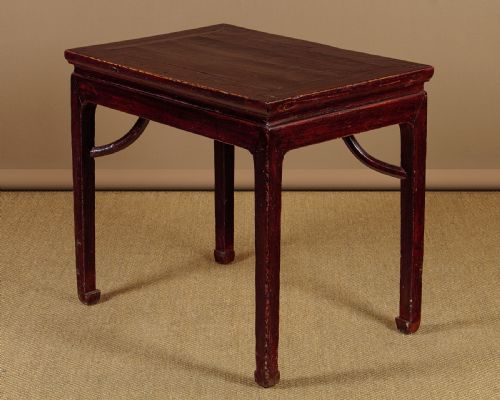

Traditional Chinese Hardwood Stool
These traditional chinese hardwood stool examples offer solid joinery and rich grain, built to anchor a room with quiet presence.
Traditional Chinese Hardwood Stool
A traditional chinese hardwood stool is a seating form built from dense timber, appearing alongside benches, plant stands, side tables, and occasional tables. The pieces on this page span the nineteenth century up to nineteen twenty, taking in provincial items and finer Qing dynasty examples.
Makers shaped these items for practical daily use in regional and traditional Chinese settings. Forms include barrel stools, low tables, and sturdy seats fashioned from elm, teak, and hongmu.
The aesthetic leans towards rustic utility or refined regional carving. Buyers find matched pairs alongside singular benches, offering versatile options for seating and display.
How they were made
Carpenters utilised dense hardwoods, elm, and hongmu, often incorporating burr wood and teak panels. These timbers provided the structural strength needed for heavy daily use without complex metal hardware.
Surface treatments include traditional lacquer, while decorative details sometimes feature mother-of-pearl inlay or inset marble. Carved elements draw on Chinese Qing dynasty traditions and rustic regional motifs.
Traditional Chinese Hardwood Stool Retail Price Guide 2026
Typical asking prices for traditional chinese hardwood stool among the pieces listed under this phrase on Sellingantiques today, from the lower quarter to the upper quarter. They describe what is for sale here now, not the wider market.
Current listings span the nineteenth century to nineteen twenty, featuring materials such as elm, hongmu, burr wood, marble, and mother-of-pearl.
What varies in quality
The standard of timber selection and joinery separates basic regional items from finer workshop pieces. Dense hongmu and figured burr wood exhibit superior grain depth and stability compared to simpler utility elm.
Carving depth and crispness define the upper tier of the range. Subtle details in the joinery and the preservation of original lacquer or surface patination indicate careful historical upkeep.
The Traditional Chinese Hardwood Stool Glossary
- Hongmu
- A dense tropical hardwood prized in Chinese furniture making for its deep colour and heavy weight. It is often translated simply as red wood.
- Burr wood
- Timber featuring distorted grain patterns that create decorative swirling figures. Makers used it for contrasting panels on stools and tables.
- Qing dynasty
- The final imperial dynasty of China, lasting from sixteen forty-four to nineteen twelve. Pieces from this era display traditional regional and court styles.
- Elm
- A resilient domestic timber utilised widely in Chinese provincial cabinetmaking. It offers a distinct grain and sturdy performance for seating.
- Mother-of-pearl
- An iridescent inner shell layer applied as inlay to decorate furniture surfaces. It creates bright contrast against dark hardwood.
Traditional Chinese Hardwood Stool: Frequently Asked Questions
How were these stools used?
These pieces served primary functions for seating, resting feet, or supporting objects within the home. Their sturdy construction allowed them to handle heavy daily loads in domestic spaces.
Over time, many adapted to secondary roles as plant stands, low display tables, or occasional accent pieces in varied interior settings.
How do I care for hardwood?
Maintain the timber by keeping pieces away from direct heat sources and sudden humidity shifts. Regular dusting with a dry cloth preserves the natural surface.
Avoid harsh chemical cleaning agents that strip historical finishes. Occasional gentle waxing helps protect the grain of older hardwoods.
Are pairs common?
Matched pairs appear frequently among the listings, particularly for plant stands and occasional tables. These sets offer balanced display options for interior schemes.
Single stools and benches also feature strongly, each standing alone as distinct functional objects.