

Traditional Button Sofa
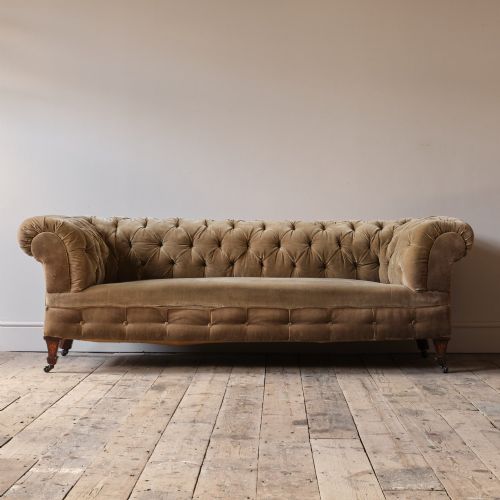
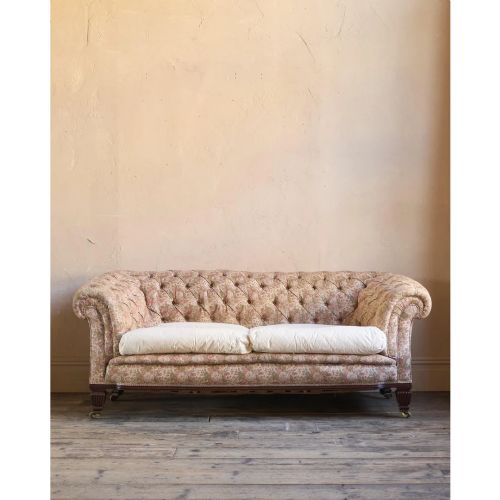
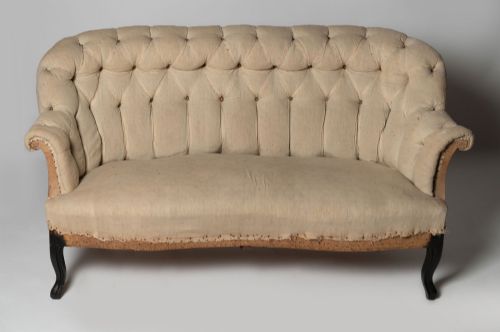
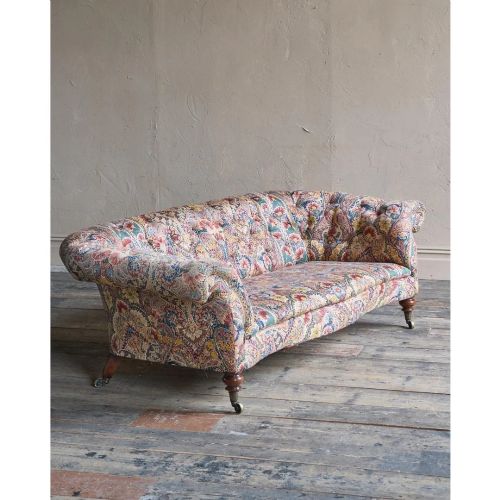
A traditional button sofa brings deep tufting and substantial proportions into a room, offering the classic lines of nineteenth-century seating.
Traditional Button Sofa
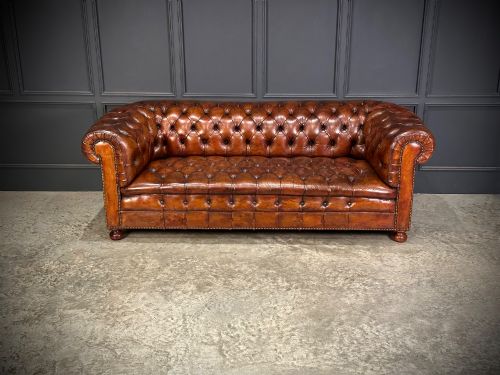
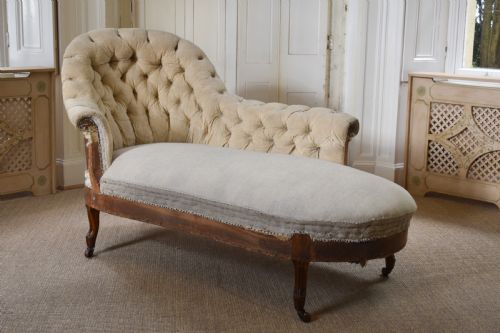
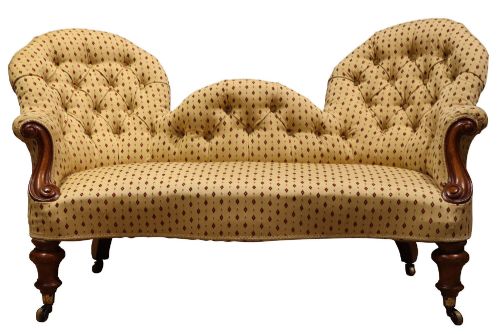
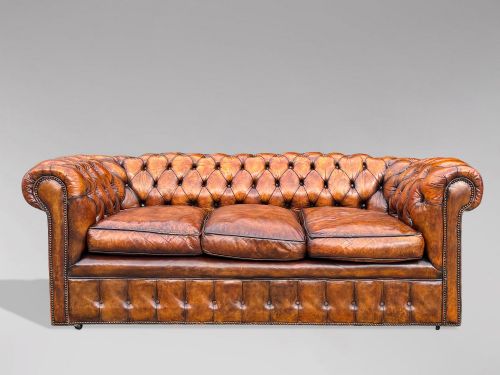
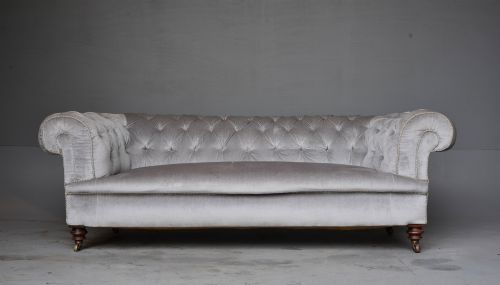
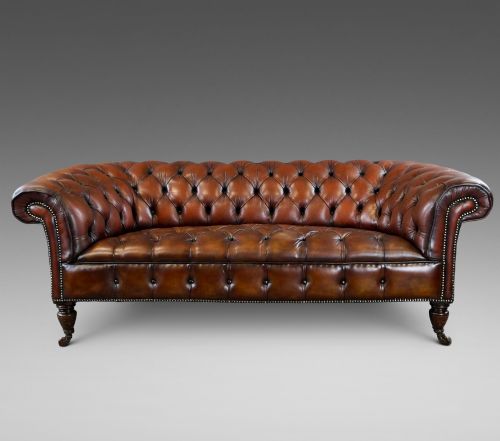
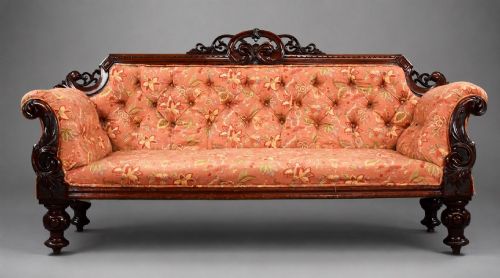
A traditional button sofa encompasses forms such as the deep-seated Chesterfield, the chaise longue, and the sprung settee, originating primarily from the nineteenth century through to the early decades of the twentieth century. Buyers seeking this phrase encounter Victorian leathers alongside mahogany-framed daybeds and upholstered salon seating.
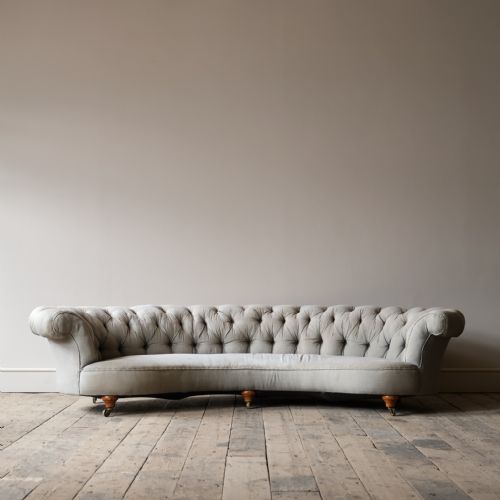
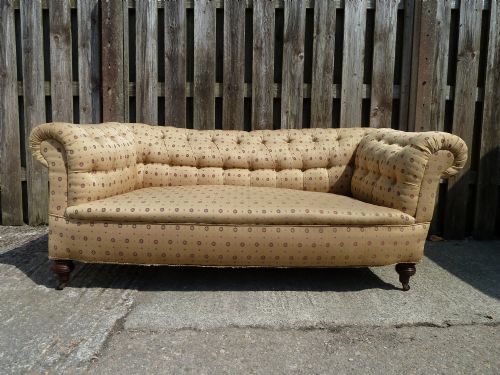
The nineteenth-century pieces dominate the selection, spanning styles from Victorian and Regency to Edwardian and 1930s British designs. These seating options range from compact two-seater settees to wide multi-seat chesterfields and curved crescent configurations.
Materials and Construction
Construction relies upon sturdy internal frames shaped from hardwood and mahogany, supporting traditional sprung bases and horsehair filling. Deep buttoning secures the upholstery through the padding to form the characteristic tufted surface.
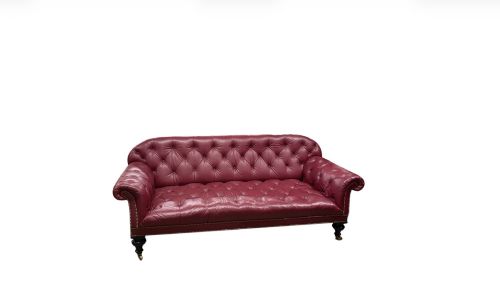
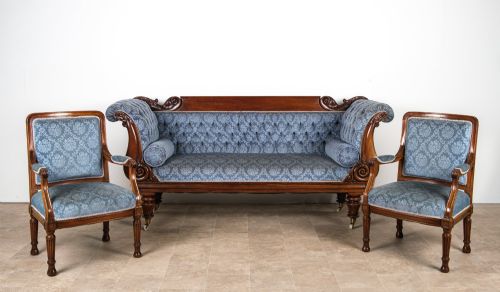
Outer coverings utilise durable leather, which appears frequently in hand-dyed whiskey brown and raw finishes, alongside soft fabrics such as burgundy deep pile brocade and velvet trimmed with tassels. Brass detailing and exposed carved timber frames appear on specific chaise longues and settees.
Traditional Button Sofa Retail Price Guide 2026
Typical asking prices for traditional button sofa among the pieces listed under this phrase on Sellingantiques today, from the lower quarter to the upper quarter. They describe what is for sale here now, not the wider market.
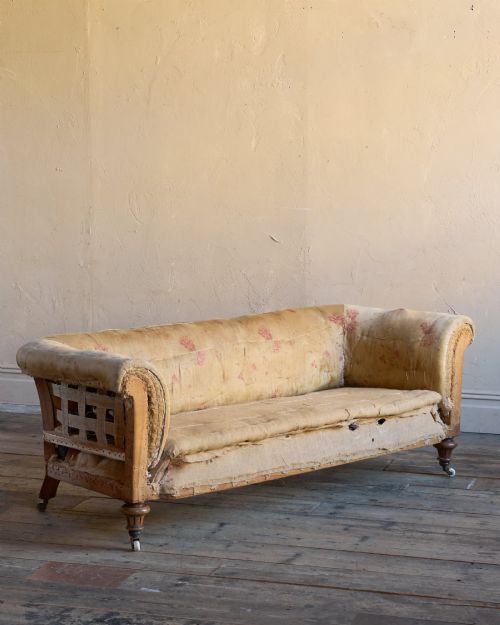
Some nineteenth-century chaises arrive ready for a new life, having spent generations quietly supporting afternoon readers before heading to the workshop.
Assessing Quality
The standard of a traditional button sofa rests upon the integrity of its internal stuffing and the precision of the deep tufting. Pieces retaining original horsehair filling and sound coil springing demonstrate superior foundational craftsmanship compared to later alterations.
Timber frames show variation in the depth of carving and the selection of cabinet woods like mahogany and rosewood. The choice between raw leather prepared for custom dyeing and patinated nineteenth-century hide alters the tactile character of the piece.
Howard and Sons·Jas Shoolbred·Hampton and Sons of Pall Mall
The Traditional Button Sofa Glossary
- Chesterfield
- A large upholstered sofa characterised by arms and back of the same height, featuring deep button tufting. This form remains a staple of nineteenth-century seating design.
- Chaise Longue
- An elongated upholstered chair designed for reclining, often featuring a single raised end and an exposed wooden frame. Examples appear in mahogany and rosewood from the Victorian period.
- Horsehair Gilled
- The traditional use of processed equine hair as internal padding for upholstery. This material provides firm, resilient support beneath the leather or fabric cover.
- Brocade
- A rich shuttle-woven fabric featuring raised patterns, often utilised in deep pile variations for reupholstered nineteenth-century settees.
Traditional Button Sofa: Frequently Asked Questions
How do I identify a Victorian chesterfield?
Look for heavy timber framing, traditional horsehair stuffing, and deep buttoning executed in genuine leather.
Examine the proportions and the wear patterns on the hide to gauge the age of the piece.
Are these sofas suitable for daily use?
Traditional button sofas constructed with hardwood frames and coil springs offer robust support for everyday seating.
Condition varies depending on whether the piece retains its original upholstery or has undergone restoration.
How should I care for antique leather?
Maintain antique leather by applying appropriate conditioners that prevent the hide from drying out over time.
Avoid placing the sofa near direct heat sources or strong sunlight to preserve the hand-dyed colour.