

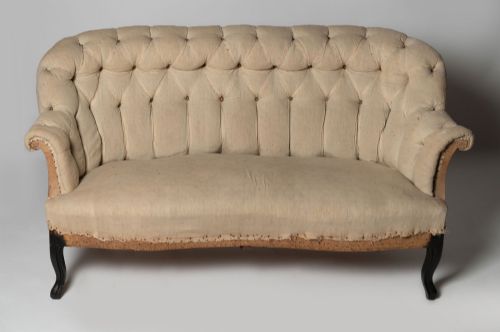
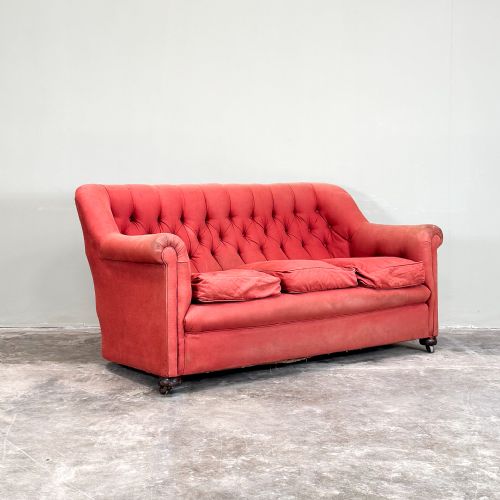


Traditional Button Back Settee
A traditional button back settee brings deep-buttoned upholstery and substantial proportions to a room, offering both comfort and historical character.
Traditional Button Back Settee
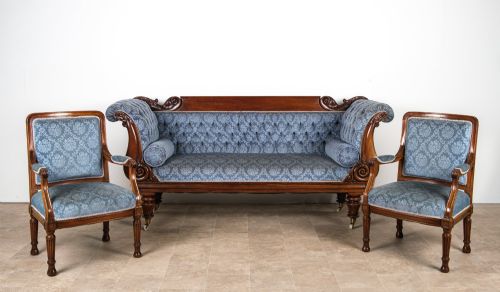
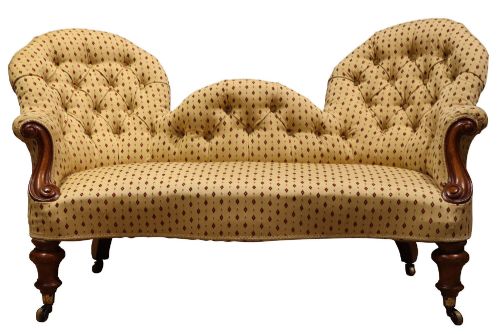
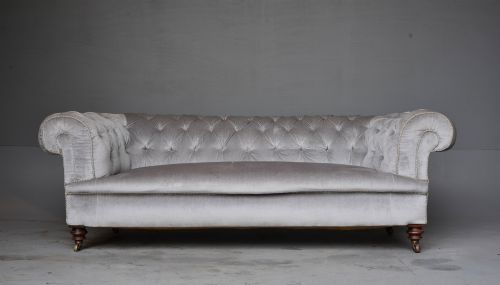
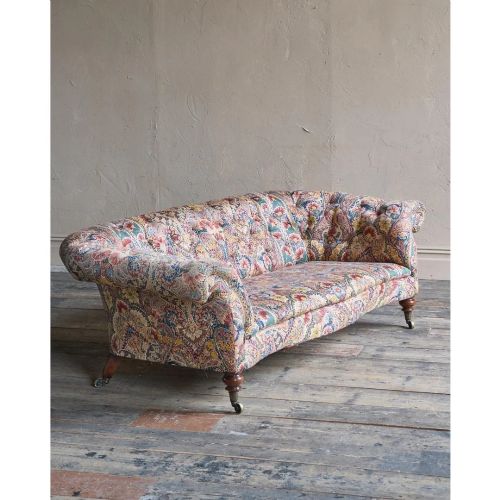
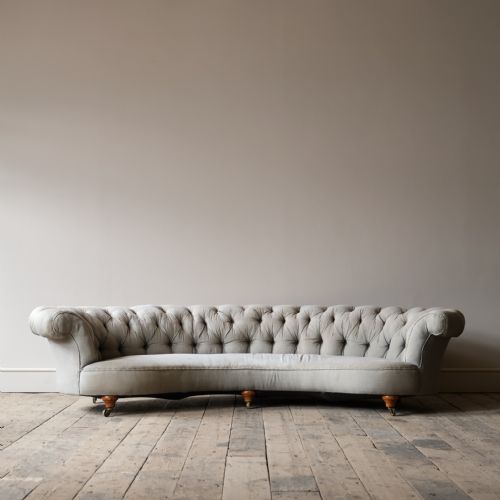
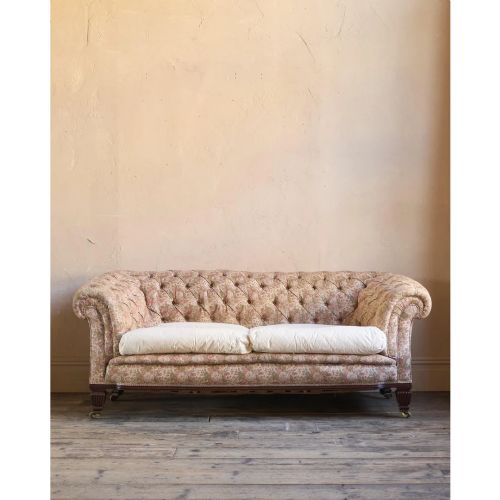
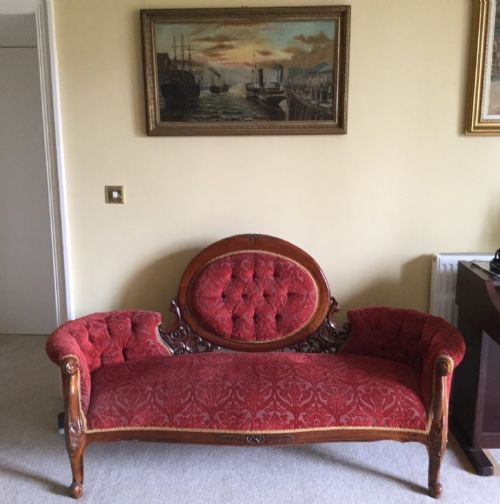
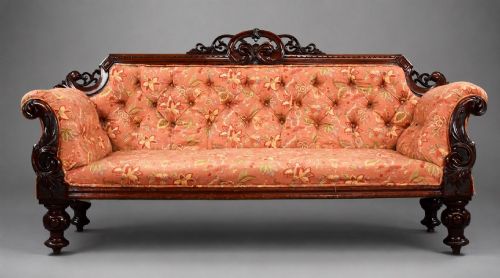
A traditional button back settee encompasses low-slung Chesterfields, double-ended sofas, and salon suites originating from Victorian, Edwardian, and mid-twentieth-century periods. These seating pieces span forms such as serpentine fronts, open arm designs, and large library or bedroom sofas.
The prevailing examples on this page date from the nineteenth century onward, constructed in mahogany, walnut, and hardwood frames. Upholstery choices range from raw and hand-dyed leathers to velvet, brocade, and fabric coverings with traditional sprung bases.
Materials and construction
Upholstery relies on traditional techniques incorporating deep buttoning, coiled sprung bases, and brass details. Coverings utilise heavy textiles like velvet, brocade, and thick leather hides, frequently secured with individual tacks.
Traditional Button Back Settee Retail Price Guide 2026
Typical asking prices for traditional button back settee among the pieces listed under this phrase on Sellingantiques today, from the lower quarter to the upper quarter. They describe what is for sale here now, not the wider market.
Listings feature Victorian, Edwardian, and 1930s periods, utilising materials such as mahogany, walnut, brass, leather, velvet, and hardwood.
Judging quality and integrity
Quality rests in the original integrity of the timber frame and the depth of the sprung base. Pieces retaining untouched early leathers or traditional hair-stuffing differ significantly from those requiring modern re-webbing and total re-upholstering.
Refinement shows in the precision of the deep-button tufting and the harmony of carved wooden elements. Maker attribution through stamped frames or firm signatures elevates specific pieces above standard workshop productions.
Howard and Sons·Hampton and Sons of Pall Mall·Gillows
The Traditional Button Back Settee Glossary
- Chesterfield
- A deep-buttoned sofa characterised by arms and back of the same height. This form remains a staple of nineteenth-century seating.
- Double-ended settee
- A sofa featuring two raised scroll ends rather than a distinct back and single arm arrangement. These allow seating from either direction.
- Brocade
- A heavy woven fabric often featuring raised patterns in silk, metallic threads, or thick pile. It frequently appears on Victorian salon furniture.
- Serpentine front
- A furniture front curving inward centrally and outward at the ends in a gentle 'S' shape. This profile adds visual movement to heavy settee bases.
- Sprung settee base
- An internal arrangement of coiled metal springs beneath the cushions. This system provides structural support and resilient seating comfort.
Traditional Button Back Settee: Frequently Asked Questions
How do I identify a Victorian Chesterfield?
Victorian Chesterfields display characteristic deep-buttoned upholstery across the back and arms, often paired with turned wooden legs and brass castors. The framing underneath utilises solid timber construction typical of nineteenth-century cabinet making.
Examining the underside reveals webbing, hessian, and traditional stuffing materials rather than modern synthetic foams. Leather examples from this era typically show heavy grain textures and natural patination developed over decades of use.
How should I care for an antique leather sofa?
Antique leather requires consistent conditioning to maintain flexibility and prevent the material from drying out. Avoid placing the settee near direct heat sources or strong sunlight, which causes fading and cracking.
Regular dusting with a soft cloth keeps abrasive particles away from the surface. Professional leather balms help preserve hand-dyed finishes and raw leather patinas without altering the historic character.
Can I reupholster a button back settee?
Reupholstering a button back settee is entirely possible, though the process demands specialised skill due to the complex diamond tufting. Many examples arrive on the market ready for restoration or stripping back to the frame.
Retaining traditional hair-stuffing and sprung bases during reupholstery preserves the correct sit and profile of the piece. Selecting appropriate fabrics like heavy leather, velvet, or brocade maintains stylistic harmony with the original period.