



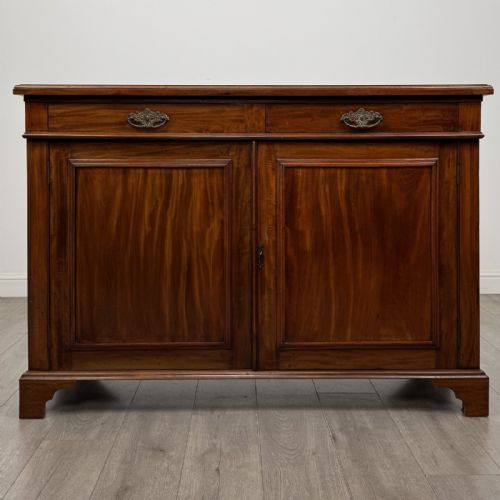
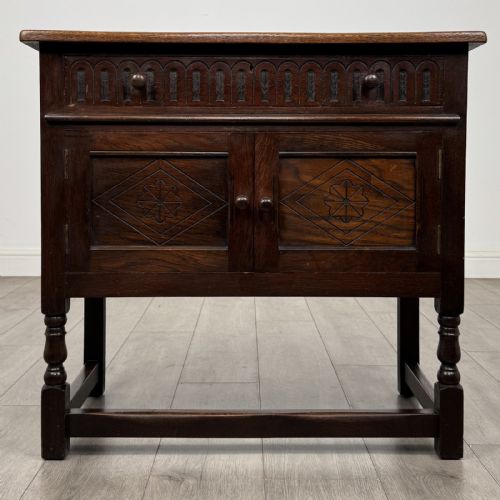
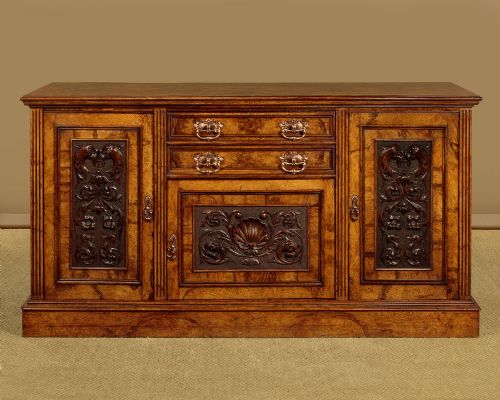
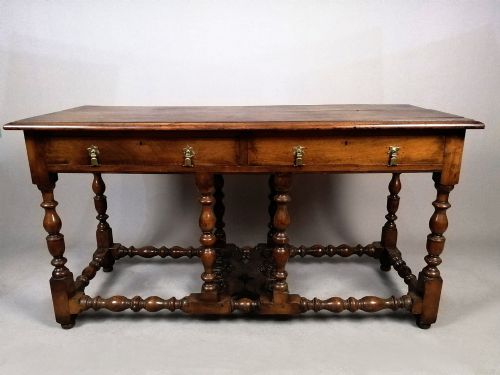
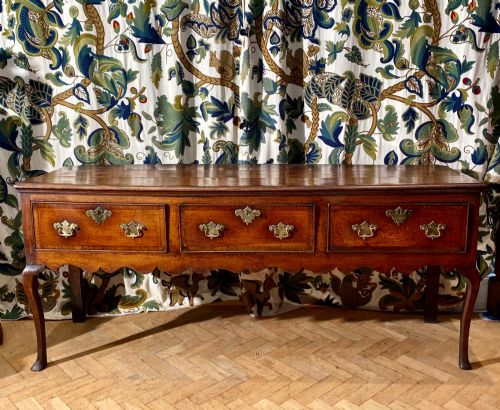
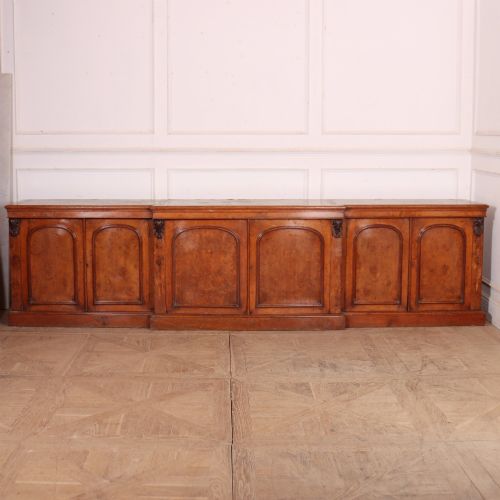
Traditional Brown Credenza
A traditional brown credenza gathers the gravitas of past centuries into sideboards, dressers, and storage cabinets crafted from timber.
Traditional Brown Credenza
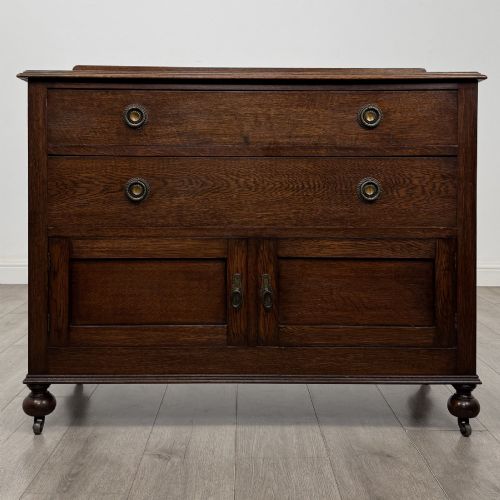
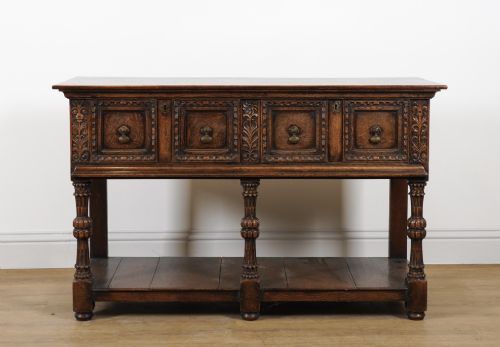
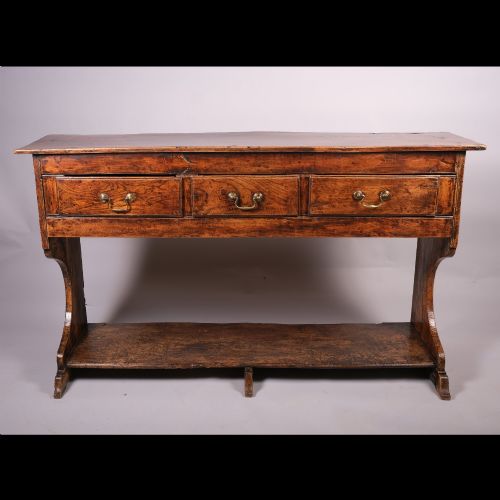
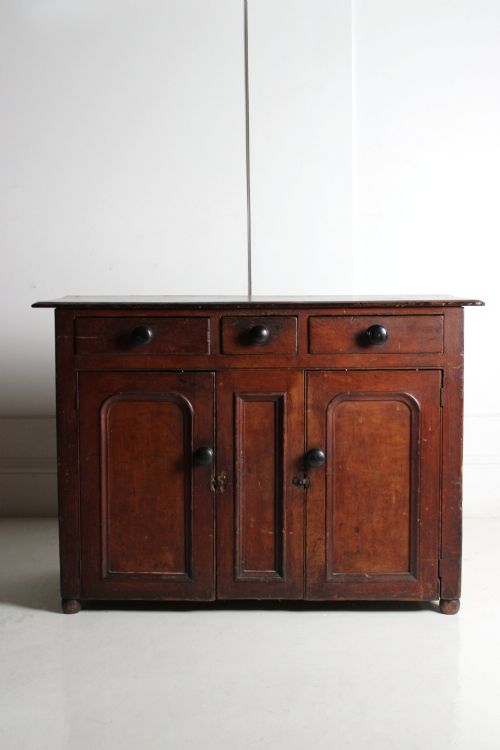
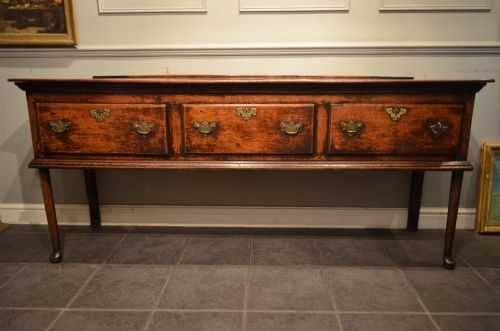
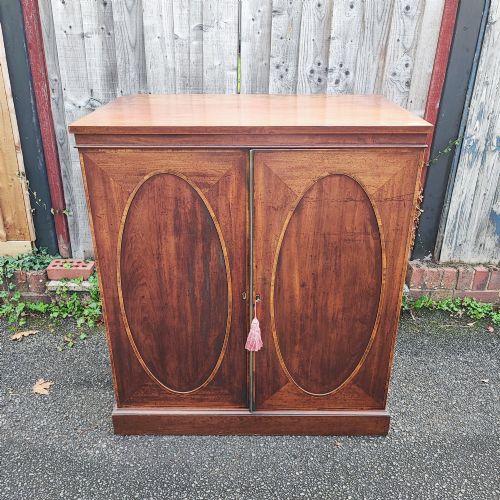
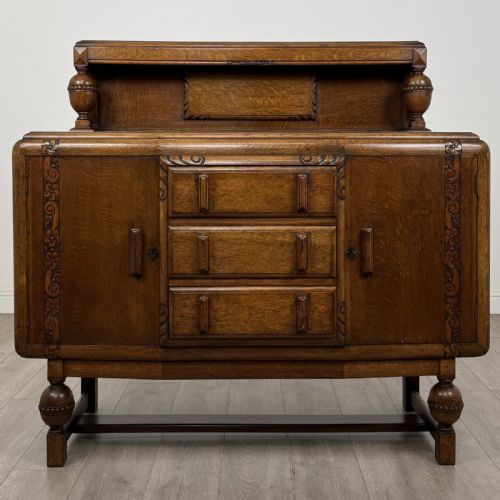
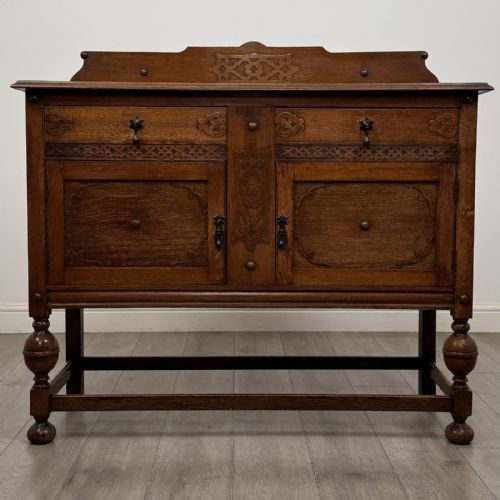
A traditional brown credenza encompasses sturdy timber storage pieces, primarily appearing on this page as sideboards, dresser bases, and large cupboards. These forms serve dining rooms and hallways, providing surface space above enclosed compartments for crockery and linens.
Most examples originate from the eighteenth and nineteenth centuries, spanning Georgian, Victorian, and Edwardian eras. Buyers frequently encounter oak and mahogany variants, alongside regional expressions such as Lancashire dresser bases and Welsh formats.
Makers historically built these items for domestic utility, resulting in configurations featuring drawers, fielded panel doors, and pot boards. The aesthetic leans heavily toward traditional styles like Jacobean Revival, Queen Anne, and Regency.
How they were made
Carpenters relied on dense hardwoods including oak, mahogany, walnut, and elm for structural integrity and longevity. Secondary timbers like pine appear internally, while metal hardware such as brass face handles and iron fittings secure doors and drawers.
Construction techniques involve pegged joints, carved detailing, and inlaid decoration on select surfaces like bow fronts. Drawers utilise hand-cut joinery, and panels are often fielded to allow timber to expand and contract naturally without splitting.
Traditional Brown Credenza Retail Price Guide 2026
Typical asking prices for traditional brown credenza among the pieces listed under this phrase on Sellingantiques today, from the lower quarter to the upper quarter. They describe what is for sale here now, not the wider market.
Listings feature pieces spanning the Georgian, Victorian, and Edwardian eras, constructed from oak, mahogany, walnut, elm, and pine.
What varies in quality
The grading of these storage pieces depends heavily on the selection of timber, such as figured walnut, pollard oak, or flame mahogany, which exhibits superior grain pattern and depth. Master cabinetmakers employed precise proportions and clean execution in carved motifs and inlaid details.
Structural honesty and the retention of original brass or iron hardware elevate an example above standard utility pieces. Alterations to drawer configurations or replaced timber lower the standing of an item within its period.
The Traditional Brown Credenza Glossary
- Dresser base
- A low wooden storage unit featuring drawers and cupboards beneath a flat top, historically used in kitchens and dining rooms.
- Fielded panel
- A wooden panel with bevelled edges set into a frame, designed to reduce weight and accommodate seasonal timber movement.
- Pot board
- An open lower shelf fitted beneath a dresser base, traditionally utilised for storing heavy pots and ceramic vessels.
- Serpentine sideboard
- A storage unit characterised by a gently undulating front facade with a convex centre flanked by concave curves.
Traditional Brown Credenza: Frequently Asked Questions
Where should I place a traditional brown credenza?
These storage units suit dining rooms, long hallways, or living spaces where surface area and enclosed storage are required. Their substantial depth means measuring clearance pathways is essential before placement.
Position them against blank walls away from direct heat sources to protect timber surfaces from drying out. Pairing them with wall-hung art or mirrors balances their visual weight in a room.
How do I care for antique timber furniture?
Maintain the wood by applying traditional beeswax periodically to nourish the grain and preserve the finish. Avoid commercial silicone sprays that build up and attract dust over time.
Keep pieces out of direct sunlight to prevent fading of mahogany and walnut tones. Maintain stable indoor humidity levels to stop solid timber panels from cracking.
How can I identify Georgian furniture periods?
Georgian pieces generally display restrained classical proportions, premium mahogany or oak construction, and subtle carved details. Bracket feet or tapering legs are common structural characteristics of this era.
Later Victorian and Edwardian interpretations often introduce heavier carving, revival styles, or machine-assisted joinery. Examining the interior secondary woods and backboards helps confirm the age of the piece.