




Traditional Brass Pull
These traditional brass pull items are solid metal hardware and mechanisms spanning Victorian, Georgian, Regency, and Edwardian periods.
Traditional Brass Pull
When you search for traditional brass pull, you encounter functional antique hardware and fittings designed for doors, bells, and desks. These pieces originate from Georgian, Regency, Victorian, and Edwardian eras.
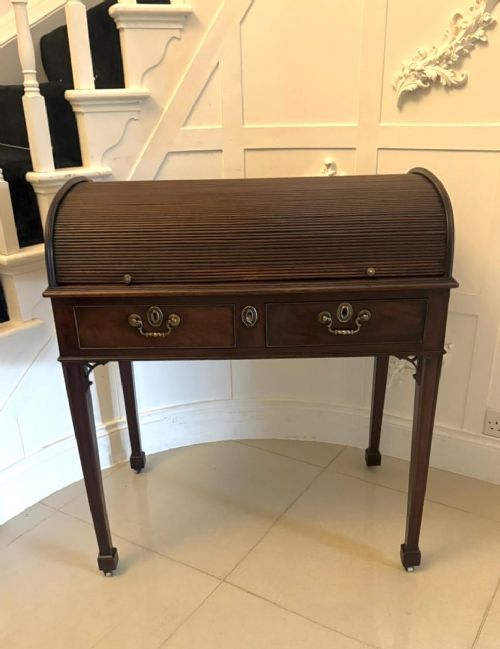
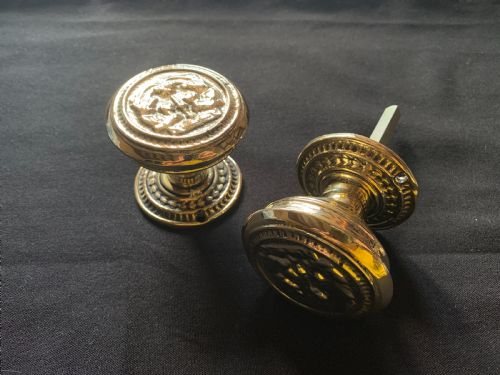
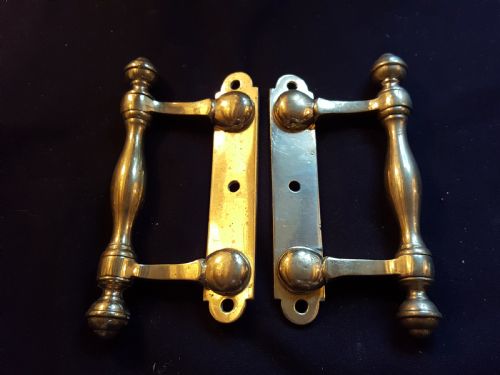
The selection on this page centres predominantly upon brass door knobs, bell pulls, door pull handles, and sash lifts. Alongside these hardware items, the listings include period desks and bracket clocks featuring pull mechanisms.
Most items are forged or cast in solid brass, though bronze variants also appear. Each piece reflects the domestic utility of its respective period, whether mounted on a front door or fitted to furniture.
How traditional brass pull items were made
The primary material across the listings is brass, frequently utilised in solid form for door furniture and bell pulls. Bronze and steel also appear in certain Edwardian hardware and clock mechanisms.
Manufacturing methods rely on traditional casting and forging techniques suited to durable metal hardware. Wood elements such as mahogany appear in associated desk pieces rather than the pulls themselves.
Some Victorian doors required visitors to pull a brass handle connected to a bell, announcing callers with a satisfying mechanical clatter.
What varies in quality
Quality in these pieces rests upon the crispness of the casting and the integrity of the metalwork. Plain brass surfaces contrast with shaped designs like bee hive or octagonal forms, where precision in turning or moulding defines the standard.
Substantial weight and solid brass construction indicate superior execution compared to lighter or later reproductions. The preservation of original mounting plates and functional mechanisms further distinguishes finer examples.
The Traditional Brass Pull Glossary
- Centre Door Knob
- A heavy door knob mounted in the middle of an exterior door rather than the edge, primarily used for pulling the door closed.
- Bell Pull
- A mechanical handle connected to an interior bell system by wire or chain, commonly found in Georgian and Victorian hallway settings.
- Sash Lift
- A small metal handle attached to the bottom rail of a window sash to assist with raising and lowering the glass frame.
- Fusee Chain
- A fine steel chain used within bracket clocks to equalise the pull of the mainspring as it winds down.
- Tambour Top
- A flexible rolling shutter made of narrow slats of wood, used on cylinder desks alongside pull-out writing slides.
Traditional Brass Pull: Frequently Asked Questions
How do I date a brass door knob?
Dating relies upon the fastening methods, screw types, and overall silhouette associated with periods like Georgian or Victorian.
Heavier cast brass and specific geometric forms such as octagonal or bee hive patterns offer clear chronological markers.
Were these pulls used indoors or outside?
Both locations were common depending on the specific object type and architectural context of the house.
Centre door knobs and bell pulls served exterior entryways, while sash lifts operated interior windows.
What is the difference between a bell pull and a door pull?
A bell pull connects to an internal summoning mechanism via wire, whereas a door pull simply assists in drawing a heavy door shut.
Bell pulls often feature long backplates or vertical lever designs.
How should I clean antique brass?
Gentle wiping with a soft cloth preserves the natural aged patina accumulated over the Victorian and Georgian eras.
Avoid aggressive metal polishes that strip away historical surface character.