



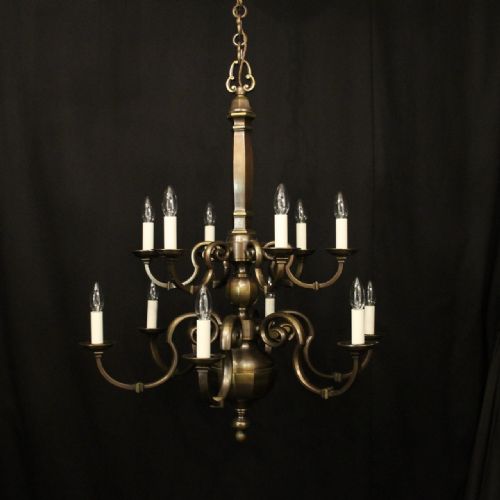
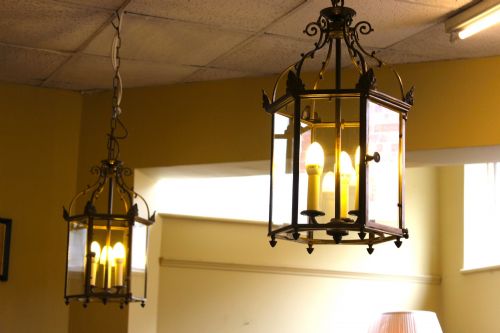
Traditional Brass Hanging Lamp
A traditional brass hanging lamp brings heavy metalwork and clear glass into a hallway or reception room.
Traditional Brass Hanging Lamp
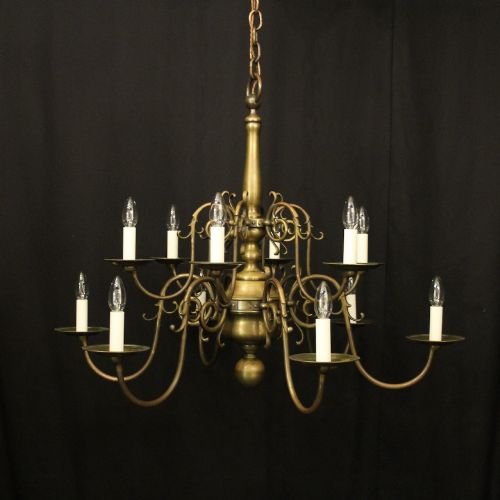
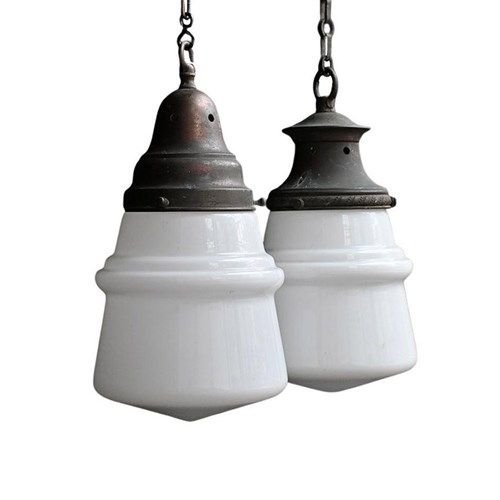
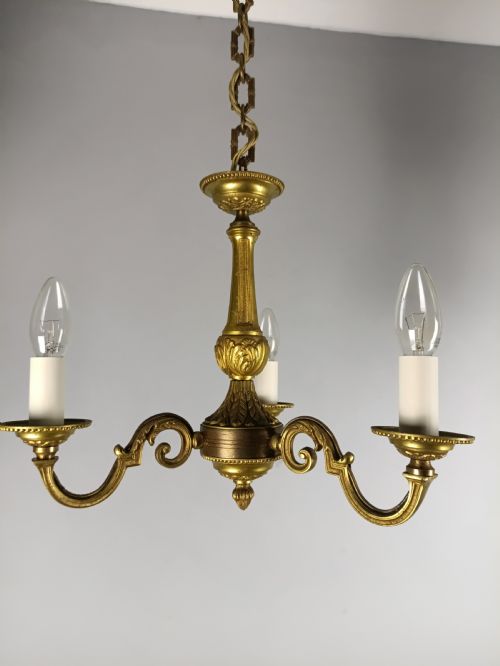
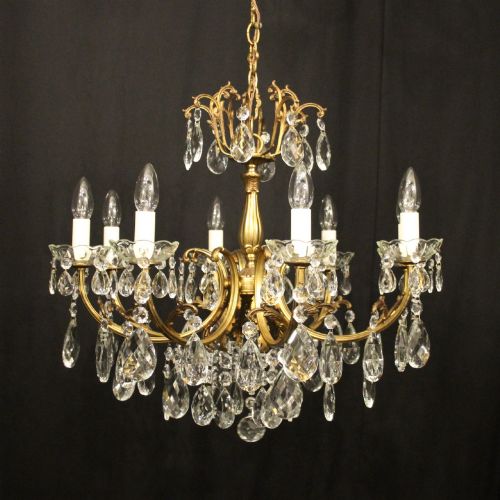
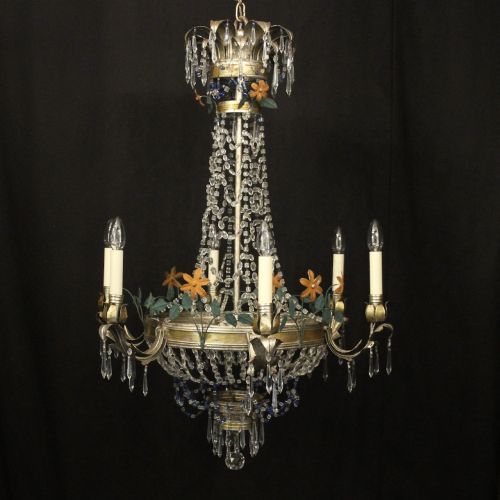
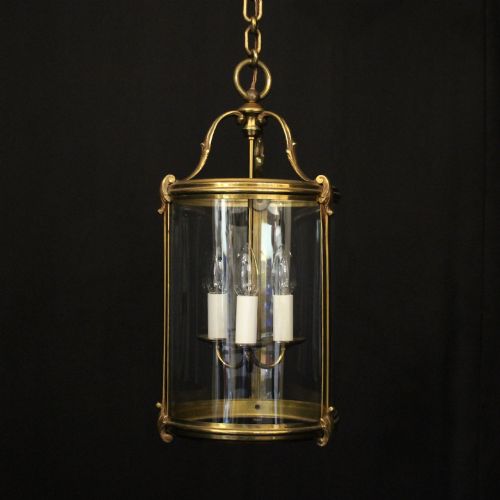
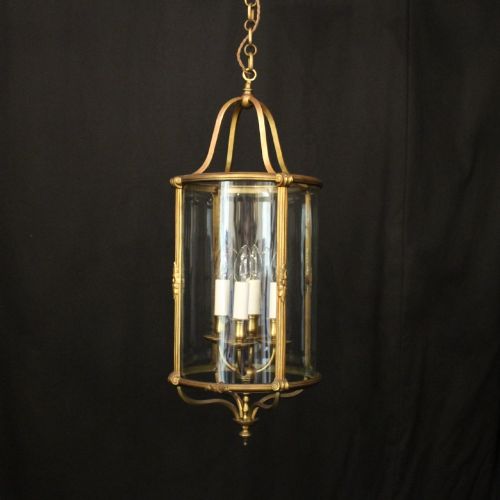
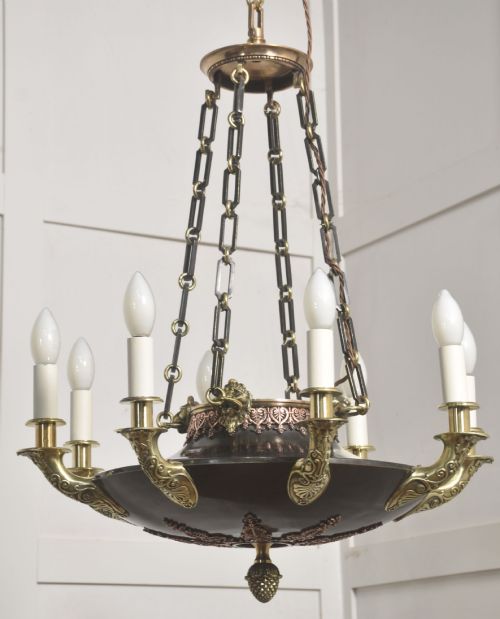
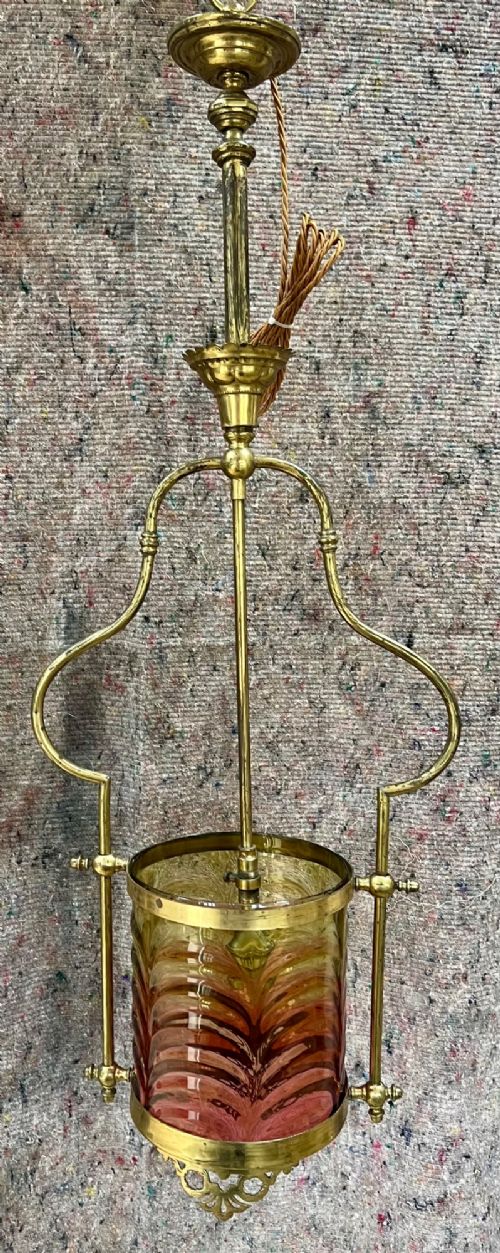
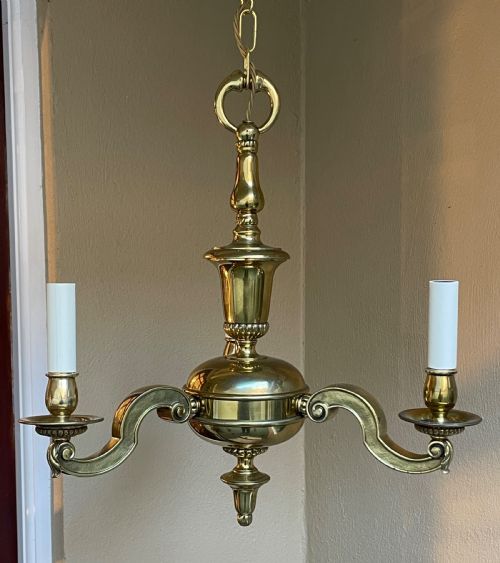
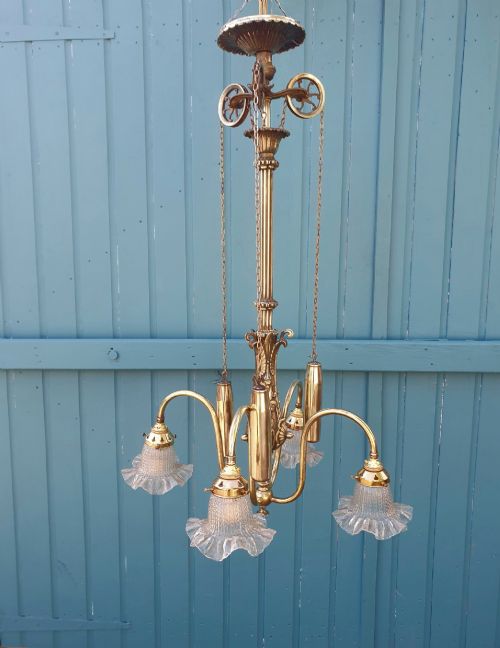
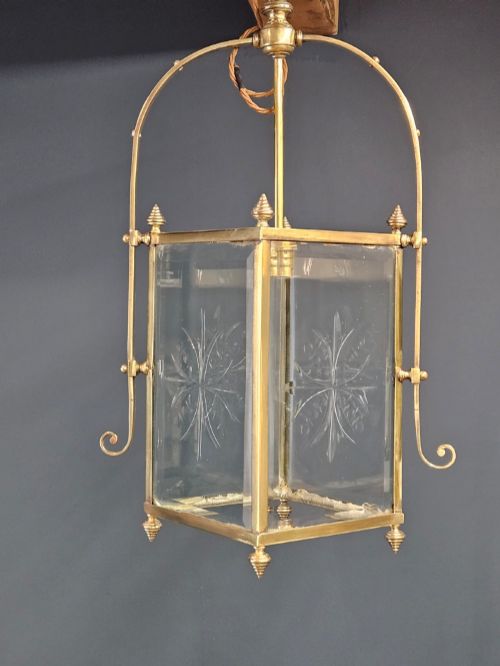
When you search for a traditional brass hanging lamp, you encounter multi-branch chandeliers, hall lanterns and ceiling pendants spanning from the Victorian era through the Edwardian period and into the nineteen-twenties. These fittings originate from English, French and Dutch workshops, taking the form of heavy cast chandeliers or glazed hexagonal and convex lanterns designed to light large rooms and corridors.
The most common versions on this page are Edwardian hall lanterns and nineteen-twenties French gilded bronze or brass chandeliers set with crystal drops. You also meet industrial billiard lights, Dutch-style copper and brass multi-arm fixtures, and specialised pieces such as Sabbath lamps.
Dating ranges from the late nineteenth century to nineteen-thirty, with heavy representation from the nineteen-tens and nineteen-twenties. Styles lean towards Empire Revival, French Rococo, Neoclassical and Arts and Crafts, reflecting the decorative tastes of those decades.
Gradations in manufacture
Quality separates by the crispness of metal casting and the depth of surface finishing, where finely chased acanthus leaf mounts and heavy bronze or gilt brass frames outrank simpler pressed sheet metal. Superior examples display dense hand-chiselling on the bronze and robust structural gauge.
The complexity and cut of the glass elements dictate the upper tier, with heavy cut glass, leaded crystal drops and convex bent glass panes marking better work. Simpler pieces rely on plain blown or flat glass panels.
Provenance and attribution to known makers elevate certain pieces, alongside the original integrity of the gilding and the weight of the cast bronze armature.
Traditional Brass Hanging Lamp Retail Price Guide 2026
Typical asking prices for traditional brass hanging lamp among the pieces listed under this phrase on Sellingantiques today, from the lower quarter to the upper quarter. They describe what is for sale here now, not the wider market.
Object forms include multi-branch chandeliers, convex hall lanterns, billiard lights, and specialised Sabbath lamps.
G.E.C
The Traditional Brass Hanging Lamp Glossary
- Plafonnier
- A ceiling-mounted light fixture that sits flush or very close to the ceiling surface rather than hanging on a long suspension chain. These often feature cut glass bowls or bowls enclosed in brass frames.
- Billiard light
- An elongated multi-branch hanging fixture originally designed to illuminate a billiard table evenly across its playing surface. They typically feature several shades or burners arranged in a straight line.
- Convex lantern
- A hanging light enclosed by outward-curving glass panels that swell from the metal frame. This curved glass diffuses light broadly across an entrance hall.
- Gilt bronze
- Bronze metal that has been coated with a thin layer of gold or gold-coloured alloy to give a rich metallic sheen. It is frequently found on French revival chandeliers.
- Acanthus leaf
- A classical ornament carved or cast in metal to resemble the lobed leaves of the acanthus plant. It is widely used as a decorative motif on the mounts of twentieth-century chandeliers.
Traditional Brass Hanging Lamp: Frequently Asked Questions
Where should I hang a brass hall lantern?
Brass hall lanterns suit entrance hallways, vestibules and high-ceilinged corridors where their enclosed glass panels and metal frames can be viewed from below. They provide focused overhead illumination for transitional spaces.
Ensure you measure the drop height against your ceiling clearance so the fixture clears head height while remaining a central focal point in the room.
How do I date an antique brass chandelier?
Dating relies on examining the casting techniques, mounting styles, and wiring methods used in the fixture. Heavier cast bronze frames with acanthus leaf mounts often point to the Edwardian period or the nineteen-twenties, while simpler turned brass stems can indicate late nineteenth-century manufacture.
Look for style indicators such as Empire Revival or Arts and Crafts motifs, which help narrow down the decade of production.
Are these old brass lamps rewired for modern use?
Many vintage and antique lighting fixtures are updated with modern electrical wiring to meet safety standards while retaining their original metal and glass bodies. Rewiring ensures the internal components can safely handle contemporary bulb wattages.
Check individual listings to confirm whether the fitting has been modernised or retains its historic wiring setup.