




Traditional Brass Fire Screen
These traditional brass fire screen pieces protect a room from stray sparks while adding a refined metallic lustre to the hearth.
Traditional Brass Fire Screen
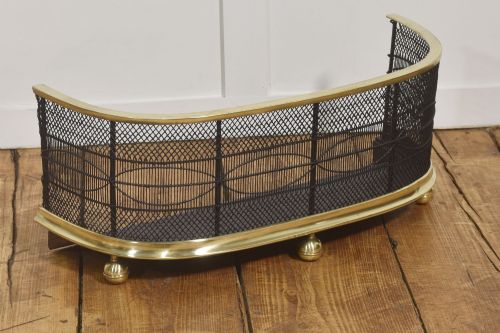
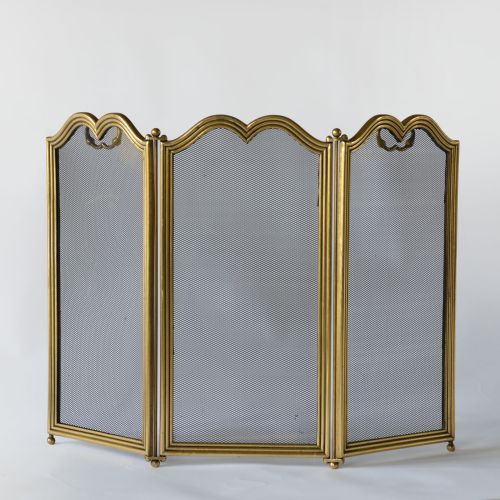
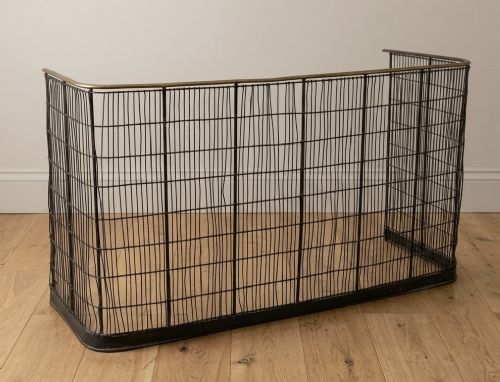
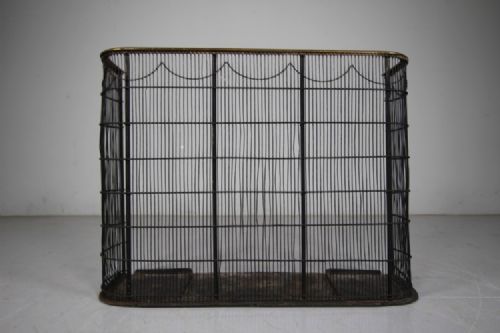
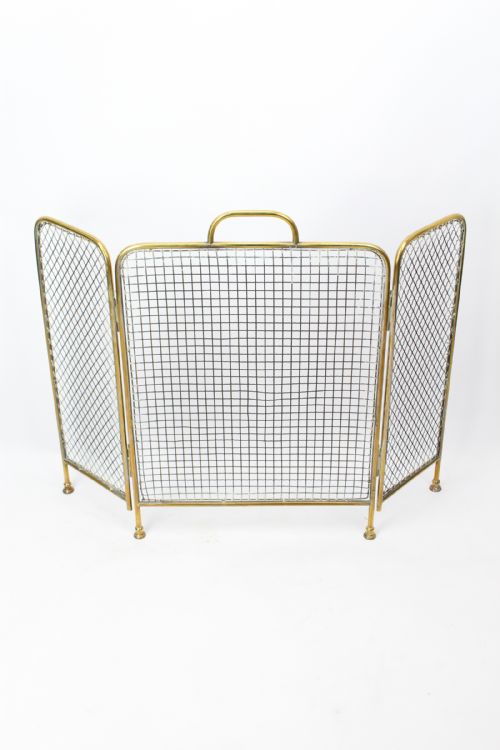
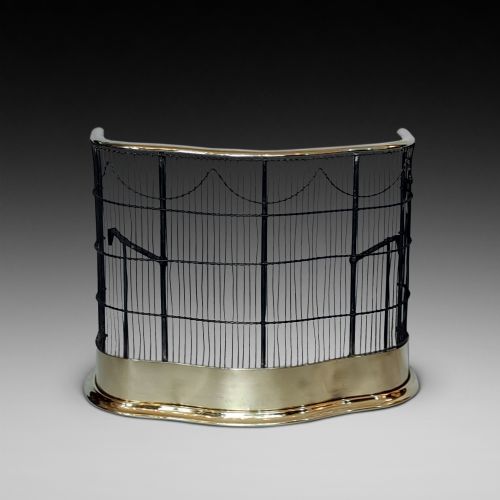
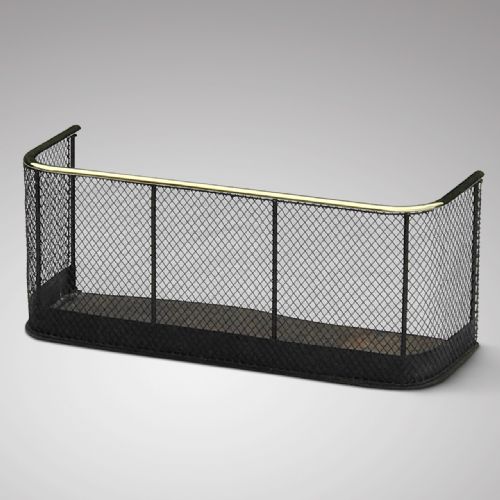
A traditional brass fire screen serves as a protective barrier before an active fireplace, combining structural metal framing with fine mesh panels. These hearth accessories appear across the Victorian, Edwardian, and Regency periods, spanning the nineteenth century into the early twentieth century. Buyers encounter folding tripartite designs, demi-lune shapes, and large nursery fenders fitted with brass top rails.
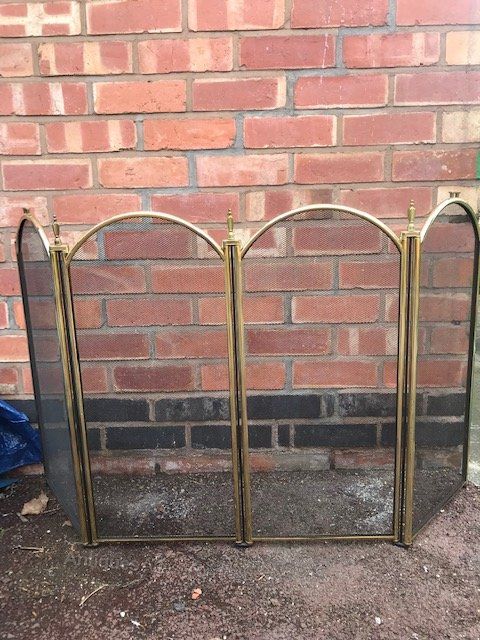
The most common formats on this page utilise bright brass frames paired with wire mesh or woven iron wire to catch stray embers. Many examples incorporate folding sections or gate-fronted mechanisms to adjust around the hearth aperture. Iron and copper elements frequently appear alongside the dominant brass construction to provide additional stability.
Makers designed these screens to balance domestic safety with the decorative standards of period interiors. Whether listed as a spark guard or a nursery fender, each piece reflects the practical demands of nineteenth- and twentieth-century coal or wood fires. The surviving forms range from simple wirework guards to elaborate serpentine screens with polished brass rims.
How traditional brass fire screen pieces were made
Craftsmen built these guards using solid brass framing combined with woven iron wire or fine wire mesh to contain sparks without blocking the warmth of the fire. The metal frames were often shaped into serpentine, demi-lune, or multi-folding sections through careful bending and jointing techniques. Iron and steel components provided hidden structural reinforcement beneath the decorative brass surfaces.
Finishing methods varied from polished brass rims and top rails to black-finished iron bodies contrasted with warm copper or brass accents. Hinges on folding screens and nursery fenders required sturdy pinned joints to withstand daily adjustment around the hearth. Wire mesh was securely fastened into the metal channels to ensure durability under intense heat.
Listings feature Victorian, Edwardian, and Regency periods, constructed from brass, iron, wire mesh, steel, and copper.
What varies in quality
Quality in a traditional brass fire screen lies in the substantial gauge of the brass framework and the tightness of the wire mesh weave. Finer examples display clean, crisp angles on serpentine or demi-lune frames and robust hinges that maintain alignment through repeated folding. Lesser pieces rely on lighter wire and simpler soldered joints that show fatigue more readily.
The sophistication of the metalwork distinguishes standard utility guards from more ornamental parlour pieces. Superior items feature well-finished brass top rails, neatly fitted wirework, and stable multi-section designs that stand firmly without listing. The integration of complementary materials like copper or wrought iron further indicates the original maker's ambition.
The Traditional Brass Fire Screen Glossary
- Spark guard
- A fine wire mesh screen designed specifically to catch flying embers from an open fire. These protective pieces prevent hot coals from damaging hearth rugs and flooring.
- Nursery fender
- A low, protective enclosure placed around the hearth to keep children and pets at a safe distance from the fire. They frequently incorporate a sturdy brass top rail and substantial wire mesh panels.
- Demi-lune
- A half-moon or semicircular shape common in the footprint of hearth fenders and screens. This curve allows the guard to fit neatly against traditional fireplace surrounds.
- Tripartite
- Composed of three sections joined by hinges, allowing the screen to fold compactly or angle around the hearth opening. This configuration provides flexible coverage for varying fireplace widths.
- Woven iron wire
- A durable mesh material utilised in period fire guards to withstand intense heat while maintaining visibility of the flames. It forms the flexible barrier portion of many nineteenth-century screens.
Traditional Brass Fire Screen: Frequently Asked Questions
How do I choose the right size?
Measure the width and projection of your hearth opening before selecting a folding or fixed screen. Ensure the guard covers the entire width of the grate to catch stray sparks effectively.
Consider whether you need a flat demi-lune shape or a multi-folding section that adjusts to fit awkward hearth dimensions.
Can I use these with modern fires?
These period guards function well with both open solid fuel fires and modern hearth settings as a decorative safety barrier. The brass and wire mesh construction provides the same spark protection today as it did in the nineteenth century.
Check the stability and mesh condition of the specific piece to ensure it meets your practical requirements for daily use.
What is a nursery fender?
A nursery fender is an extended protective barrier designed to keep young children safely away from the hot hearth area. These larger frames often include a brass top rail and tall wire mesh sides.
Victorian households relied on these substantial guards to prevent accidents in family rooms and parlours with open coal fires.
How do I clean brass and mesh?
Dust the wire mesh gently with a soft brush and clean brass components with an appropriate non-abrasive metal polish. Avoid harsh chemical cleaners that might strip the historic finish or damage the fine wire weave.
Regular light maintenance preserves the warm metallic lustre without altering the authentic character of the piece.
Are folding sections original?
Many Victorian and Edwardian screens were constructed with hinged panels to allow flexible placement around the fireplace. Tripartite and four-section designs permitted easy adjustment and compact storage.
Examine the hinge pins and joint construction to confirm the folding mechanism aligns with period manufacturing standards.