
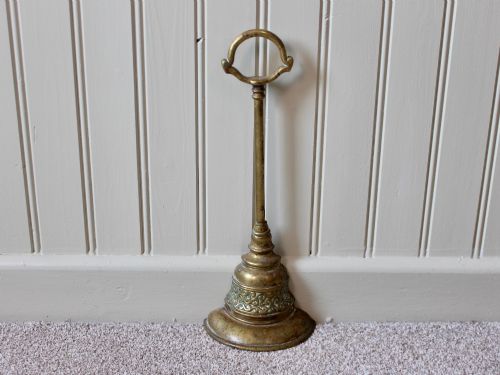


Traditional Brass Door Handles
Traditional brass door handles bring solid weight and period character to an interior, covering forms from Georgian centre knobs to Victorian beehives.
Traditional Brass Door Handles
Traditional brass door handles encompass a range of functional hardware built to operate doors across multiple historic periods. When searching for traditional brass door handles, buyers encounter everything from Georgian ovular centre knobs to Victorian beehive pairs and Edwardian door pulls.
The selection on this page leans heavily toward nineteenth-century examples, with Victorian and Regency items appearing alongside Georgian and Edwardian hardware. Alongside turning knobs, the listings include related brass door porters, bell pulls, and lock sets that share the same period workshops.
How they were made
Makers utilised cast brass and bronze to shape durable door hardware, often pairing metal components with wooden elements or iron fixings. Sand casting created the heavy body of these pieces, which workers then turned, filed, and polished to achieve smooth operable surfaces.
Details emerged through varied construction techniques, from the ribbed turning seen on beehive knobs to the decorative moulding cast into heavier doorstops and pulls. Makers such as William Tonks applied distinct finishing methods that left marks of individual workshop production on the metal.
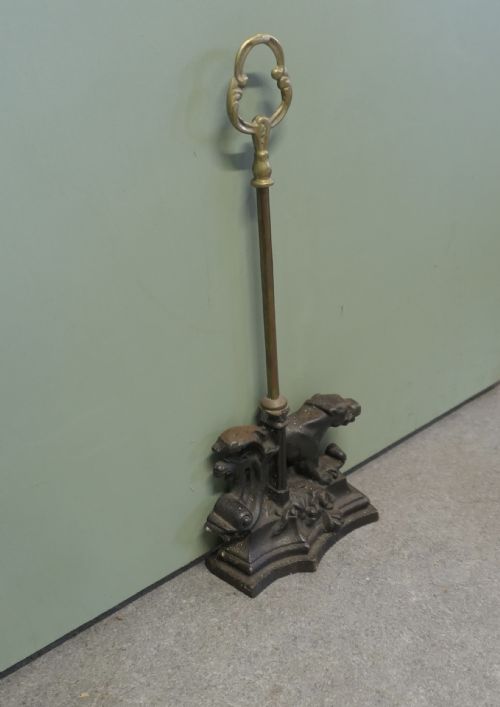
Some nineteenth-century hardware doubled as domestic sentinels, holding doors open while quietly masquerading as cast brass fruit or regal lions.
What varies in quality
Quality rests in the weight of the casting and the crispness of the turned or moulded detail. Superior examples retain deep relief in their decorative borders and substantial metal thickness that withstands decades of daily turning.
The integrity of the mechanism and the preservation of the original surface patination distinguish finer items from simpler production. Better pieces show thoughtful assembly between the handle, spindle, and backplate, ensuring the hardware performs reliably while ageing gracefully.
William Tonks
The Traditional Brass Door Handles Glossary
- Beehive knob
- A door knob characterised by concentric stepped rings resembling a traditional beehive. This profile provides a secure grip and defines many Victorian examples.
- Centre door knob
- A stationary handle fixed to the middle of a front door rather than a latching spindle mechanism. These often appear in Georgian and Regency designs.
- Door porter
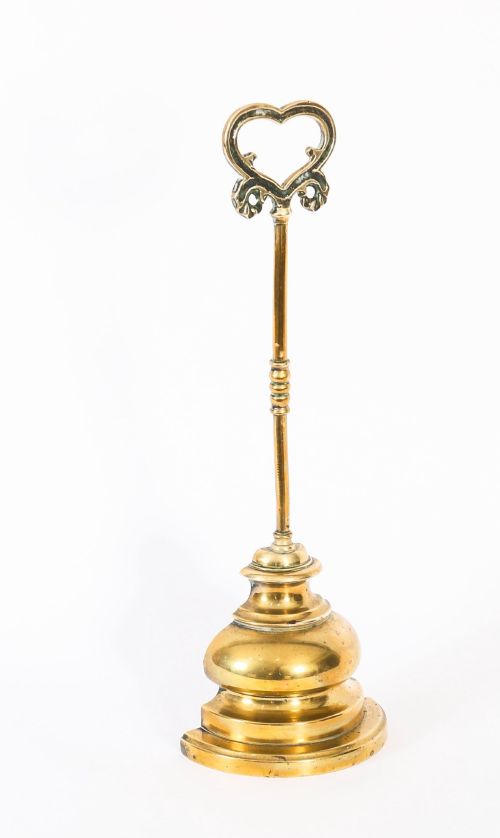
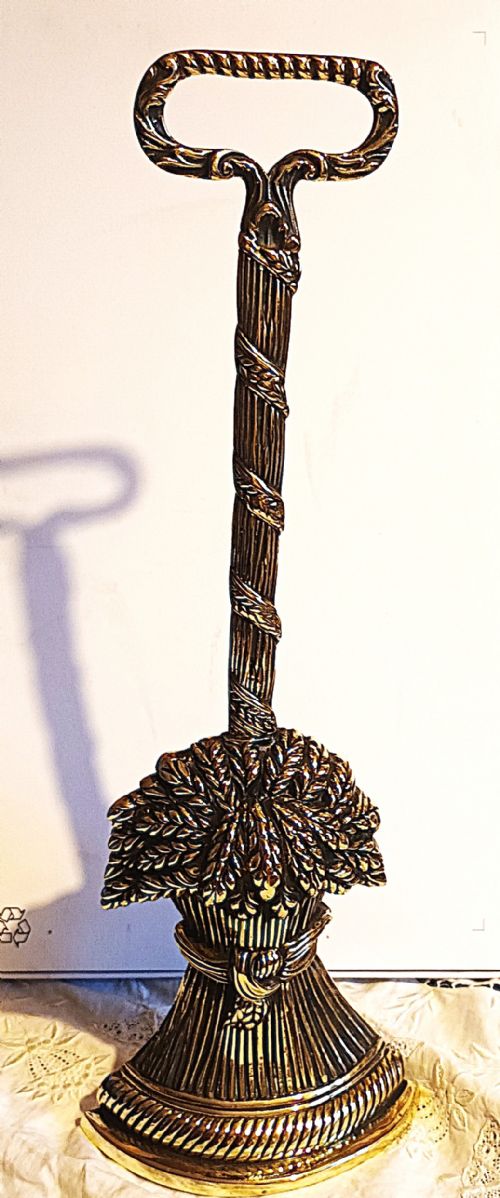
- A heavy weighted stop designed to hold interior doors open against drafts. They frequently take cast brass or bronze figurative and sculptural forms.
- Bell pull
- A mechanical lever mounted near a doorway to ring a remote bell inside the house. These brass fixtures feature articulated arms and decorative backplates.
- Patina
- The natural surface sheen developed on metal through oxidation, handling, and cleaning over centuries. Collectors prize unpolished surfaces that display this authentic ageing.
Traditional Brass Door Handles: Frequently Asked Questions
How do I date brass door handles?
Dating relies on stylistic shifts, fastener types, and manufacturing methods associated with periods like the Georgian, Regency, and Victorian eras.
Comparing the mounting backplates, screw threads, and overall silhouette against known period examples helps narrow down the decade of production.
Are old brass handles compatible with modern doors?
Many vintage handles use standard spindle dimensions that fit contemporary internal mortice locks with minor adjustments.
However, some nineteenth-century mechanisms require matching historic spindles or spindle adaptors to operate correctly in modern doors.
What is the difference between cast brass and bronze?
Cast brass is an alloy primarily of copper and zinc, yielding a bright golden tone when polished.
Bronze contains copper and tin, producing a slightly warmer, darker metal that forms a deep patinated surface over time.
How should I clean traditional brass hardware?
Gentle washing with warm soapy water removes accumulated surface dirt without stripping away the historic patina.
Abrasive metal polishes should be avoided because they erase the dark oxide layers that collectors value on antique hardware.