


Traditional Boardroom Table
A traditional boardroom table commands the room, offering vast proportions and rich timbers designed for grand gatherings.
Traditional Boardroom Table
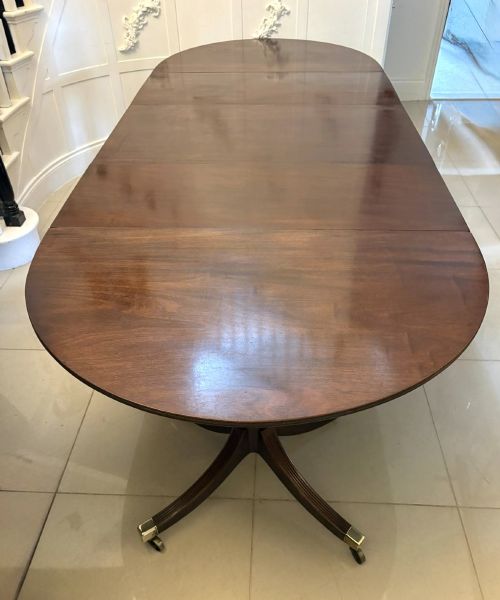
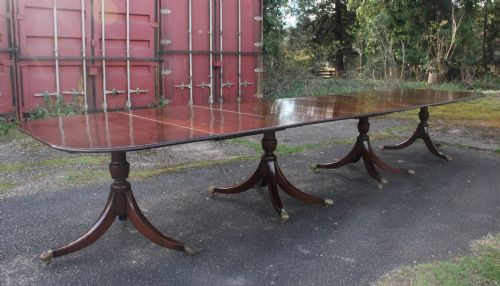
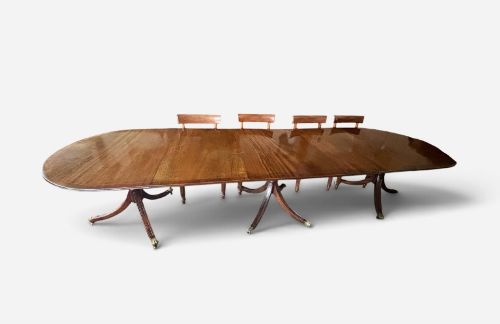
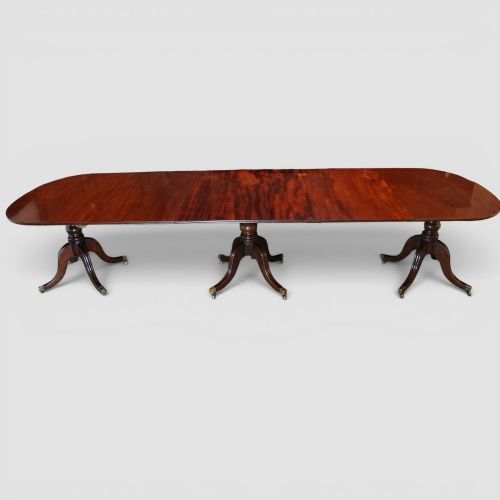
When searching for a traditional boardroom table, buyers encounter substantial pieces originating primarily from the nineteenth and early twentieth centuries. These large tables frequently span multiple pedestals or rely on sturdy pillar and refectory constructions to accommodate extensive seating arrangements.
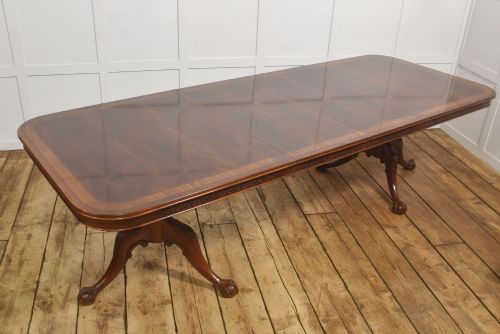
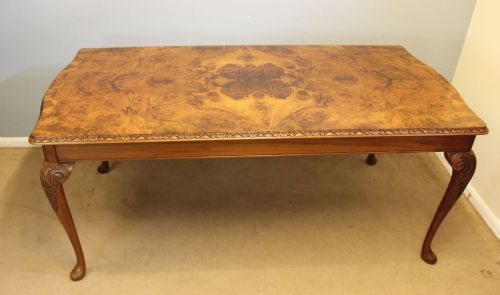
The selections available range from Regency and Victorian periods to Edwardian revivals, often taking the form of expansive dining or banquet tables well suited to formal conference spaces. Mahogany and oak dominate the offerings, frequently accompanied by walnut, satinwood, and burr walnut veneer.
Makers and designers from these eras focused on creating monumental surfaces capable of seating twenty or more guests with ease. The forms draw heavily on classical design vocabulary, including Georgian and Chippendale influences executed on a grand scale.
Materials and construction methods
Makers utilised solid timbers alongside figured veneers, selecting mahogany, oak, and walnut for their durability and striking grain patterns. Brass castors and subtle string inlay often punctuate the primary wood surfaces, adding refined decorative contrast.
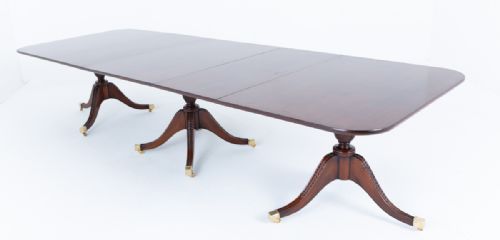
Construction typically involves multi-pedestal systems or trestle supports equipped with removable leaves to allow flexible length adjustment. Joinery relies on traditional framing techniques to ensure stability across exceptionally long surfaces.
Current listings span the nineteenth and early twentieth centuries, featuring mahogany, oak, walnut, satinwood, burr walnut veneer, fabric, and brass.
Distinctions in quality
The upper tier of these tables is distinguished by the choice of timber and the sophistication of the figuring, such as highly figured mahogany or burr walnut veneer. Superior examples display meticulous attention to detail in the carving of pedestals and the seamless integration of extension leaves.
Proportion and structural integrity separate exceptional pieces from standard workshop output. Maker attribution, such as work originating from established firms like Gillows of Lancaster, further elevates a piece through documented craftsmanship and superior joinery.
Gillow of Lancaster
The Traditional Boardroom Table Glossary
- Pedestal table
- A table supported by one or more central pillars rather than four corner legs. This configuration allows greater legroom for seated guests along the sides.
- Extending table
- A dining or boardroom table designed with a mechanism or removable leaves to increase its overall length. These additions enable the table to accommodate larger assemblies when required.
- Refectory table
- A long, narrow table traditionally used for communal dining, characterised by sturdy wooden legs joined by stretchers. Nineteenth-century interpretations often utilise oak.
- Inlay
- A decorative technique where contrasting materials such as satinwood or brass are embedded into the wood surface. This creates patterns and borders that define the tabletop edge.
Traditional Boardroom Table: Frequently Asked Questions
How many people can a boardroom table seat?
Many of these large tables are configured with multiple leaves and pedestals to seat twenty-four guests or more.
Buyers should review the listed dimensions and leaf counts to determine exact capacities for their specific room requirements.
What woods were used for these tables?
Mahogany and oak form the foundation of the majority of these pieces, alongside walnut and timber.
Finer examples incorporate burr walnut veneer, satinwood details, and brass fittings to enhance their decorative presence.
How do multi-pedestal tables extend?
These tables utilise removable wooden leaves that drop into the centre of the frame as the pedestals are pulled apart. This modular construction allows the table length to adjust according to the number of guests.
Which periods are most common?
The selection spans the nineteenth century through the early twentieth century, including Regency, Victorian, and Edwardian eras.
Revival styles from the Victorian and Edwardian periods frequently emulate earlier Georgian and Chippendale designs.