



Traditional Bathroom Towel Rail
A traditional bathroom towel rail brings solid Victorian and Edwardian timber into the washing space for hanging linens.
Traditional Bathroom Towel Rail
A traditional bathroom towel rail provides a designated wooden frame for airing and hanging domestic fabrics in daily use. These freestanding fixtures date from the Victorian and Edwardian eras, spanning the mid-nineteenth century up to the early twentieth century.
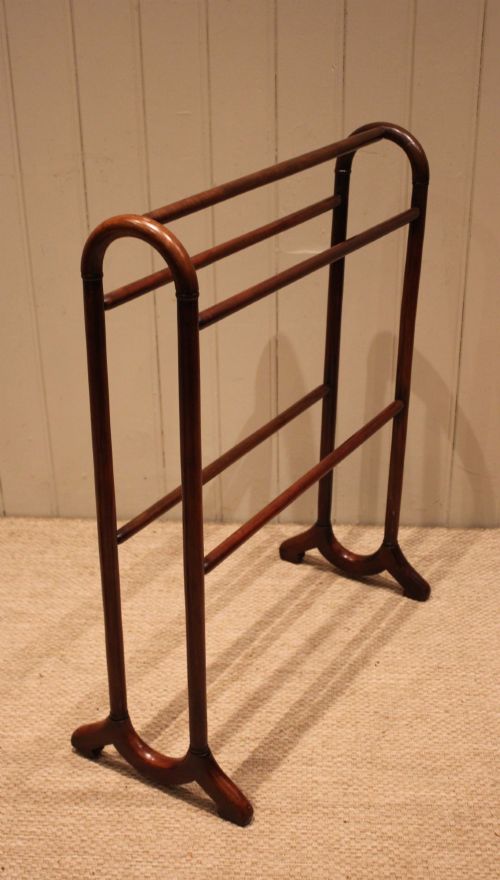
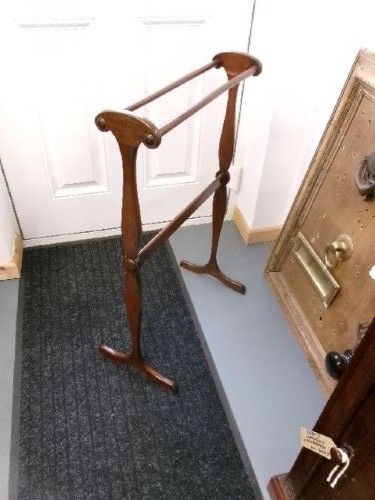
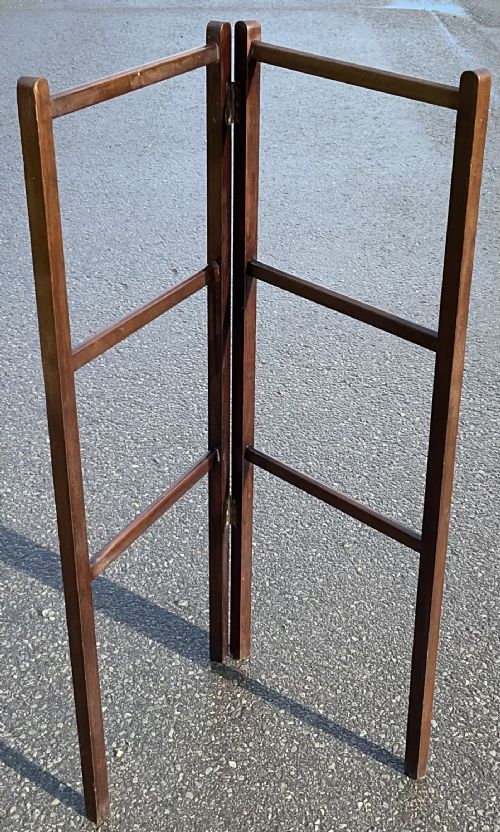
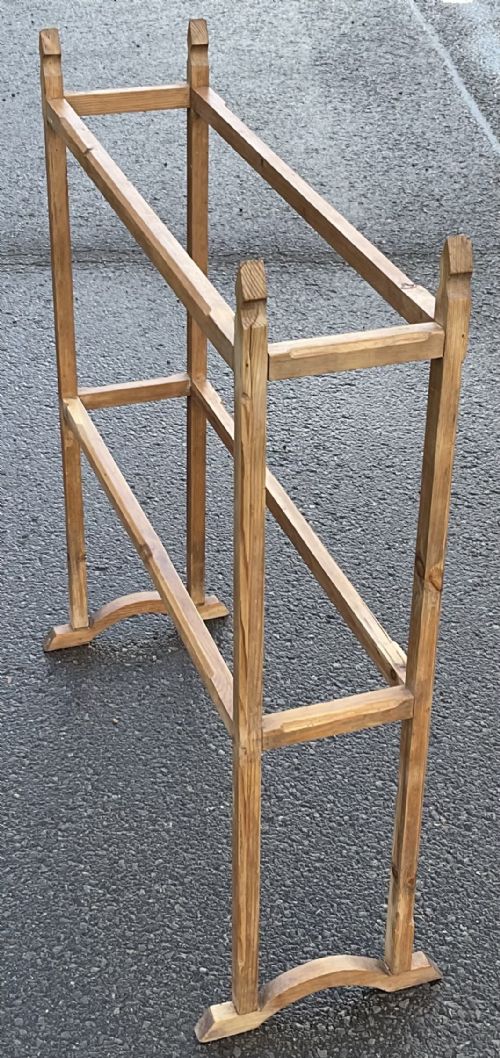
The pieces listed on this page appear primarily as standing towel rail stands and folding airers. Mahogany forms the backbone of these selections, alongside pine, satinwood inlay, and ebonised wood.
Victorian examples bring darker woods and earlier nineteenth-century proportions to the room. Edwardian pieces offer lighter timbers and multi-bar frames suited to bedroom and bathroom washing routines.
How they were made
Cabinet makers constructed these traditional bathroom towel rail designs using solid mahogany and pine, shaped with turned uprights and joined rails. Workshops utilised contrasting boxwood and satinwood inlay to decorate the timber surfaces of finer Edwardian stands.
Makers applied ebonising techniques to create deep black wooden finishes on specific Victorian frames. Selected pieces incorporate multiple turning bars within a single folding or standing framework to maximise hanging capacity.
Traditional Bathroom Towel Rail Retail Price Guide 2026
Typical asking prices for traditional bathroom towel rail among the pieces listed under this phrase on Sellingantiques today, from the lower quarter to the upper quarter. They describe what is for sale here now, not the wider market.
The listings here span from eighteen-fifty to nineteen-ten, uniting Victorian and Edwardian periods through mahogany, pine, and brass elements.
What varies in quality
The distinction between standard utility items and finer pieces rests in timber selection and decorative detailing. Plain pine frameworks serve functional purposes, whereas mahogany structures with satinwood inlay demonstrate greater workshop ambition.
Proportion and rail capacity elevate certain designs above simpler variants. Five-bar configurations and carefully turned uprights separate standard joinery from more accomplished period production.
The Traditional Bathroom Towel Rail Glossary
- Mahogany
- A durable tropical hardwood prized by period cabinet makers for its rich reddish-brown tone and stability. It resists warping in damp environments.
- Ebonised wood
- Timber treated with chemical solutions or dark finishes to imitate expensive ebony. This technique was popular for decorative household stands.
- Satinwood inlay
- Small pieces of pale exotic timber fitted flush into recesses carved into a darker primary wood. It creates contrasting geometric or linear patterns.
- Folding towel rail
- A hinged wooden frame designed to collapse flat when not in use. This mechanism allowed households to adjust the footprint of the airer within smaller dressing rooms.
Traditional Bathroom Towel Rail: Frequently Asked Questions
How do I clean wooden towel rails?
Wipe the timber surfaces gently with a soft, dry cloth to remove dust. Avoid excess water and harsh chemical sprays to protect the historic polish and finish.
Feed the wood periodically with appropriate wax if the surface appears dry. This maintains the natural moisture balance of Victorian and Edwardian hardwoods.
Are these towel rails sturdy enough?
Period wooden towel rails were built for daily household utility using traditional joinery methods. They easily support standard cotton bath towels and hand linens.
Position the freestanding frame on a level floor to prevent unnecessary strain on the joints. Avoid overloading a single side of folding rails.
Can I place these in a modern bathroom?
These pieces integrate naturally into modern interiors as practical furniture for hanging textiles. Ensure the bathroom has adequate ventilation to protect antique timber from excessive steam.
Keep the wood away from direct water splashes from showers or basins. Regular air circulation keeps both the linens and the frame in healthy condition.
How do I date a wooden towel rail?
Examine the wood species, construction marks, and decorative style to determine the era. Victorian examples often feature solid mahogany or ebonised pine with simpler turned supports.
Edwardian pieces frequently display lighter pine or inlaid satinwood details across multi-bar frames. The specific turning patterns and joint types offer clear clues to the decade of manufacture.