




Traditional Asian Low Table
A traditional asian low table brings grounded proportion and historic timber grain to a room, serving as a low surface for tea, writing or display.
Traditional Asian Low Table
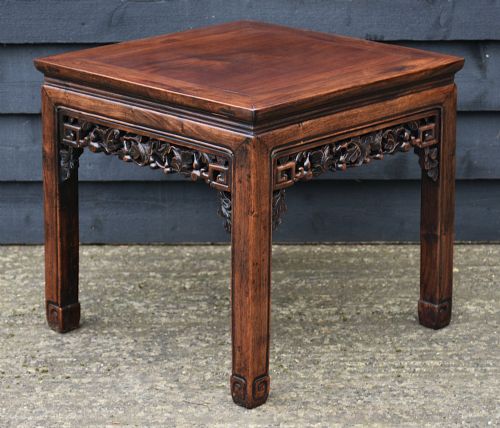
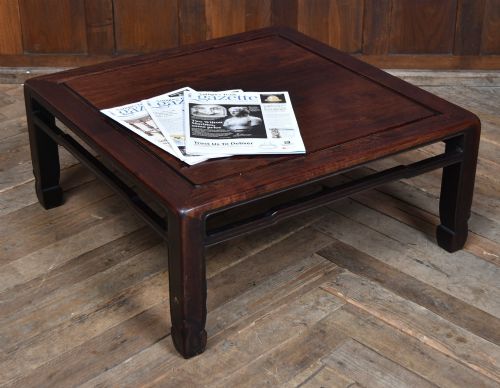
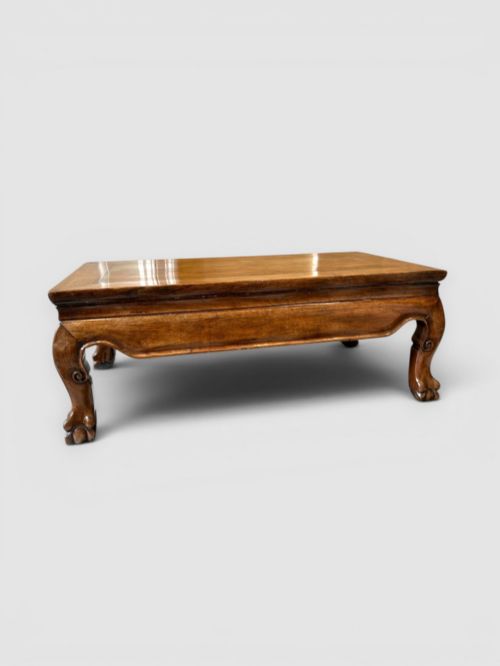
A traditional asian low table encompasses low-slung surfaces originating from China and Japan, designed for kneeling or floor-level seating. When you search for a traditional asian low table, you encounter forms that range from rustic country benches to formal scroll-end kang tables.
The pieces appearing on this page span the eighteenth, nineteenth, and early twentieth centuries, including Victorian-era imports. Chinese examples often take the form of opium tables, kang tables, or low coffee tables, while Japanese pieces include chabudai tea tables, hibachi, and calligraphy writing desks.
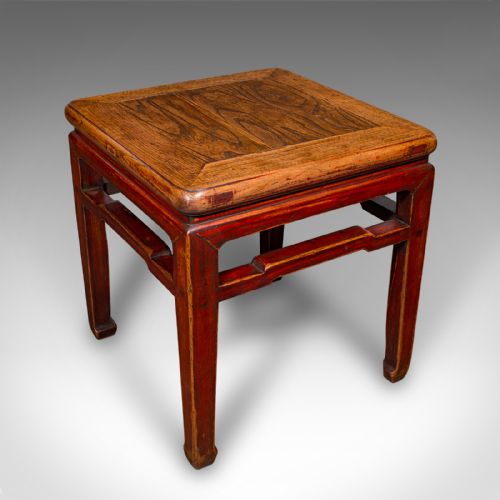
Most surfaces remain low to the floor, resting on short legs or trestle supports rather than standard dining heights. Elm and various oriental hardwoods predominate, shaped into rectangular or circular formats intended for domestic utility.
How they were made
Carpenters constructed these tables using dense timbers such as rosewood, padouk, elm, keyaki wood, and hongmu, selecting materials for structural resilience and natural grain depth. Joinery methods prioritised stability without metal nails, allowing wood to expand and contract naturally across seasons.
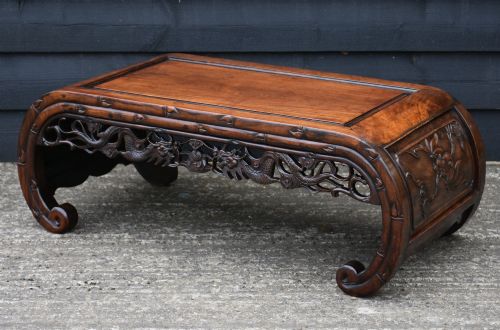
Surface finishes vary from clear wax accentuating the natural patina of hardwood to applied red lacquer. Carved details such as dragon motifs or scroll ends require skilled hand-chiselling directly into the timber body.
Listings feature eighteenth, nineteenth, and early twentieth-century pieces, spanning Qing dynasty aesthetics and rustic country furniture.
What varies in quality
Quality rests upon the selection of timber and the crispness of hand-carved elements like dragon details or scroll ends. Dense hardwoods like rosewood and padouk hold finer carving lines than softer timbers like elm.
The integrity of the original surface finish, whether deep lacquer or polished hardwood patina, dictates visual depth. Subtlety in proportion and restraint in carved decoration separate utilitarian country pieces from finer formal examples.
The Traditional Asian Low Table Glossary
- Kang table
- A low platform table placed upon a heated brick bed or used independently on the floor for dining and writing. These pieces frequently feature scroll ends.
- Opium table
- A traditional low Chinese table originally utilised for resting smoking paraphernalia or serving tea. They often feature carved aprons and short legs.
- Chabudai
- A short-legged traditional Japanese table used for partaking in meals or tea while kneeling on tatami mats. Elm and keyaki wood frequently form these domestic surfaces.
- Hibachi
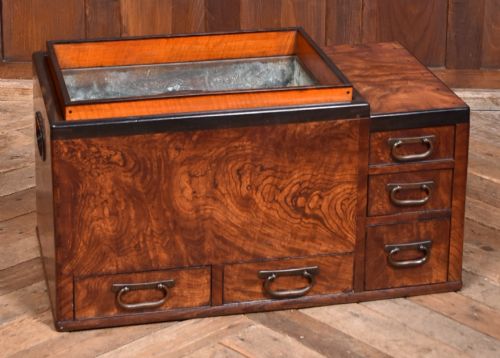
- A traditional Japanese heating device or brazier, sometimes adapted or utilised as a low table surface. They incorporate metal liners within wooden frames.
- Huali
- A fragrant Chinese hardwood prized for its decorative grain pattern and density. Cabinetmakers utilised this material for formal seating and low tables.
Traditional Asian Low Table: Frequently Asked Questions
What is a traditional asian low table used for?
These pieces serve primarily as low coffee tables, tea stations, or display surfaces in modern interiors. Their low profile suits minimalist room arrangements and floor-level seating.
Historically, makers designed them for kneeling tasks such as writing calligraphy, serving tea, or resting objects within domestic living spaces.
What is a japanese chabudai table?
A chabudai is a short-legged table used in Japanese homes for activities centered around floor seating. They are commonly constructed from elm or keyaki wood.
Unlike heavier Chinese forms, chabudai often feature folding or simple straight legs intended for easy storage when not in use.
How do I care for antique hardwood low tables?
Maintain the timber by applying natural beeswax sparingly to preserve the polished patina without building up residue. Keep the surface away from direct heat sources and strong sunlight to prevent timber splitting.
Dust regularly with a soft dry cloth and avoid placing damp items directly onto untreated wooden surfaces.