





Torch Wall Sconces
Torch wall sconces bring a dramatic, classical radiance to an interior, blending historic illumination forms with decorative metalwork and glass.
Torch Wall Sconces
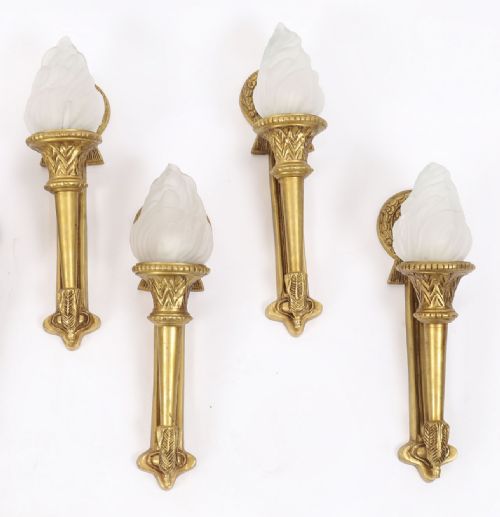
Torch wall sconces take the form of flaming torches mounted to a wall, designed to project warm light across an entrance hall or reception room. These fixtures span periods from the Victorian era and the nineteenth century through to the interwar decades of the nineteen tens, twenties, and thirties.
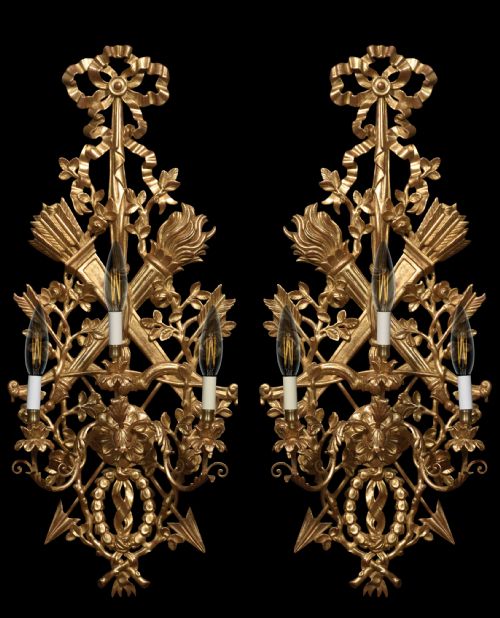
The selections available here favour symmetrical pairs and larger sets intended for flanking doorways or fireplaces. Stylistic influences range from Gothic Revival and Arts and Crafts to Neo-Classical, Empire, and Art Deco designs.
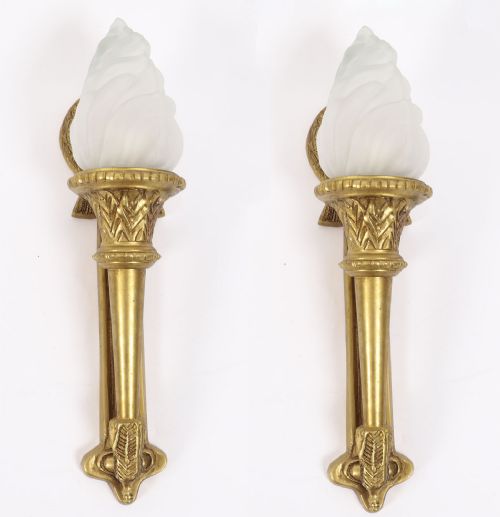
Forms vary from heavy iron castle lanterns and bronze entrance hall lights to gilt-wood appliqués and copper fixtures. Many examples incorporate flame-shaped glass shades or frosted glass to diffuse the illumination from the bulb.
Materials and construction
Metalworking forms the structural backbone of these pieces, utilising cast bronze, ormolu, and heavy wrought iron. Artisans also employed copper, chrome, and gilt-wood to shape the backplates and arms supporting the light source.
Glass is integral to the design, appearing as frosted shades or moulded flame elements that mimic licking tongues of fire. Early twentieth-century pieces occasionally integrate modern industrial plastics such as Bakelite and Catalin alongside traditional metallic patinations.
Torch Wall Sconces Retail Price Guide 2026
Typical asking prices for torch wall sconces among the pieces listed under this phrase on Sellingantiques today, from the lower quarter to the upper quarter. They describe what is for sale here now, not the wider market.
The listings on this page span the Victorian era, the nineteenth century, and the 1910s, 1920s, and 1930s.
Judging the range
Quality reveals itself in the crispness of the metal casting and the depth of the chased detail upon ormolu and bronze elements. Superior examples display harmonious proportions between the mounting bracket and the glass flame or shade.
The integrity of matching sets and pairs elevates a piece above single installations, particularly when the original patination of the iron, copper, or gilt-wood remains undisturbed.
The Torch Wall Sconces Glossary
- Ormolu
- Gilt bronze created by applying a finely ground high-carat gold-mercury amalgam to a bronze object. This technique produces a rich, enduring golden finish often seen on Neo-Classical fixtures.
- Bakelite
- An early synthetic thermosetting plastic moulded into various components. It provides a smooth, tactile contrast to metalwork on interwar electrical fittings.
- Appliqué
- A decorative wall-mounted light fitting fixed directly to the surface. It functions similarly to a sconce, directing light outwards into the room.
- Gothic Revival
- An architectural and decorative style drawing on medieval ecclesiastical aesthetics. Pieces in this idiom feature robust ironwork and architectural motifs.
Torch Wall Sconces: Frequently Asked Questions
How do I hang heavy iron wall sconces safely?
Heavy iron and bronze sconces require secure fixing into solid masonry or proper wall studs using appropriate fixings to support the considerable weight of the metal and glass.
Consulting a qualified electrician ensures the wiring is safely integrated into the wall cavity before mounting the backplate.
How do I clean frosted glass flame shades?
Frosted glass and moulded flame shades benefit from gentle cleaning using warm soapy water and a soft cloth to remove accumulated dust. Harsh abrasives should be avoided to protect the delicate texture of the glass surface.
Removing the shades from the metal fitting prior to cleaning prevents accidental damage to ormolu or bronze mounts.
Can I mix different periods of wall sconces?
Mixing periods such as pairing an Arts and Crafts copper light with Neo-Classical ormolu pieces creates a layered interior if unified by scale and metal tone. However, matching sets work best when flanking a central architectural feature like a fireplace or doorway.
Paying attention to the projection from the wall helps maintain a balanced look across a room.