





Torch Wall Lights
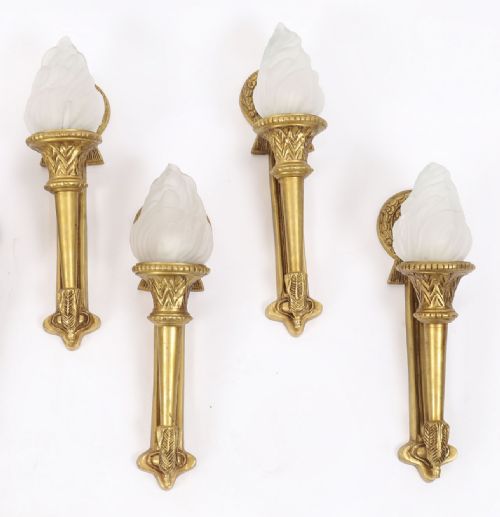
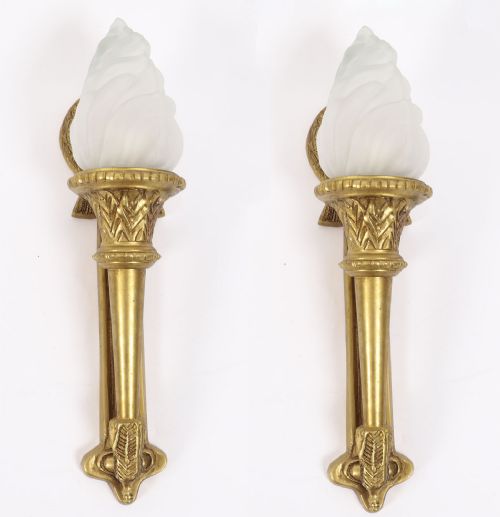
Torch wall lights bring a dramatic, vertical radiance to a room, casting a warm illumination reminiscent of ancient flame sconces.
Torch Wall Lights
When buyers search for torch wall lights, they encounter fixtures designed to mimic handheld flames, torches, and lanterns mounted upon a vertical bracket. These fittings trace their lineage across several distinct eras, spanning the heavy metalwork of the Victorian period through to the streamlined geometries of the Art Deco epoch.
The most common examples on this page date from the nineteen-twenties and nineteen-thirties, favouring the clean lines of Art Deco alongside revived Neo-Classical and Gothic motifs. Materials range from cast bronze and ormolu to chrome and wrought iron, frequently paired with frosted or moulded glass flames.
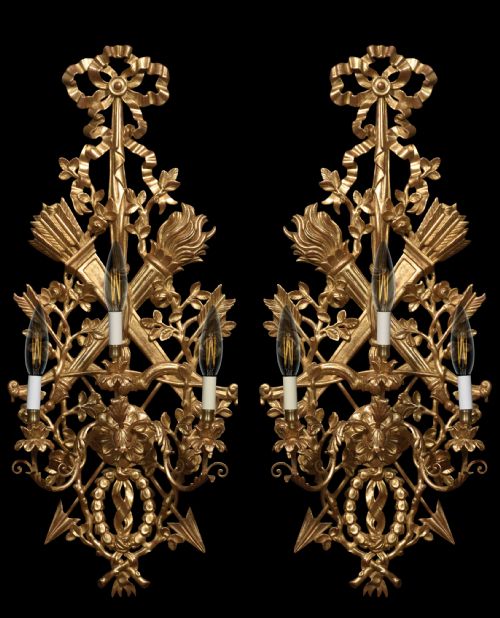
Forms vary from pairs of matching sconces intended for flanking mirrors or doorways to substantial single lanterns and multi-light appliqués. Whether fashioned as flaming torches or simple flame shades, these pieces transform a vertical wall space with architectural presence.
Materials and construction
Makers utilised a combination of cast metals and worked irons to achieve the structural rigidity required for wall-mounted fixtures. Bronze, ormolu, and heavy cast iron form the structural spines of many pieces, providing both durability and a suitably antique heft.
Glass elements, particularly frosted and moulded varieties, were blown or cast to represent licking flames or flickering light sources. Early twentieth-century pieces occasionally integrate modern industrial plastics like Bakelite alongside traditional metals, reflecting changing manufacturing techniques.
Torch Wall Lights Retail Price Guide 2026
Typical asking prices for torch wall lights among the pieces listed under this phrase on Sellingantiques today, from the lower quarter to the upper quarter. They describe what is for sale here now, not the wider market.
Listings feature items spanning the Victorian era through the nineteen-thirties, with materials ranging from wrought iron and bronze to chrome and Bakelite.
Assessing quality and craftsmanship
Quality reveals itself in the crispness of the metal casting and the depth of the chasing on ormolu and bronze surfaces. Finer pieces display careful hand-finishing that accentuates the texture of metal drapery, feathering, or ironwork.
The integrity and weight of the glass components separate superior examples from standard production. Thick, evenly moulded frosted glass or well-matched glass shades indicate a higher standard of manufacture than thin or uneven substitutes.
The Torch Wall Lights Glossary
- Ormolu
- Gilt bronze, where a finely ground high-carat gold-mercury amalgam is applied to a bronze object. This technique produces a rich, durable golden surface seen on decorative mounts.
- Catalin
- A cast phenolic formaldehyde resin developed in the twentieth century. It offers vibrant opaque colours and was frequently utilised for decorative handles and electrical fittings.
- Appliqué
- A wall-mounted light fixture or sconce designed to hold multiple candles or electric lamps. These fittings sit flat against the vertical surface.
- Sconce
- A wall-mounted lighting fixture that uses brackets to support candles or electric bulbs. They often project forward to direct illumination into the room.
- Gothic Revival
- An architectural and decorative style drawing inspiration from medieval design. It employs pointed arches, heavy ironwork, and ecclesiastical motifs.
Torch Wall Lights: Frequently Asked Questions
How were torch wall lights used historically?
These fixtures provided functional illumination along corridors, entrance halls, and main reception rooms in grand houses. They were positioned to cast light upwards or outwards, echoing the placement of historic wall torches.
Over time, designers adapted the ancient torch motif into ornamental electric fittings that served as primary decorative statements on interior walls.
How do I clean bronze and ormolu lights?
Dusting gently with a soft, dry cloth is usually sufficient for regular maintenance of metal surfaces. Avoid using abrasive metal polishes, which can strip away the delicate gilt layer on ormolu.
Glass shades can be removed and washed in warm soapy water, provided they are dried completely before being reattached to the metal frame.
How do I tell Art Deco from Victorian lights?
Victorian torch wall lights typically feature ornate casting, heavy bronze or iron, and motifs drawn from Gothic or classical revivals. They lean towards darker patinas and elaborate historical ornament.
Art Deco examples, by contrast, embrace streamlined chrome, Bakelite, and stylized flame shades that reflect the modern machine aesthetic of the nineteen-thirties.
Can these vintage wall lights be rewired?
Most antique and vintage wall fixtures can be adapted to meet modern electrical safety standards by a qualified electrician. Original lamp holders can often be retained or discreetly replaced to accommodate contemporary bulbs.
Rewiring ensures the internal cabling is safe while preserving the exterior metalwork, glass, and overall historical character of the fitting.