



Toleware Storage Box
A toleware storage box brings hand-painted colour and robust metalwork into a room, offering practical containment with distinct historic character.
Toleware Storage Box
A toleware storage box encompasses functional metal containers designed for domestic and professional use, ranging from domestic kitchen buckets and coal scuttles to legal document tins and military hat boxes. These utilitarian objects span the nineteenth century and the early twentieth century, reflecting both formal Regency elegance and robust Victorian utility.
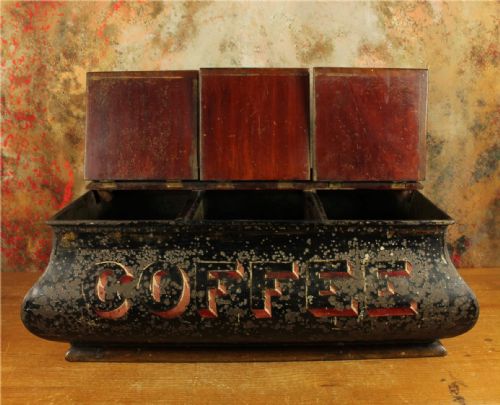
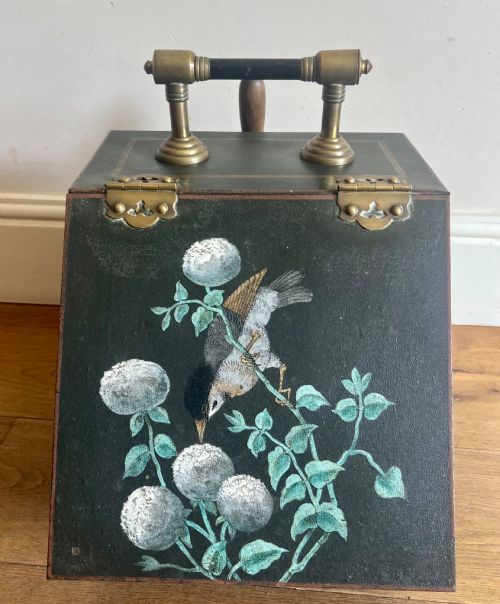
The pieces you encounter on this page include country house maid's buckets, multi-compartment cafe tins, and folk art barge wear log boxes. Forms vary from cylindrical waste paper bins and tea canisters to lacquered boxes with trays and sets of solicitor's document tins.
Originating predominantly from English workshops, these items utilise sheet iron and tin as a base for decorative painting. Whether styled as Victorian military gear or early twentieth century legal storage, each piece combines rigid metal construction with surface artistry.
Construction and decoration
These items are constructed from sheet iron or tin, beaten and joined to form rigid boxes, buckets, and cylindrical bins designed to withstand heavy daily use. Makers reinforced edges and fitted brass or iron hardware to handle the physical demands of storage.
The painted finish involves building up layers of pigment on metal, sometimes enhanced with gold leaf accents or specific lacquering techniques. Folk art traditions, such as barge wear, utilise vibrant hand-applied pigments directly onto the prepared tin surface.
Toleware Storage Box Retail Price Guide 2026
Typical asking prices for toleware storage box among the pieces listed under this phrase on Sellingantiques today, from the lower quarter to the upper quarter. They describe what is for sale here now, not the wider market.
Assessing the work
Quality rests in the execution of the hand-painted surface and the integrity of the underlying metalwork. Superior examples display confident, articulate brushwork in the decorative schemes, whether floral motifs or regency patterns, rather than simplistic or crude application.
Completeness alters the standing of a piece, particularly when assessing sets of document tins or lacquered boxes with their original trays intact. Retaining the original painted surface without excessive overpainting distinguishes better preserved examples from heavily restored ones.
The Toleware Storage Box Glossary
- Toleware
- Painted or lacquered metalware, typically tin or sheet iron, decorated in imitation of Asian lacquer or with European folk motifs. This technique transformed utilitarian containers into decorative domestic objects.
- Sheet iron
- A malleable metal rolled into thin plates, serving as the primary structural body for heavier storage boxes and coal bins. It provided durability before the widespread adoption of modern plastics.
- Folk art
- Traditional decorative work produced by self-taught artisans or local tradespeople, often seen in barge wear items with bold, unpretentious floral designs. These pieces reflect regional vernacular styles rather than academic art.
- Lacquering
- The process of applying protective and decorative varnish layers to a prepared surface. It added depth and durability to the painted decoration on boxes and trays.
- Regency
- An architectural and design period spanning the early nineteenth century, characterised by classical restraint and refined decorative motifs. Pieces from this era often feature structured symmetry and elegant painted borders.
Toleware Storage Box: Frequently Asked Questions
What were toleware storage boxes used for?
These metal containers served a multitude of domestic and professional purposes, from holding coal by the hearth to storing legal documents in solicitor's offices.
Kitchens utilised them for foodstuffs like tea, while military personnel relied on specific tins for transporting headwear and uniforms.
How do I clean an antique toleware box?
Maintenance requires only a soft, dry cloth to remove dust from the painted surface.
Moisture and harsh cleaning agents must be avoided to protect the historic paint layers and prevent rust from forming on the exposed iron.
Are these storage boxes waterproof?
While constructed from sheet iron or tin, antique pieces are not guaranteed to hold liquids securely due to age and potential wear at the seams.
They are best utilised for dry storage, such as papers, logs, or general household items.
How can I tell the difference between periods?
Nineteenth-century pieces often display Regency elegance or folk art traditions with hand-painted floral motifs.
Early twentieth-century items tend towards utilitarian professionalism, such as matching sets of solicitor document tins.