




Toleware Pendant Light
These toleware pendant light fixtures bring painted charm and provincial warmth to a room, offering distinct decorative hanging illumination.
Toleware Pendant Light
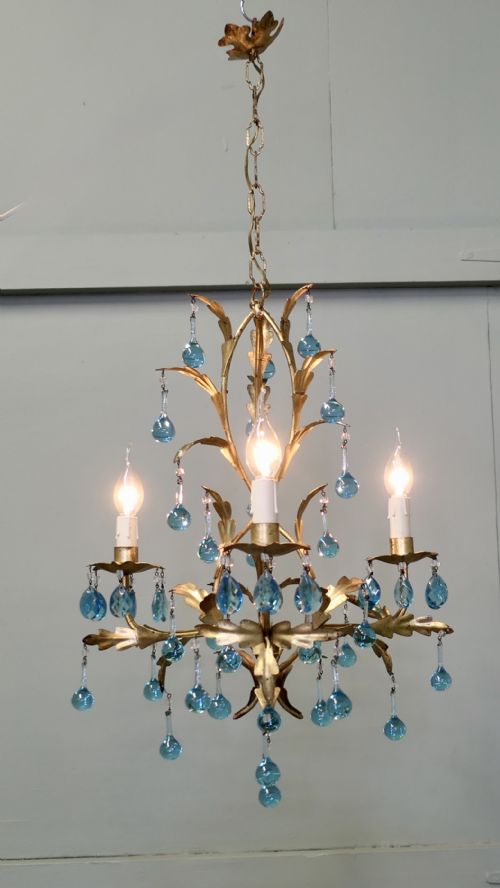
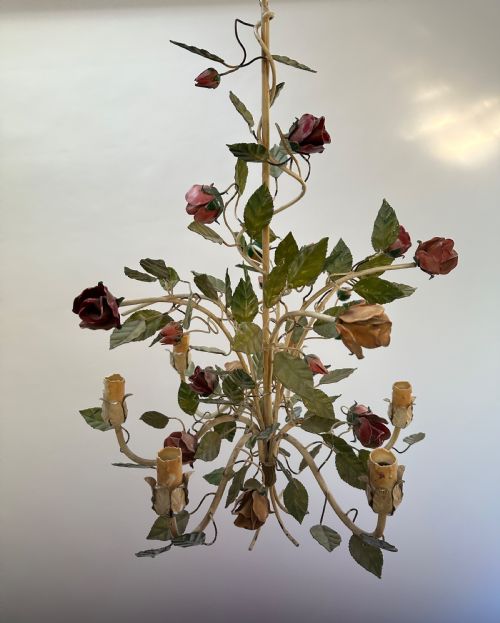
When you search for a toleware pendant light, you are looking at painted and gilded metal hanging illumination largely originating from French and Italian sources. These fixtures span the nineteenth century through the early twentieth century, including the decades of nineteen hundred, nineteen ten, nineteen twenty, and nineteen thirty. The versions most commonly met on this page take the form of multi-bulb chandeliers, ceiling lights, and ceiling lanterns.
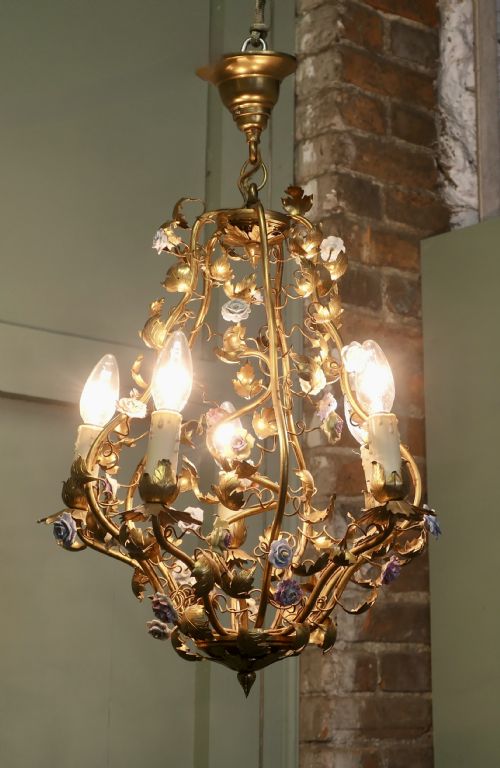
The aesthetic leans heavily toward French chateau, French country, and Italian rococo styles. Many examples incorporate floral ceramics, wrought iron, and glass elements alongside the painted metal body. They serve as overhead focal points that combine utilitarian hanging lights with ornamental metalwork and painted surfaces.
How they were made
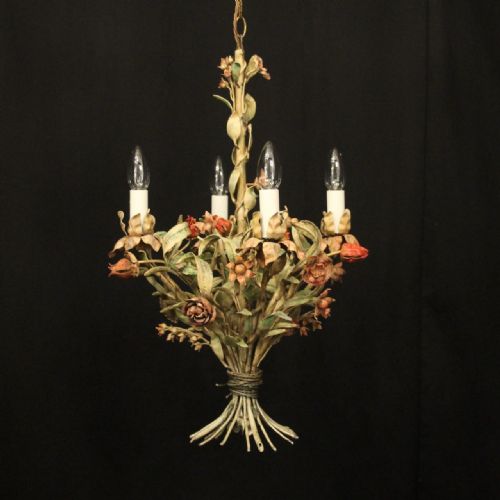
These fixtures rely on shaped sheet metal as their primary foundation, painted or polychromed to create lasting surface colour. Gilding is frequently applied to metal branches and frames, adding metallic contrast to the painted hues. Wrought iron provides structural support in specific designs, particularly within lantern formats.
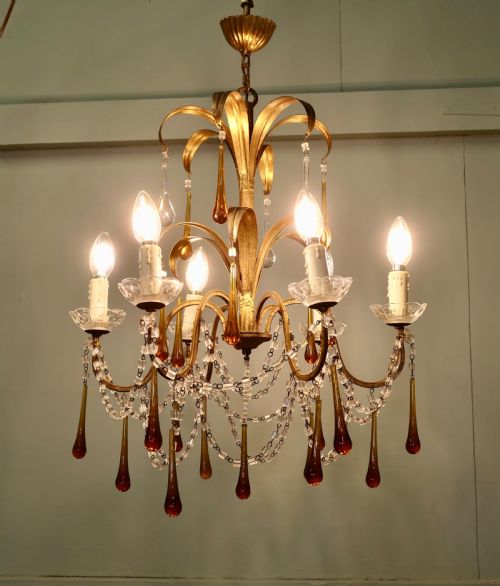
Decorative detailing is achieved by integrating ceramic floral motifs and glass components such as amber crystal teardrops or turquoise crystals. Metal components are shaped into multi-light cage frameworks and scrolling branches, accommodating multiple bulbs and wiring for ceiling suspension.
Toleware Pendant Light Retail Price Guide 2026
Typical asking prices for toleware pendant light among the pieces listed under this phrase on Sellingantiques today, from the lower quarter to the upper quarter. They describe what is for sale here now, not the wider market.
Listings feature periods from the nineteenth century up to nineteen thirty, utilising toleware, gilt metal, glass, ceramic, and wrought iron.
What varies in quality
The refinement of the painted surface work distinguishes finer examples from simpler production. Hand-painted polychrome details and delicate floral ceramic integrations demand greater artisan skill than plain painted finishes.
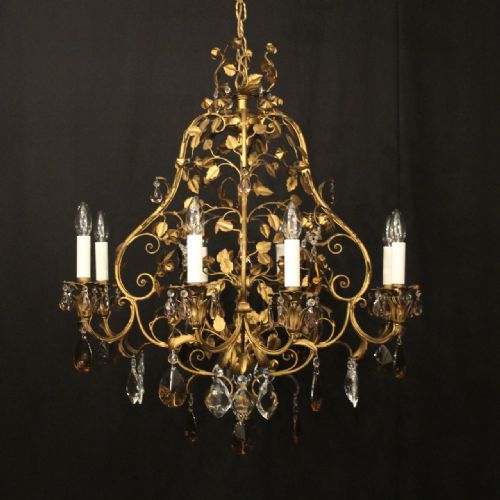
The complexity of the metal armature and the inclusion of quality glass elements dictate the upper tier of the range. Cage chandeliers with numerous branches, gilt accents, and crystal drops demonstrate superior decorative ambition compared to basic lantern configurations.
The Toleware Pendant Light Glossary
- Toleware
- Painted or lacquered sheet metal items produced in various European decorative traditions. It provides the core material for these hanging lights.
- Polychrome
- Having multiple colours applied to the surface decoration. This technique brings varied hues to floral and metal elements.
- Gilt Metal
- Metal treated with gold leaf or a gold-coloured finish. It adds a reflective sheen to branches and frames.
- Cage Chandelier
- A chandelier style featuring an open metal framework enclosing internal light sources. Crystal drops often hang within or around this structure.
- Ceiling Lantern
- An enclosed or semi-enclosed hanging light fixture suspended from a chain or bracket. Wrought iron and glass frequently construct these pieces.
Toleware Pendant Light: Frequently Asked Questions
What periods do these lights come from?
The available pieces originate from the nineteenth century through the early decades of the twentieth century, specifically spanning nineteen hundred to nineteen thirty.
These dates reflect the manufacturing eras represented in the current selection of French and Italian lighting.
How were these fixtures used?
They functioned as primary overhead illumination sources in period rooms, suspended from ceilings to light dining spaces and halls.
Their decorative metalwork and painted finishes ensured they served as visual focal points even when unlit.
What materials make up toleware lights?
The primary material is painted or gilded sheet metal, often supplemented by wrought iron for structural framework.
Additional materials include ceramic floral elements, glass components, and crystal drops that catch the light.
How do French and Italian styles differ?
French examples frequently exhibit chateau or country aesthetics incorporating floral ceramics, polychrome paint, and crystal elements.
Italian pieces in this selection demonstrate rococo influences, sometimes combining giltwood with painted metal work.