


Tobacco Humidor Cabinet
These tobacco humidor cabinet pieces keep leaf and pipe neatly stored, offering a proper home for serious smoking gear.
Tobacco Humidor Cabinet
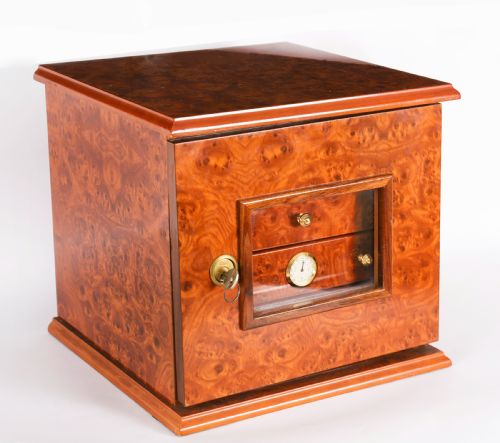
A tobacco humidor cabinet brings together specialised storage for cigars, pipes, and smoking gear within a compact wooden enclosure. These pieces emerge in styles spanning the Victorian and Edwardian eras, alongside later twentieth century iterations.
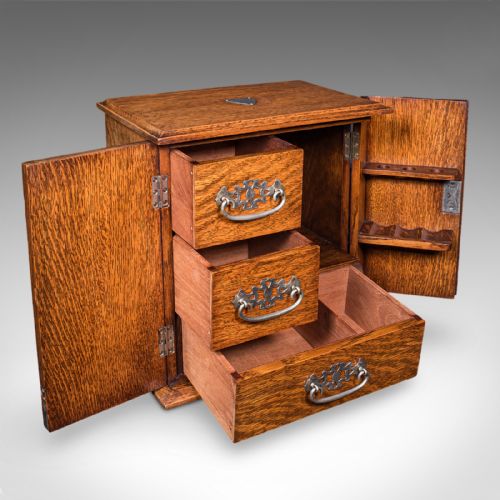
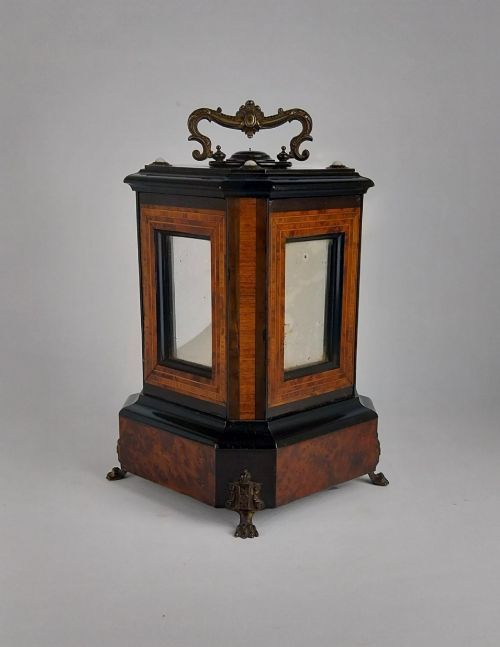
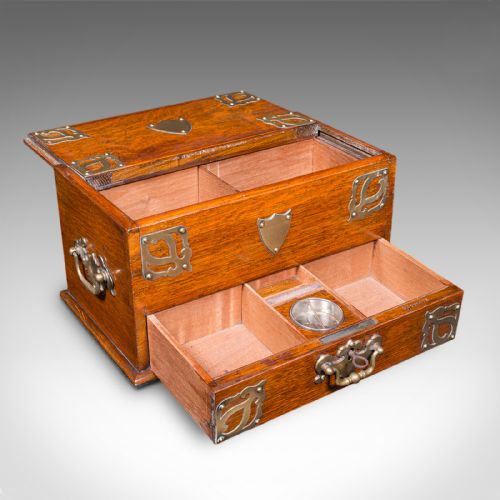
The selections here showcase distinct formats, from wall cabinets and tabletop smoker's boxes to larger floor or desk containers. Oak and burr walnut dominate the construction, often fitted with internal drawers or compartments designed specifically for leaf and tobacco preservation.
Materials and construction methods
Cabinet makers utilised dense hardwoods such as oak, burr walnut, burr elm, and cedar to build these enclosures. These woods provided the necessary stability and moisture retention properties required for storing tobacco products safely over long periods.
Metal fittings such as brass hinges, locks, and handles appear frequently across the pieces, securing the doors and internal drawers. Glass panels and leather accents occasionally supplement the wooden structures, particularly in advertising or display formats.
One piece mimics a railway coal wagon for the dedicated smoker.
Distinguishing quality in these cabinets
Superior examples demonstrate meticulous timber selection, particularly in the figuring of burr walnut or burr elm veneers. The precision of the joinery and the integration of functional locking mechanisms also separate standard boxes from finer workshop productions.
Specialised internal design, such as multiple fitted drawers or custom compartments for pipes and humidification elements, indicates a higher grade of manufacture. Pieces retaining original brass hardware and working locks hold greater distinction.
Alfred Dunhill·H. Upmann
The Tobacco Humidor Cabinet Glossary
- Humidor
- A sealed box or cabinet designed to maintain a constant humidity level for storing cigars and tobacco. Proper internal sealing prevents the leaf from drying out.
- Burr walnut
- A highly figured wood veneer taken from the warted growths on walnut trees. It displays swirling grain patterns prized by cabinet makers.
- Tambour
- A type of sliding door constructed from narrow strips of wood glued to a fabric backing. It allows smooth operation around curved cabinet corners.
- Ebonised wood
- Timber treated with a dark finish to imitate expensive ebony. This technique provided a stark, formal appearance on Victorian furnishings.
- Smoker's box
- A portable container organised to hold pipes, tobacco, and matches. These portable versions often preceded fitted cabinets in domestic spaces.
Tobacco Humidor Cabinet: Frequently Asked Questions
How do I maintain a vintage tobacco humidor cabinet?
Keep the interior timber clean and monitor the moisture levels within the storage compartment. Avoid placing the wood near direct heat sources that could warp the structure or crack the internal linings.
Ensure any humidification elements are used correctly without saturating the surrounding wood. Regular wiping with a dry cloth preserves the exterior polish and hardware.
What is the difference between a smoker's box and a cabinet?
Smoker's boxes are typically smaller, portable containers meant to sit on a table or desk for easy transport. They hold basic accessories like pipes and loose leaf.
Cabinets offer larger, fixed storage featuring multiple drawers, doors, and specialised compartments. They are designed to stay in one room as a permanent piece of furniture.
How do I date an Edwardian tobacco cabinet?
Examine the construction methods, secondary woods, and hardware styles typical of the period between nineteen nought one and nineteen ten. Edwardian pieces often display lighter oak timbers and simpler decorative carving compared to Victorian examples.
Look for registration numbers or maker's marks stamped onto the brass locks or hinges. These stamps can narrow down the exact manufacturing window.
Can I store cigars in these antique cabinets?
Many of these pieces served as cigar cabinets or humidors originally and retain fitted interior spaces suitable for leaf storage. However, older seals may require careful checking before relying on them for active humidification.
Collectors often treat them as display furniture or utilise modern inserts to maintain precise humidity levels inside the antique shell.