

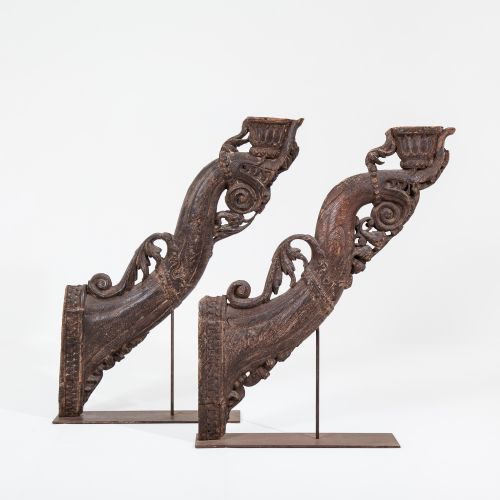


Timber Wall Shelves
Timber wall shelves span centuries of practical joinery, offering functional display and storage shaped by diverse periods from the seventeenth century onward.
Timber Wall Shelves
Timber wall shelves bring architectural display space to domestic interiors through various forms ranging from simple storage shelving to decorative brackets and plate racks. These pieces satisfy the desire to mount collections, books, and ornamental items securely onto walls using period timbers.
The selections available here run from seventeenth-century carved figurative examples through Georgian oak plate racks and nineteenth-century walnut designs. Buyers frequently encounter nineteenth-century walnut and mahogany formats alongside architectural salvage and display shelving.
Origins stretch across British, Continental, and American workshops, displaying vernacular folk traditions alongside formal cabinet-making styles. Such variety ensures a format exists for both rustic farmhouse settings and formal period rooms.
Materials and construction
Cabinet-makers relied on native and exotic hardwoods like walnut, mahogany, rosewood, and oak, often shaped by hand with carved detail. Pine and carved timber also appear, occasionally enhanced with gesso or brass fixtures to strengthen mounting points.
Joinery methods reflect the demands of weight-bearing wall furniture, utilising solid timber planks alongside pegged joints, dove-tailing, and heavy architectural corbels. Carved elements demonstrate depth through hand-chiselled foliage, figures, and architectural moulding.
Timber Wall Shelves Retail Price Guide 2026
Typical asking prices for timber wall shelves among the pieces listed under this phrase on Sellingantiques today, from the lower quarter to the upper quarter. They describe what is for sale here now, not the wider market.
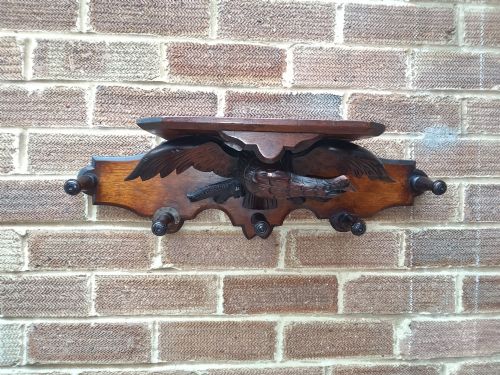
An American wall eagle happily holds up a shelf, proving patriotism makes a surprisingly good load-bearer.
Assessing quality
Quality rests in the crispness of the carving and the selection of figured timber grain, where highly grained walnut or rich mahogany elevate the piece beyond utilitarian storage. The integrity of the original construction and mounting brackets determines how successfully the timber bears weight over generations.
Refined proportions and harmonious joinery separate standard vernacular items from exceptional architect-designed brackets and display cases. Surface patination, developed through age and wax polishing, preserves the visual depth of the timber.
The Timber Wall Shelves Glossary
- Plate rack
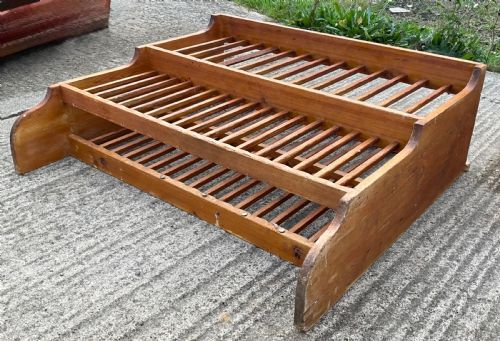
- A wall-mounted shelving unit specifically constructed with vertical slats or grooves to display plates upright. These fixtures served dining and kitchen spaces historically.
- Bracket
- A projecting architectural support fixed to a wall to hold weight above it. In timber wall furniture, these frequently feature carved embellishments.
- Corbel
- A structural piece of timber projecting from a wall to carry a heavy weight. They often display elaborate scrollwork or figurative carving.
- Pigeon hole cabinet
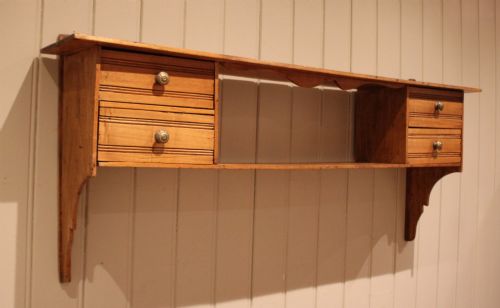
- A compartmentalised shelving unit divided into numerous small rectangular slots for sorting papers or small objects. They represent a specialised form of functional wall storage.
Timber Wall Shelves: Frequently Asked Questions
What periods do these wall shelves cover?
The pieces span from the seventeenth century through the eighteenth and nineteenth centuries, including Victorian, Regency, and William IV eras. Each period brings distinct timber choices and decorative carving styles to the wall.
Earlier examples often display hand-carved oak or figurative motifs, while nineteenth-century pieces showcase walnut, satin birch, and rosewood. This chronological breadth allows buyers to match shelves precisely to specific historic interior schemes.
How do I care for antique wall timber?
Maintain timber wall shelves by dusting gently with a dry, soft cloth and occasionally applying a traditional beeswax polish to nourish the grain. Avoid placing shelves in direct sunlight or near heat sources to prevent the wood from drying out and splitting.
Keep humidity levels in the room stable to protect historical glue joints and carved details. Regular, light maintenance preserves the natural patination built up over centuries.
Are these shelves suitable for heavy books?
Suitability for heavy books depends entirely on the construction, timber density, and the strength of the wall mounting brackets. Solid oak or mahogany shelves with robust corbels manage substantial weight if properly fixed.
Lighter display shelves, satin birch units, or delicate plate racks are better suited to ceramics, glassware, or decorative objects. Assess the thickness of the timber board and the bracket support before loading books.