

Timber Top Kitchen Table
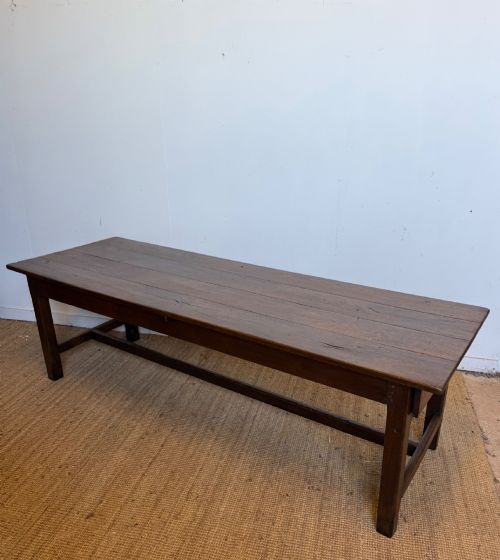
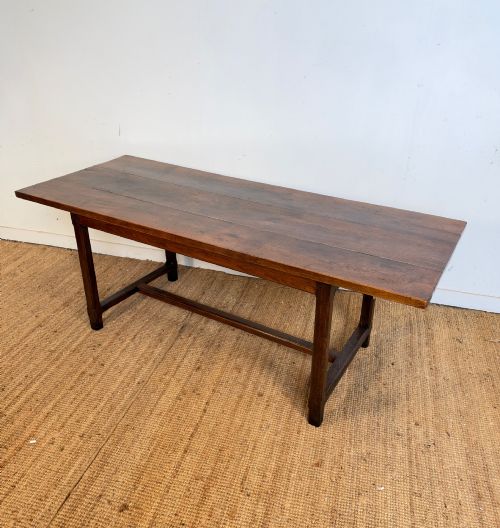
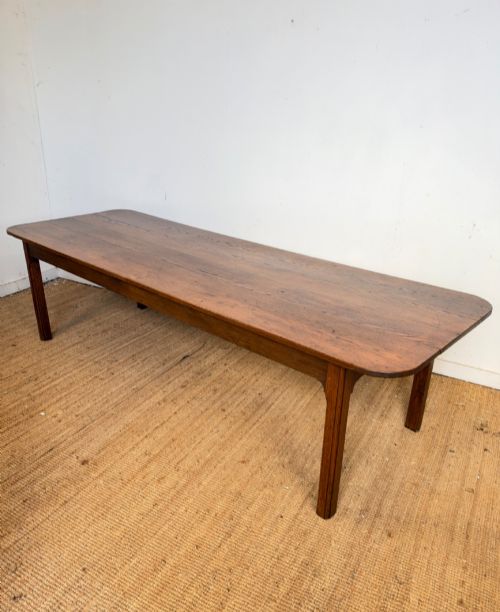
A timber top kitchen table brings honest utility and decades of daily gatherings straight into the heart of the home.
Timber Top Kitchen Table
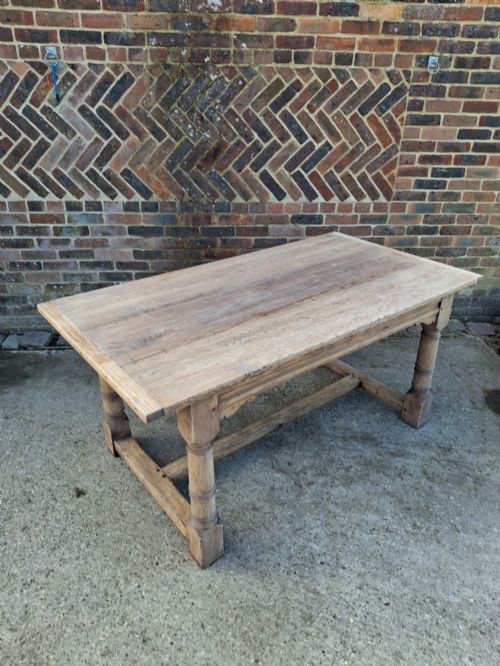
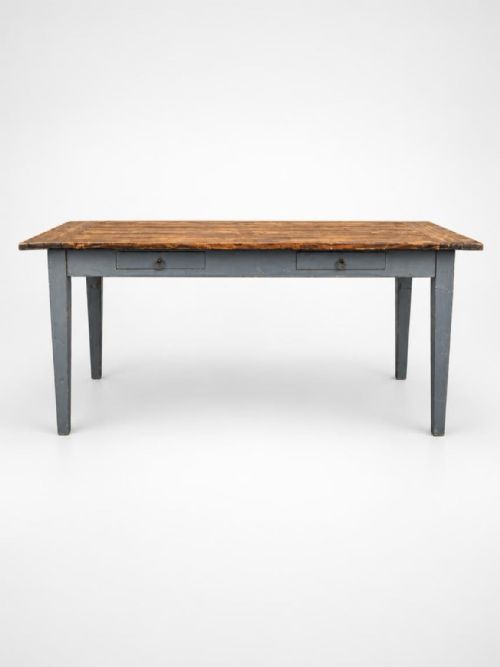
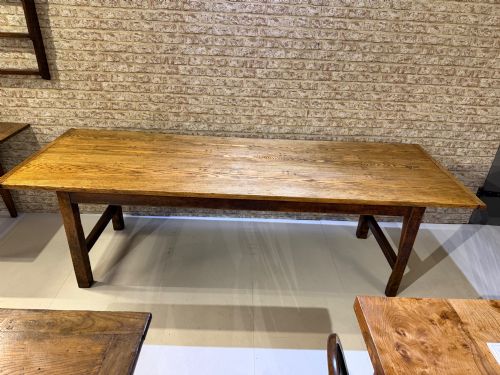
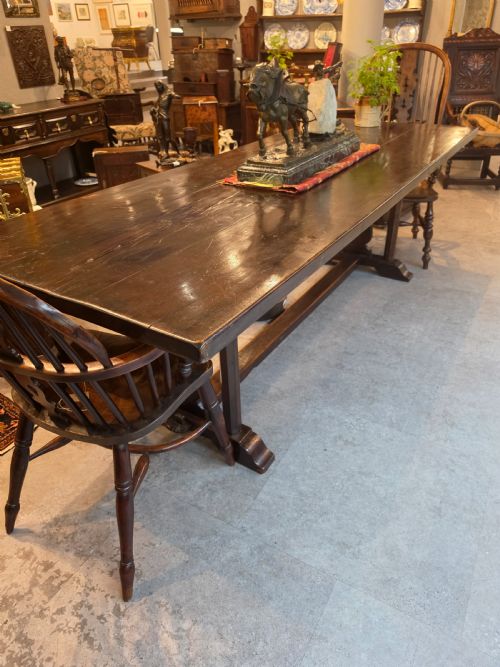
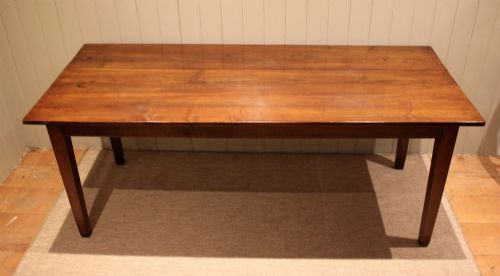
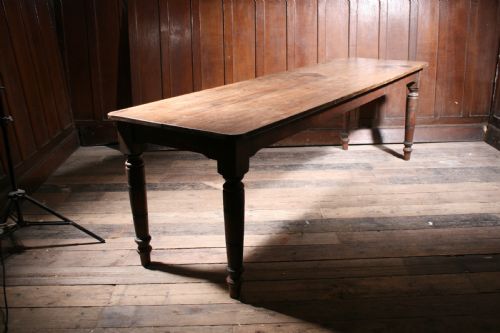
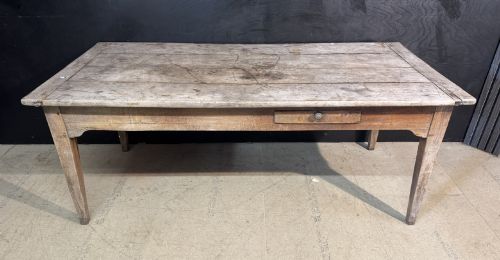
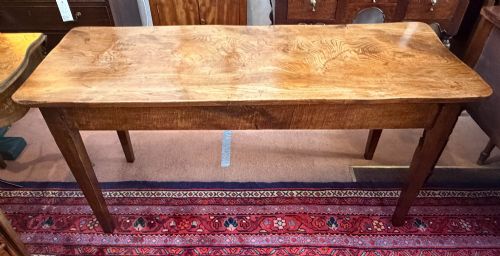
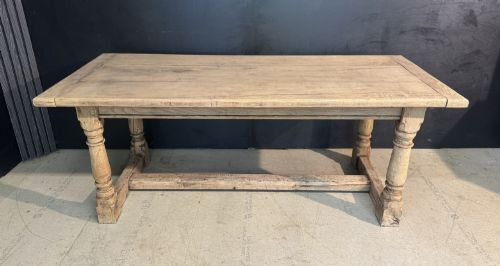
A timber top kitchen table represents the core of domestic life, drawing on forms such as farmhouse, refectory, and trestle designs. When searching for a timber top kitchen table, one encounters pieces spanning the eighteenth, nineteenth, and early twentieth centuries, rooted in practical working spaces.
The selections on this page lean heavily towards generous proportions, often constructed with thick plank tops designed for heavy use. Regional variations appear across French, English, and Italian origins, ranging from scrubbed surfaces to scrub top variants with bread slides.
Materials extend beyond standard softwoods into rich hardwoods, reflecting the varied local timbers available to past makers. These tables served rural households and country houses alike, maintaining a functional presence that suits contemporary dining rooms.
Materials and Construction
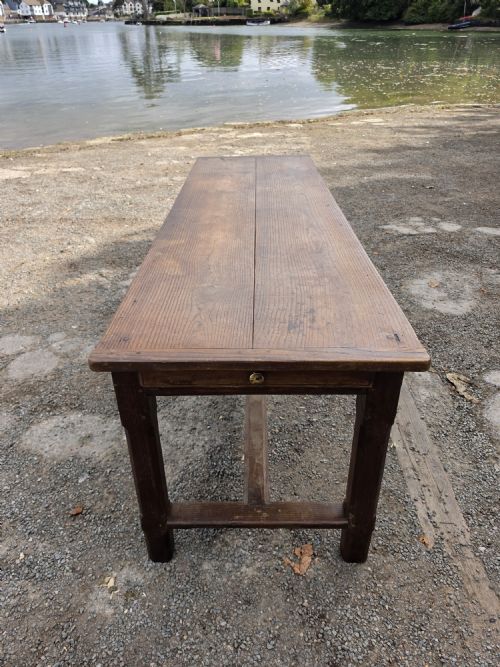
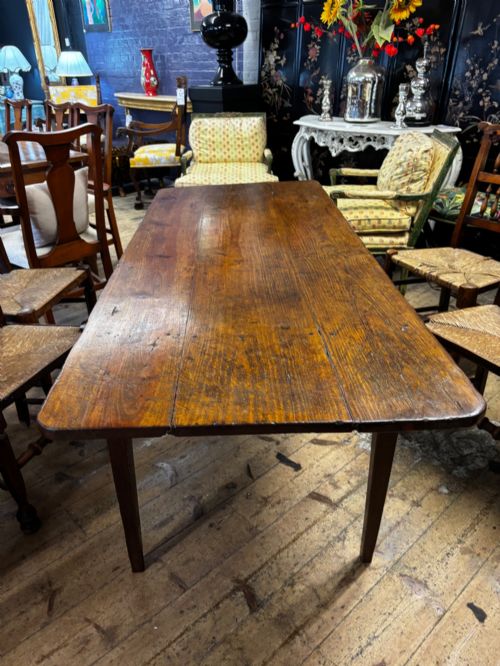
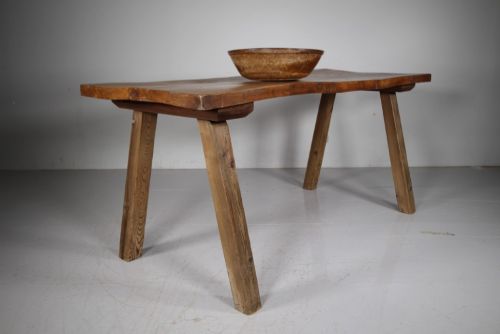
Makers relied on durable regional timbers such as pine, oak, elm, fruitwood, and ash, selecting woods based on local availability and structural strength. Tops frequently feature single, twin, or multiple planks joined together to create a robust working surface that could withstand daily preparation and dining.
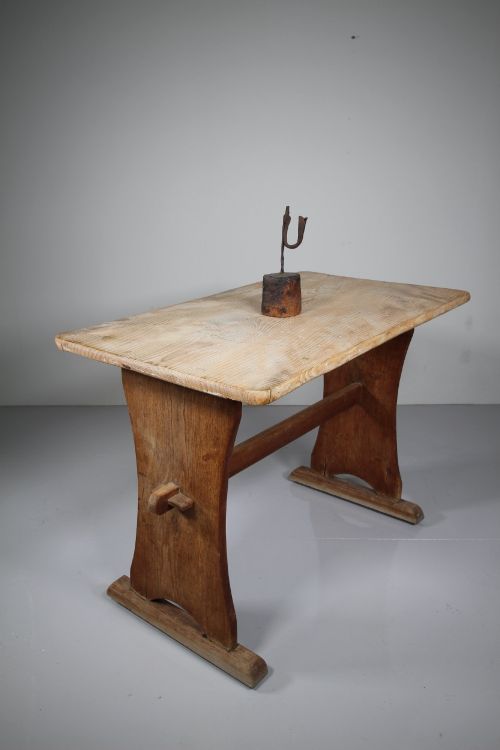
Underframes range from sturdy wooden trestles and four-legged farmhouse bases to iron supports, secured with traditional joinery methods. Surfaces show the marks of hand-planing and sustained use, recording the physical labour and domestic routines of past centuries.
Timber Top Kitchen Table Retail Price Guide 2026
Typical asking prices for timber top kitchen table among the pieces listed under this phrase on Sellingantiques today, from the lower quarter to the upper quarter. They describe what is for sale here now, not the wider market.
Some French country tables arrive with integrated bread slides, quietly proving that past generations took their carbohydrate storage very seriously.
Evaluating Quality
Quality rests in the integrity of the timber selection and the balance of proportions between the top and the underframe. Tables featuring stable, well-seasoned planks with minimal distortion stand apart from lesser examples where subsequent timber movement compromises the structure.
The character of the surface timber dictates much of the visual weight, with tightly fitted plank construction and honest patination marking the better pieces. Finer examples retain their original structural framing without excessive modern intervention, preserving the integrity of the original workshop output.
The Timber Top Kitchen Table Glossary
- Plank top
- A table surface constructed from distinct boards joined edge-to-edge. This method allows large surfaces to remain stable while accommodating natural wood movement.
- Refectory table
- A long, narrow dining table historically used in communal dining halls. These forms translate into domestic settings with substantial length and sturdy stretcher bases.
- Scrub top
- A wooden surface subjected to vigorous washing with water and sand to clean the timber. This process leaves a pale, weathered texture characteristic of French country tables.
- Bread slide
- A pull-out shelf integrated beneath the tabletop. Bakers utilised this feature to cool loaves or expand workspace temporarily.
- Trestle table
- A design supported by two or more upright frames connected by a horizontal beam. This configuration maximises legroom along the length of the table.
Timber Top Kitchen Table: Frequently Asked Questions
What defines a timber top kitchen table?
These tables are practical working surfaces constructed from solid woods like pine, oak, and fruitwood. They date from the eighteenth to the early twentieth centuries.
Designed for daily domestic use, they combine sturdy timber tops with functional bases ranging from farmhouse legs to trestle supports.
How do I care for an antique wooden table?
Maintain the surface by avoiding excessive moisture and using coasters or placemats for hot dishes. Regular dusting preserves the natural patination.
Applying occasional natural wax helps nourish older timbers without sealing the wood in modern synthetic finishes.
Where were these tables originally made?
Originating across various European regions, these pieces reflect local rural traditions from England, France, and Italy. Workshops utilised whichever native hardwoods or softwoods grew nearby.
Country houses, farmhouses, and provincial kitchens provided the primary settings for their daily construction and use.
Can I use an antique table daily?
These pieces were built explicitly for heavy work, dining, and family gatherings over centuries. Their robust construction suits active modern spaces.
Embracing minor marks and historical indentations ensures the table continues its functional life without losing its character.