



Tile Top Cabinet
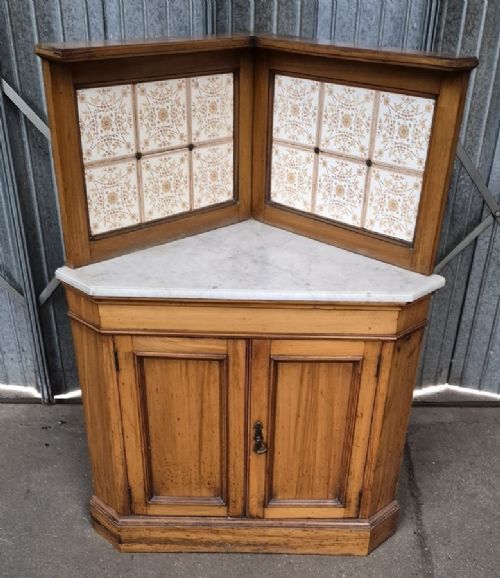
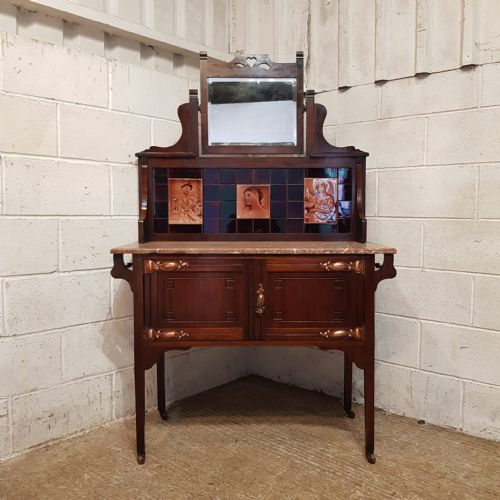
A tile top cabinet offers a practical bedroom surface with glazed ceramic inserts, combining washstand utility with decorative ceramic panels.
Tile Top Cabinet
A tile top cabinet primarily takes the form of a washstand or bedside cabinet intended for bedroom use during the Victorian, Edwardian, and 1900 periods. These pieces serve as functional furniture designed to withstand water and daily use through hard-wearing ceramic surfaces.
The versions most commonly met on this page span Victorian and Edwardian aesthetics, alongside specific Arts and Crafts, Aesthetic Movement, and Art Nouveau interpretations. These items reflect late nineteenth and early twentieth-century domestic utility.
Makers utilised mahogany, walnut, oak, and marble alongside ceramic tiles and brass fittings to construct these cabinets. The combination of timber frames and decorative tiles defines the standard format found across these listings.
How they were made
Cabinet makers constructed the foundational frames using hardwoods such as mahogany, walnut, and oak, joining the timber with traditional cabinet-making methods. These sturdy wooden structures supported heavy stone and ceramic elements without twisting or sagging.
Surfaces incorporated inset ceramic tiles alongside marble slabs, providing durable areas resistant to moisture and staining. Brass hardware and glass components appeared on fittings and doors to complete the construction.
Tile Top Cabinet Retail Price Guide 2026
Typical asking prices for tile top cabinet among the pieces listed under this phrase on Sellingantiques today, from the lower quarter to the upper quarter. They describe what is for sale here now, not the wider market.
The design styles represented across these cabinet listings include Arts and Crafts, Aesthetic Movement, and Art Nouveau.
What varies in quality
The choice of primary timber sets the baseline for quality, with figured mahogany and rich walnut generally indicating more ambitious manufacturing than standard oak. Timber selection dictates the visual weight and longevity of the cabinet frame.
The artistic execution and preservation of the ceramic tiles determine the upper tiers of quality. Hand-painted or specialised art pottery tiles from the Aesthetic Movement or Arts and Crafts periods elevate a piece above standard utility furniture.
Walker And Sons
The Tile Top Cabinet Glossary
- Washstand
- A piece of bedroom furniture designed to hold a basin and jug, often featuring a marble or tile top to protect against water splashes. These items frequently double as cabinets with enclosed storage space below.
- Aesthetic Movement
- A late nineteenth-century design approach focused on beauty and artistic expression rather than strict utility. Cabinets in this style display refined decorative elements and specific aesthetic sensitivities.
- Marble top
- A solid stone slab fitted to the upper surface of a cabinet or washstand. This material provides a cool, non-porous workspace suited to damp environments.
Tile Top Cabinet: Frequently Asked Questions
What is a tile top cabinet?
A tile top cabinet is a piece of antique bedroom furniture, typically configured as a washstand or bedside cabinet, featuring integrated ceramic tiles on its upper surface. These tiles provided a durable, water-resistant area for washing and daily ablutions.
The form bridges domestic utility and decorative arts, particularly during the Victorian and Edwardian eras when hygiene and interior decoration became increasingly important in British homes.
How were washstands used originally?
Original use centred on the bedroom, where these pieces held ewers, wash basins, and personal grooming items before indoor plumbing became universal. The tiled or marble surfaces protected the wooden structure from water damage during daily use.
Cabinets and cupboards incorporated below stored chamber pots, linens, and washing accessories out of sight, keeping the bedroom tidy and organised.
How do I date a cabinet?
Dating relies on identifying stylistic markers such as Arts and Crafts simplicity, Aesthetic Movement detailing, or Art Nouveau flowing lines. Timber choices, construction methods, and hardware also point toward specific decades between the mid-nineteenth and early twentieth centuries.
Victorian pieces often display heavier proportions and rich walnut or mahogany, whereas Edwardian examples frequently utilise lighter mahogany frames and simpler lines.
How do I care for the surface?
Maintenance involves keeping the wooden frame and ceramic tiles clean using dry or slightly damp cloths, avoiding harsh chemical cleaners that might damage the glaze or polish. Waxing the timber periodically preserves the finish of the walnut, oak, or mahogany.
Care should be taken around the grout lines between tiles to prevent moisture ingress, ensuring the structural integrity of the top remains sound over time.