

Tiered Open Shelf
When you search for a tiered open shelf, you find multiple levels of open shelving designed to display or hold books and objects.
Tiered Open Shelf
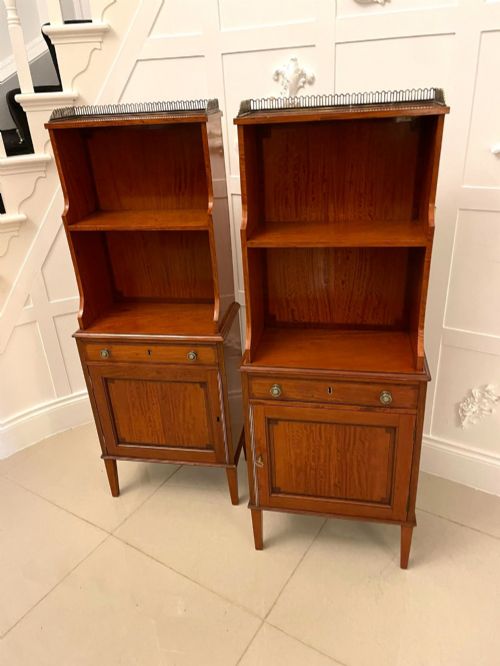
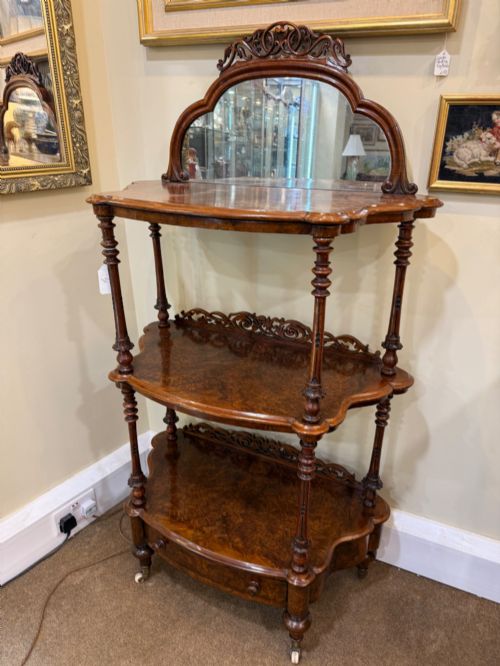
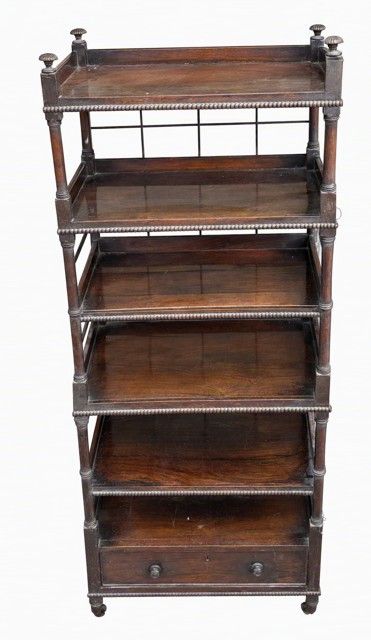
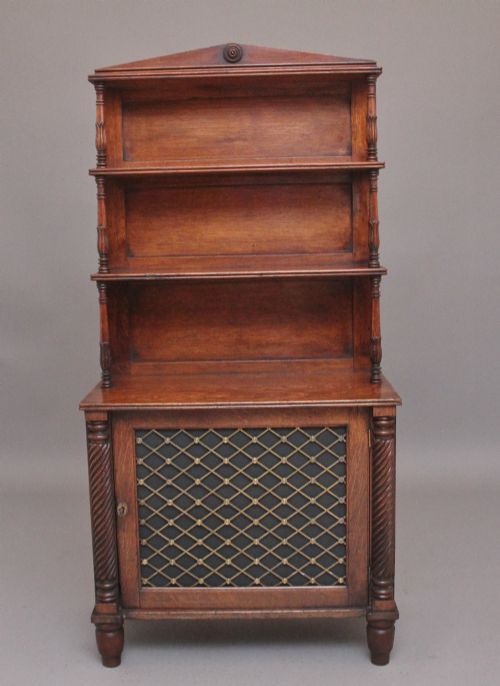
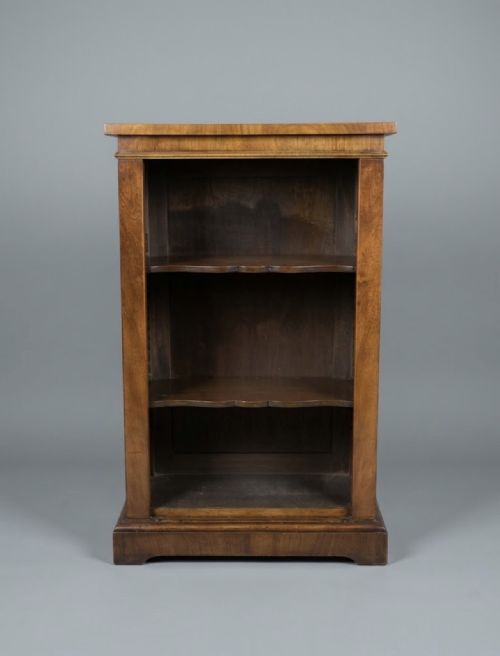
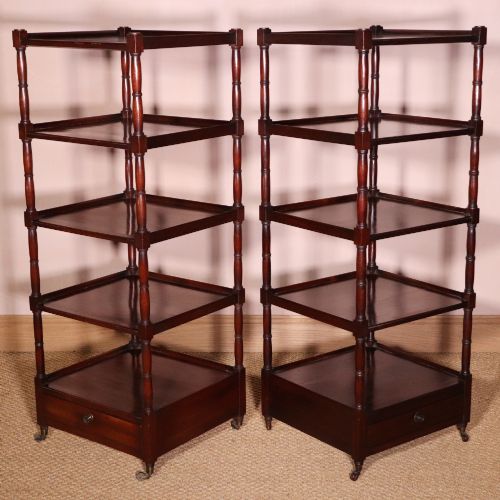
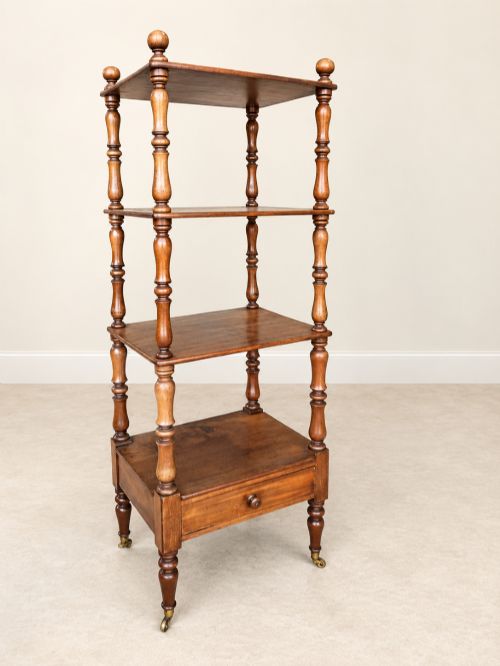
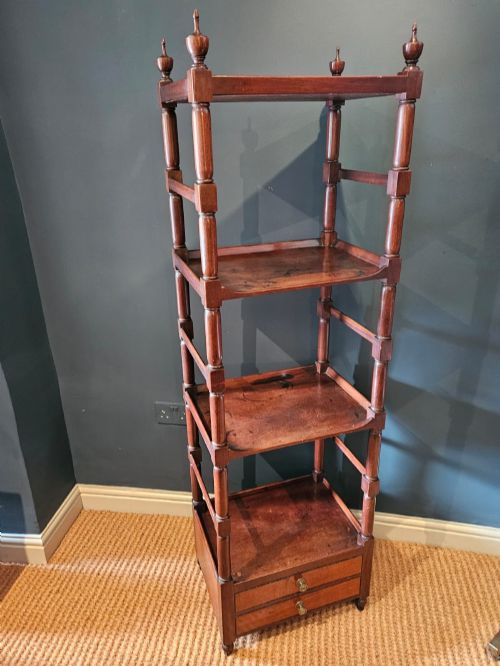
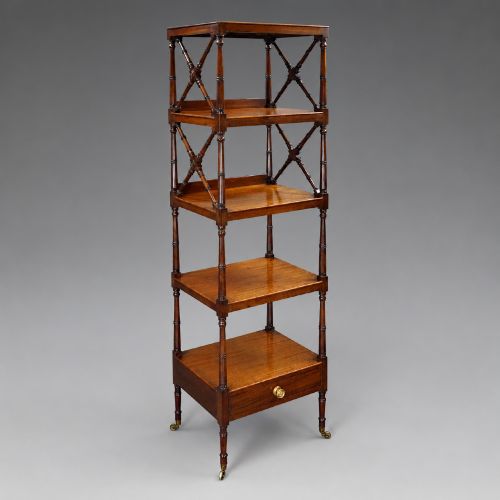
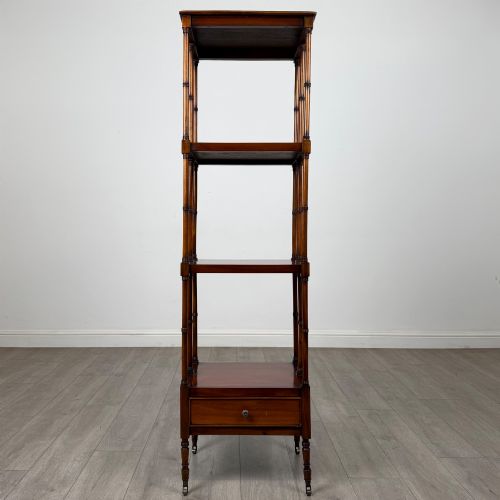
A tiered open shelf takes the form of bookcases, whatnots, etageres, and wall shelves spanning periods from the Georgian era through the Victorian and Edwardian periods. Buyers encounter freestanding walnut and mahogany whatnots alongside oak and satinwood open bookcases across these listings.
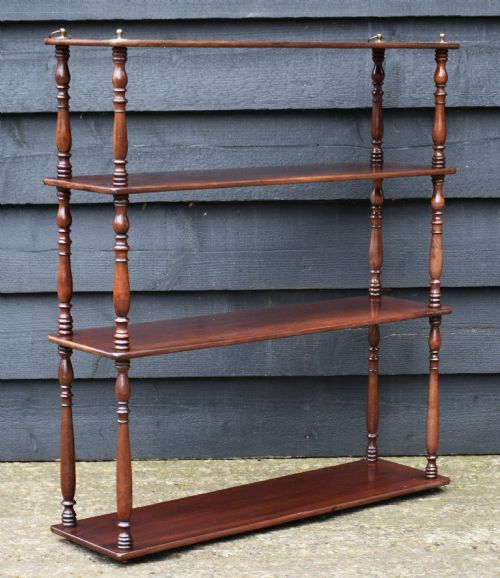
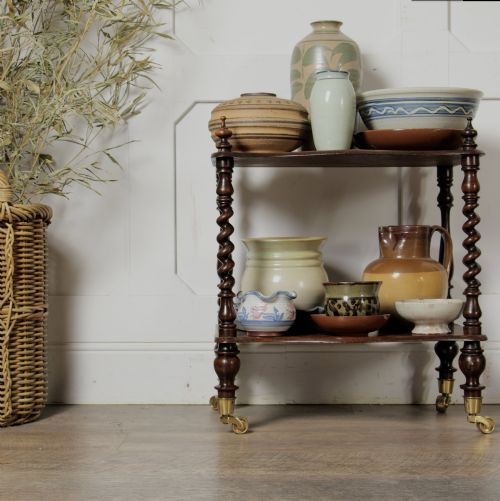
Makers and cabinetmakers constructed these multi-level units for domestic display, utilising graduated platforms supported by turned pillars, barley twist columns, or fretwork sides. The forms range from corner units and wall hanging shelves to tall freestanding bookcases and music stands.
How they were made
Cabinetmakers built these pieces using dense hardwoods such as mahogany, walnut, rosewood, and oak, often applying burr walnut or satinwood veneers to prominent surfaces. Brass details and turned wood supports provide structural division between the individual tiers.
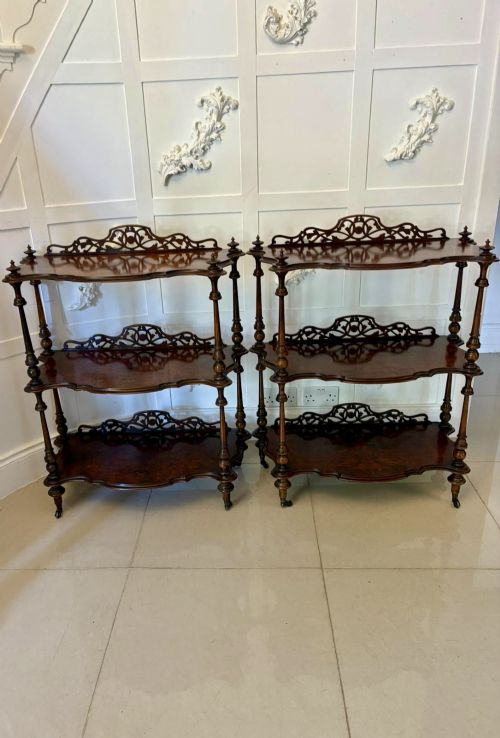
Construction techniques include pierced fretwork galleries, turned legs, and slender supporting pillars that keep the multi-tiered structure light yet rigid. Joints rely on traditional cabinetmaking methods suited to freestanding display furniture and wall-mounted shelving.
Listings feature woods including mahogany, walnut, rosewood, oak, burr walnut, and satinwood across multiple 19th-century periods.
What varies in quality
The choice of timber and veneer defines the visual weight of each piece, with figured burr walnut and exhibition-quality satinwood sitting at the upper end of the range. Simpler utilitarian oak or standard mahogany pieces offer robust everyday utility without decorative veneers.
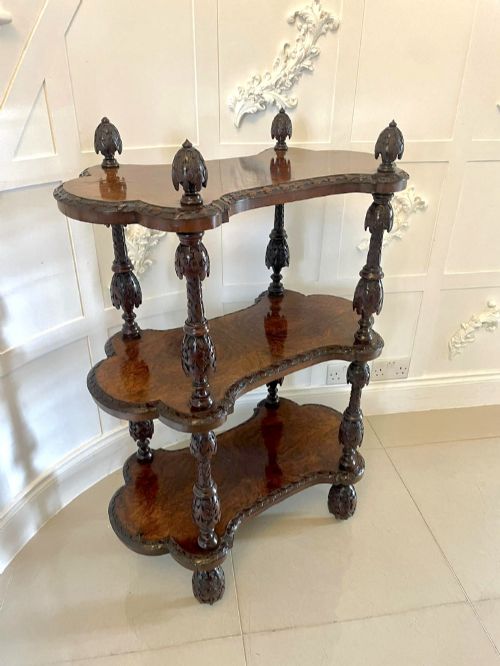
Refinement in turning, such as crisp barley twist columns or delicate pierced fretwork galleries, separates standard workshop output from finer cabinetmaker pieces. The integrity of the tiered structure and the matching of grain across multiple shelves indicate the level of care taken in construction.
Gillows
The Tiered Open Shelf Glossary
- Whatnot
- A moveable set of open shelves used for displaying ornaments, books, or small possessions. These multi-tiered pieces gained popularity during the Georgian and Victorian periods.
- Etagere
- A piece of furniture consisting of a number of open shelves for displaying small objects or china. This French-derived term often describes slender multi-level stands.
- Waterfall bookcase
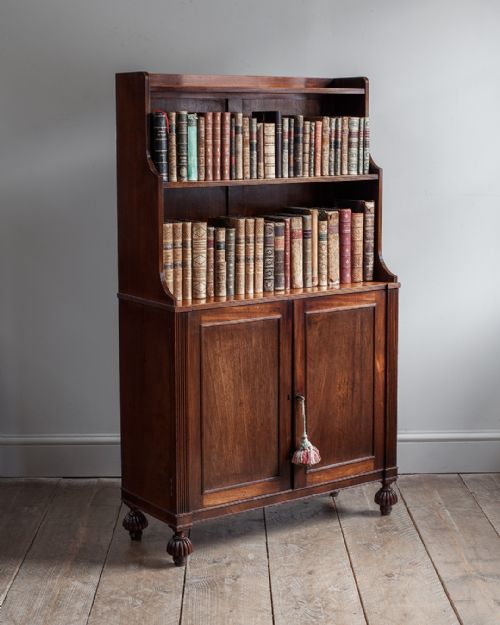
- A standing set of open shelves where each successive shelf is deeper than the one above it, creating a stepped profile resembling a waterfall.
- Fretwork
- Ornamental perforated or cut-out woodwork used on galleries or side panels. This technique adds decorative lightness to the edges of shelves.
- Barley twist
- A type of turning shaped like a spiral rope, commonly used for the vertical supports or legs on Victorian stands and whatnots.
Tiered Open Shelf: Frequently Asked Questions
What is a tiered open shelf used for?
These pieces serve as multi-level display units and storage for books, ceramics, and ornaments within living spaces.
Their open construction allows objects to be viewed from multiple angles while occupying minimal floor space.
How do I identify a Victorian whatnot?
Victorian whatnots typically feature three to six graduated tiers supported by turned columns, barley twists, or pierced fretwork.
They appear in walnut, mahogany, and rosewood, often incorporating lower drawer compartments or corner configurations.
Are waterfall bookcases Georgian or Victorian?
Waterfall bookcases span multiple periods, with examples originating in the Georgian era and continuing through the Victorian and Edwardian periods.
Later revival pieces also appear alongside earlier 19th-century cabinetwork.
How do I care for antique wood shelving?
Keep wooden shelves away from direct heat sources and fluctuating humidity to prevent timber movement and veneer lifting.
Apply traditional wax polish occasionally to nourish the surface of mahogany, walnut, and oak.