




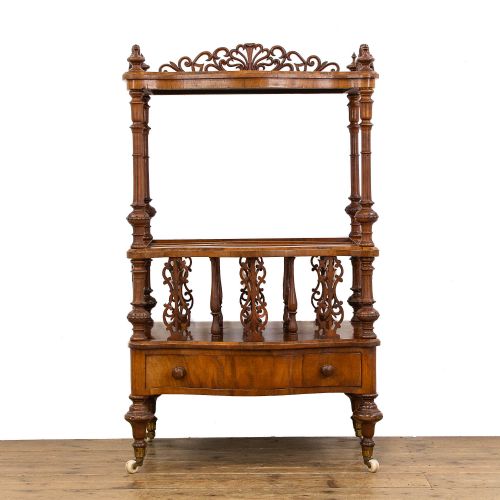


Tiered Music Cabinet
These tiered music cabinet designs combine display shelves with dedicated storage, offering collectors practical furniture that organises sheet music and showcases decorative objects.
Tiered Music Cabinet
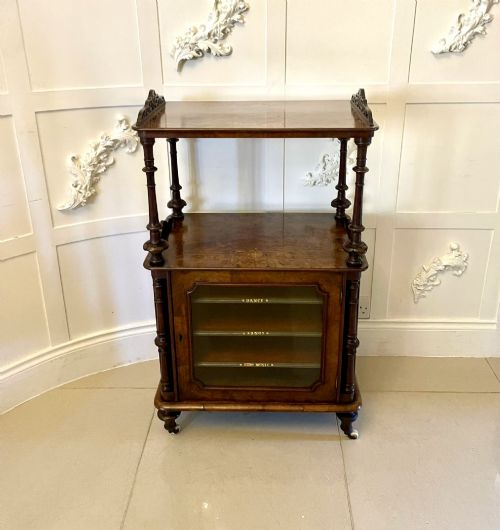
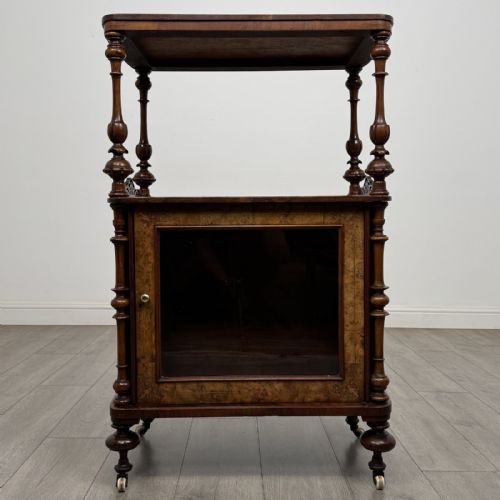
When you search for a tiered music cabinet, you encounter pieces that function simultaneously as display stands and storage units, often incorporating open shelving or etagere tiers above enclosed compartments. The examples met on this page span the Victorian and Edwardian periods alongside the nineteenth century and Regency eras, reflecting diverse structural forms.
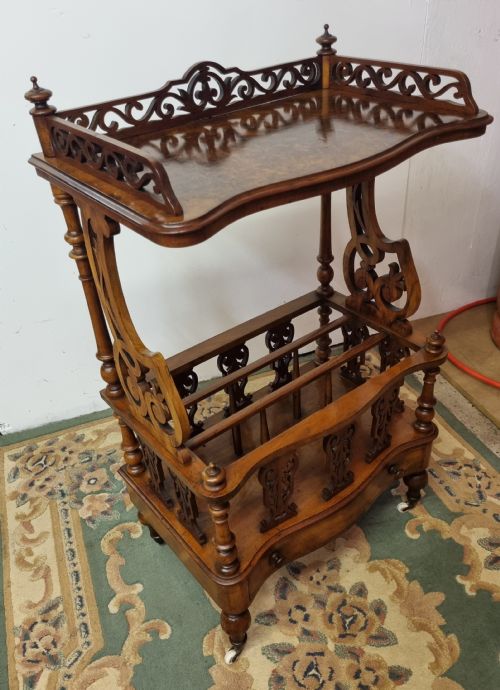
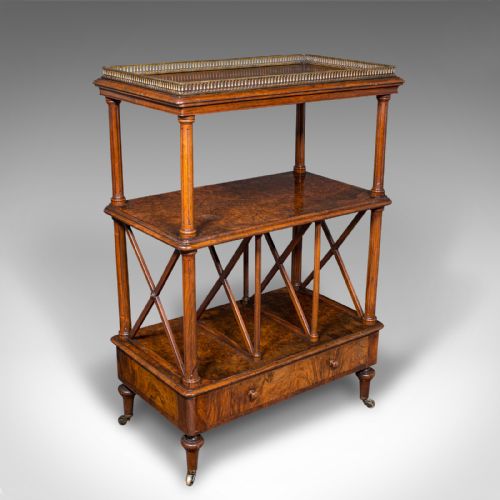
Makers designed these items to serve dual purposes in domestic interiors, merging the functions of a music cabinet, a Canterbury, and a whatnot. The physical evidence shows frequent combinations of open tiers for display with lower cabinets or compartmentalised sections for papers.
Most pieces date from the nineteenth century, including specific years like 1860 and 1890, alongside broader Victorian and Edwardian classifications. Their forms range from serpentine shapes and glazed doors to tall shelving stands fitted with original castors and turned feet.
Materials and construction
Cabinet makers utilised rich timbers such as burr walnut, mahogany, rosewood, and ebony to construct the frames and bodies of these items. Burr walnut appears frequently, often providing striking grain patterns across the main surfaces.
Detailed embellishments involve inlaid decorative work alongside structural elements formed from brass and glass. Glazed doors protect interior contents while ceramic components occasionally appear in the fitting or mounting of the hardware.
Tiered Music Cabinet Retail Price Guide 2026
Typical asking prices for tiered music cabinet among the pieces listed under this phrase on Sellingantiques today, from the lower quarter to the upper quarter. They describe what is for sale here now, not the wider market.
Several pieces include original castors, ensuring nineteenth-century sheet music could follow the pianist around the room.
Distinctions in craftsmanship
Superior examples demonstrate refined timber selection, particularly in the figuring of burr walnut and rosewood veneers across prominent exterior surfaces. The execution of inlaid decoration and the precision of joinery separate standard production from finer cabinet work.
Structural integrity depends upon original elements such as turned feet, brass hardware, and working castors remaining intact. The complexity of the form, such as combining serpentine shapes with multi-functional tiers and drawers, indicates the level of ambition in the original design.
The Tiered Music Cabinet Glossary
- Canterbury
- A low stand featuring vertical partitions, originally designed to hold sheet music or folios. These pieces often include a single drawer beneath the main tier.
- Etagere
- A piece of furniture consisting of a set of open shelves for displaying ornaments. They frequently form the upper section of a tiered music cabinet or whatnot.
- Burr walnut
- A prized timber harvested from the wart-like growth on a walnut tree. It yields highly figured wood grain patterns used extensively for decorative veneering.
- Whatnot
- An open set of freestanding shelves used for holding ornaments and books. Victorian makers often combined this form with music cabinets and display stands.
Tiered Music Cabinet: Frequently Asked Questions
What is a tiered music cabinet?
A tiered music cabinet is a piece of nineteenth-century furniture that combines open display shelves with dedicated storage for sheet music.
These items merge the functions of a whatnot, a Canterbury, and a cabinet into a single multi-purpose stand.
How were music cabinets used?
Victorian households utilised these cabinets to store sheet music near pianos while displaying decorative ornaments on the upper tiers.
The open shelves held porcelain and small objects, while the lower compartments or partitions kept musical scores organised.
What woods were commonly used?
Cabinet makers built these pieces using rich hardwoods including burr walnut, mahogany, and rosewood.
Ebony and brass often provided contrasting inlay work and structural detail against the main timber bodies.