

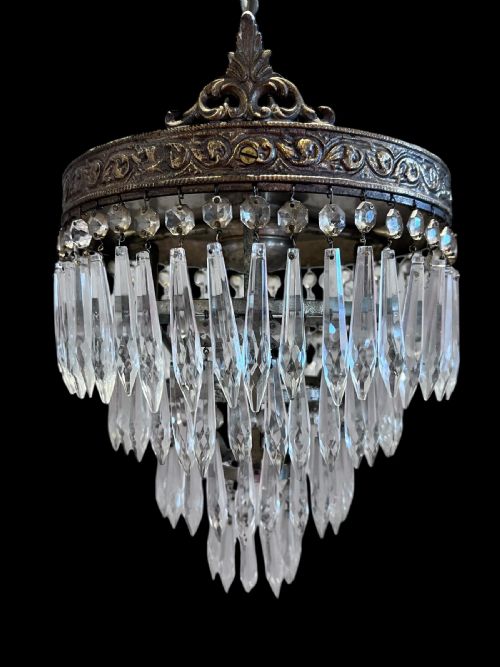


Tiered Crystal Light Fitting
A tiered crystal light fitting brings layered illumination and sparkling glass to a room, drawing the eye upwards with its suspended prisms.
Tiered Crystal Light Fitting
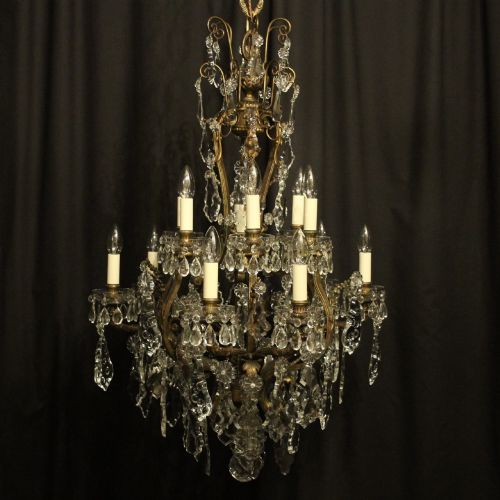
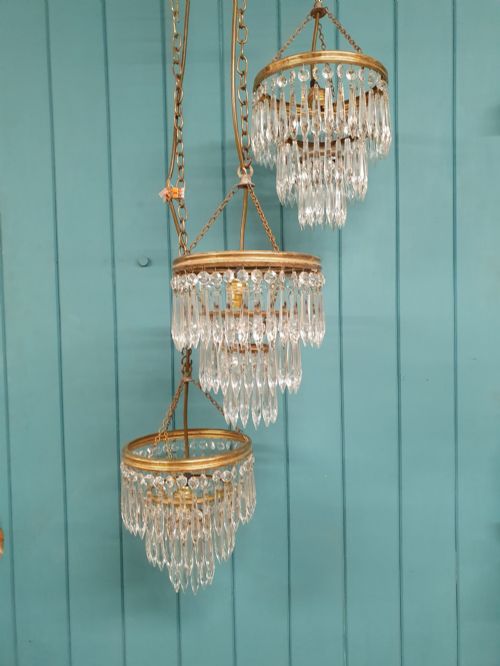
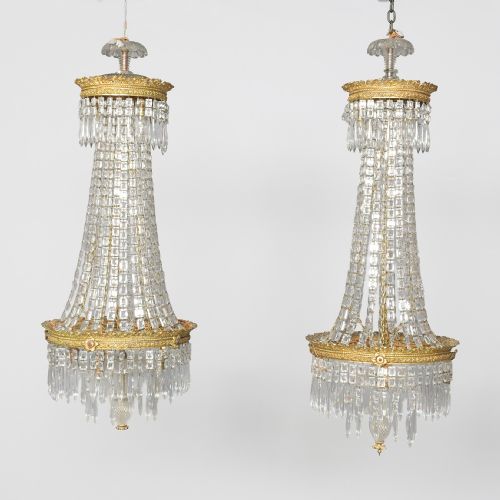
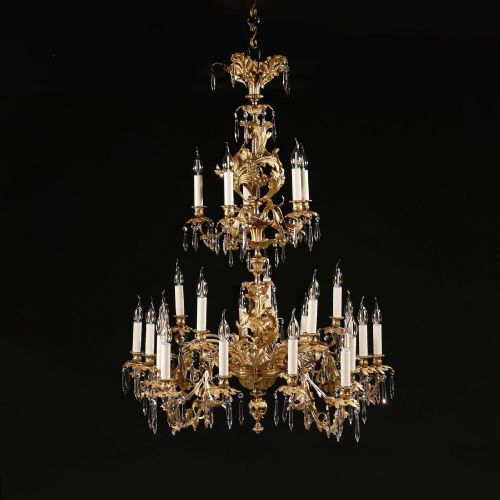
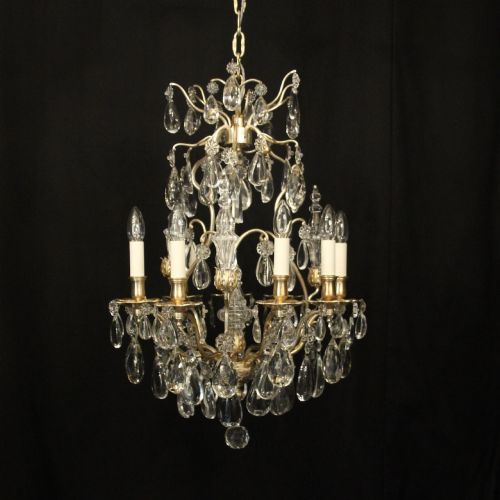
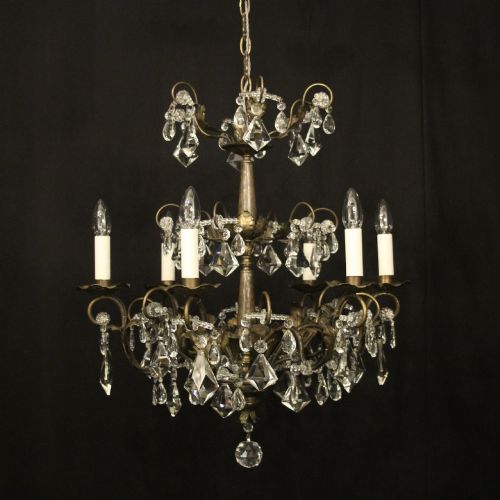
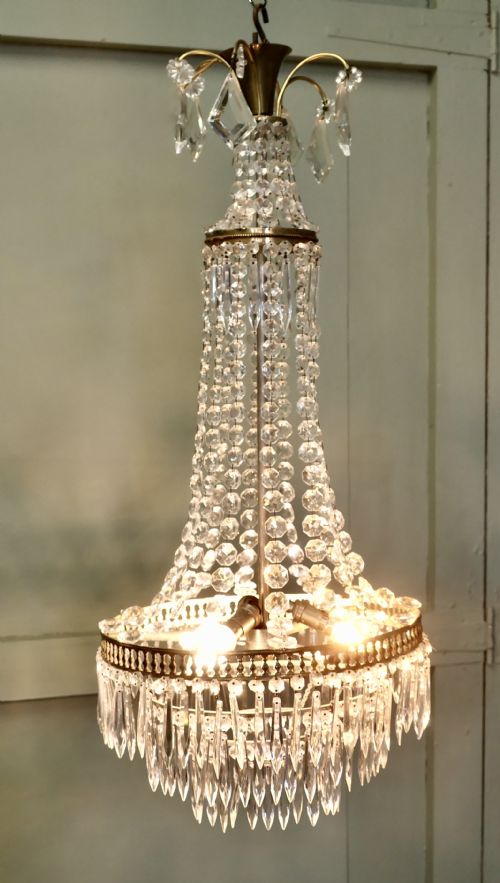
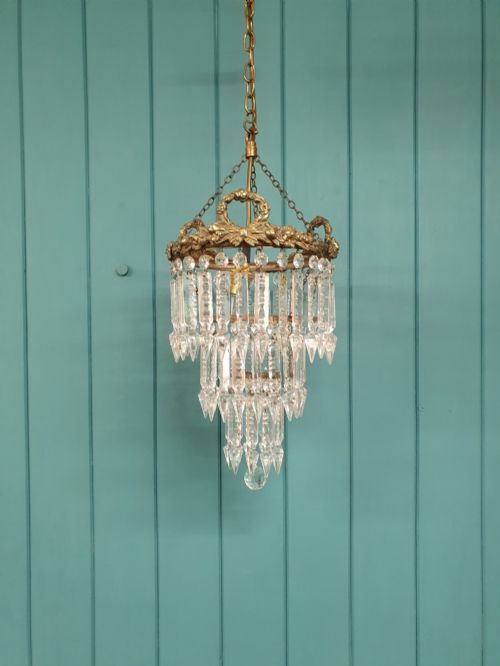
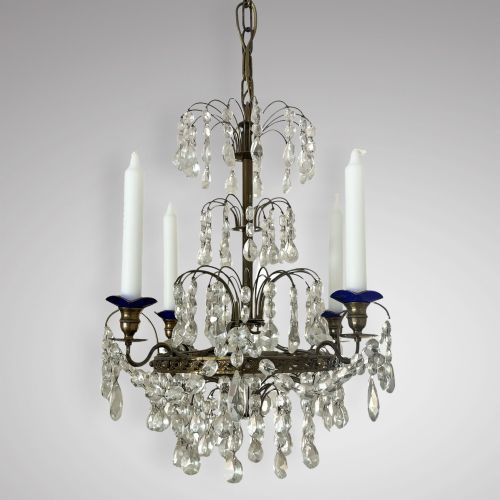
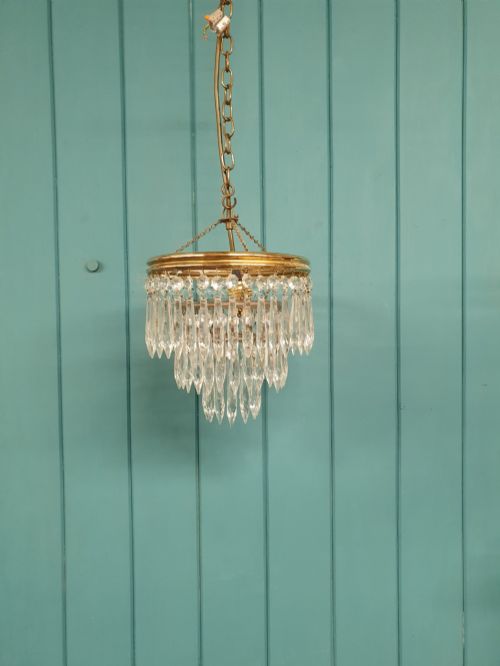
A tiered crystal light fitting is an overhead fixture constructed with multiple descending levels or tiers of glass drops, beads, and prisms. When exploring a tiered crystal light fitting on this page, a buyer encounters forms ranging from grand multi-light chandeliers to compact ceiling lights and pendant lights.
The selections span various periods including the nineteenth century, Edwardian era, and the nineteen-thirties, reflecting diverse international origins. French, English, Italian, and Bohemian workshops dominate the inventory, bringing distinct regional interpretations to the tiered silhouette.
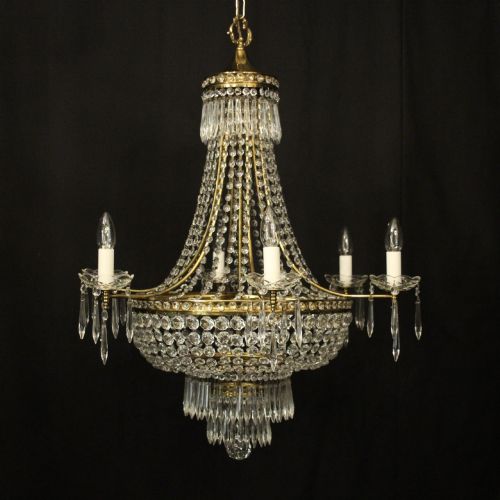
Common layouts include tent and waterfall configurations, spike designs, and multi-tier variations equipped with arms numbering from single digits up to forty-one lights. Buyers frequently find pieces cast in styles such as French Empire, Art Deco, Rococo, and Florentine.
How they were made
Makers constructed these fixtures using robust metal frames formed from brass, bronze, gilt metal, and silver-gilded bronze to support heavy glass components. These metal structures were often heavily gilded or cast with ornamental details before wiring or candle nozzles were fitted.
The luminous elements consist of crystal, cut glass, and cut crystal shaped into drops, beads, and plates. Artisans faceted these glass pieces by hand to maximise the refraction of light across the tiers.
Tiered Crystal Light Fitting Retail Price Guide 2026
Typical asking prices for tiered crystal light fitting among the pieces listed under this phrase on Sellingantiques today, from the lower quarter to the upper quarter. They describe what is for sale here now, not the wider market.
One extraordinary ballroom chandelier on record carries forty-one lights for maximum illumination.
What varies in quality
Quality rests primarily on the depth of the metal casting and the precision of the glass cutting. Heavier bronze frames and hand-cut crystal drops that retain sharp facets separate superior examples from simpler productions.
The complexity of the tier arrangement and the integration of metalwork with glass elements dictate the overall sophistication of the piece. Grander chandeliers employ intricate beaded swags and numerous light sources to achieve a dense, cohesive composition.
Baccarat
The Tiered Crystal Light Fitting Glossary
- Waterfall chandelier
- A lighting fixture where crystal drops cascade downwards in overlapping tiers resembling falling water. This configuration creates a dense sheet of sparkling glass.
- Tent and bag chandelier
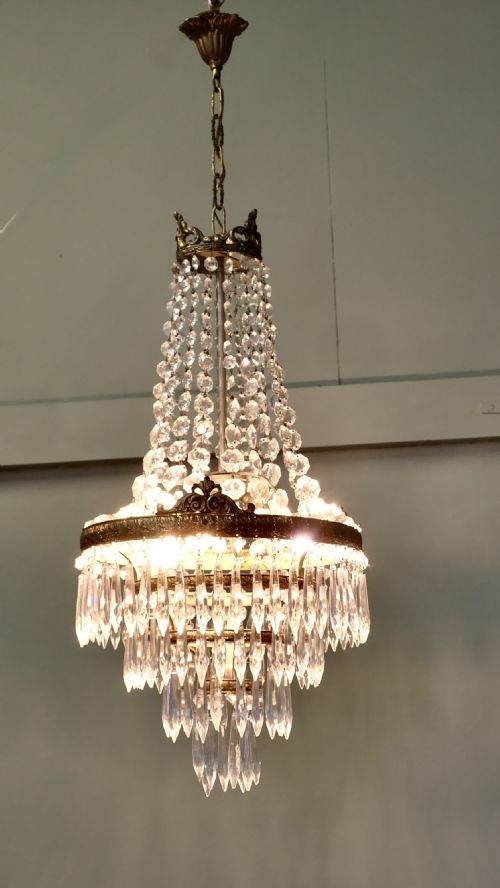
- A design featuring an upper canopy or tent of crystal strings converging towards a central bagged cluster of drops below. It is a classic eighteenth and nineteenth-century silhouette.
- Electrolier
- A light fixture designed specifically for electricity rather than converted from candles or gas. These pieces often date from the late nineteenth century onwards.
- Plafonniere
- A ceiling light fitted flush or very close to the ceiling surface rather than suspended on a long chain. They often feature a single light source enclosed or framed by glass.
- Cut crystal
- Glass containing lead oxide that has been manually carved and polished with facets. The high lead content increases brilliance and light dispersion.
Tiered Crystal Light Fitting: Frequently Asked Questions
How do I clean a tiered crystal light fitting?
Cleaning requires a gentle solution applied directly to the glass drops using a soft cloth while the fixture remains supported. Technicians often clean intricate chandeliers in situ to avoid damaging the delicate wire connections.
Harsh chemical cleaners must be avoided to protect the gilded or bronze finishes on the metal frame. Regular dusting helps maintain the reflective quality of the crystal tiers over time.
How do I determine the period of a crystal chandelier?
Dating relies on examining the metal casting techniques, the cut of the glass, and the wiring or candle sockets. Earlier nineteenth-century examples often feature heavy bronze mounts and hand-cut pendeloques.
Later Edwardian and nineteen-thirties pieces may incorporate machine-cut glass elements or streamline Art Deco geometric frameworks. Comparing the construction methods to documented styles helps narrow the manufacturing decade.
Can these chandeliers be hung from standard ceilings?
Suspension depends on the weight of the metal frame and the structural support available in the ceiling joists. Heavy multi-tier fittings require reinforced fixings and professional installation to bear the load safely.
Ceiling height also dictates the choice between a flush plafonniere and a cascading chandelier on a chain. Lower rooms suit compact spike or swag designs rather than multi-tiered ballroom fixtures.
What is the difference between glass and crystal?
Crystal contains a proportion of lead oxide which increases the density, weight, and refractive index of the material. This chemical composition allows artisans to cut sharper facets that disperse light into spectral colours.
Standard glass lacks lead content and tends to be lighter with less optical brilliance. Antique tiered fittings often utilise high-lead crystal for its superior sparkle.