
Tier Shelf Unit
A tier shelf unit provides graduated display space, combining open shelving with architectural presence in mahogany, walnut, oak, and rosewood.
Tier Shelf Unit
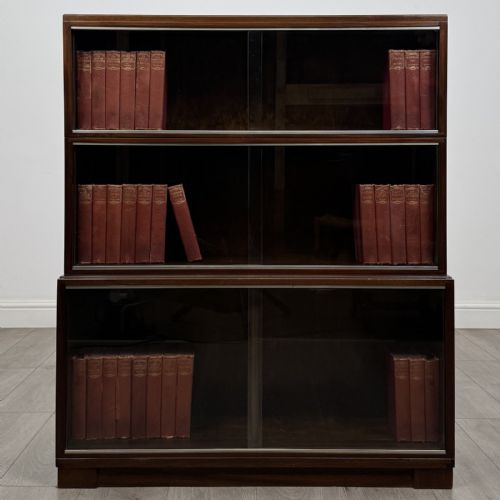
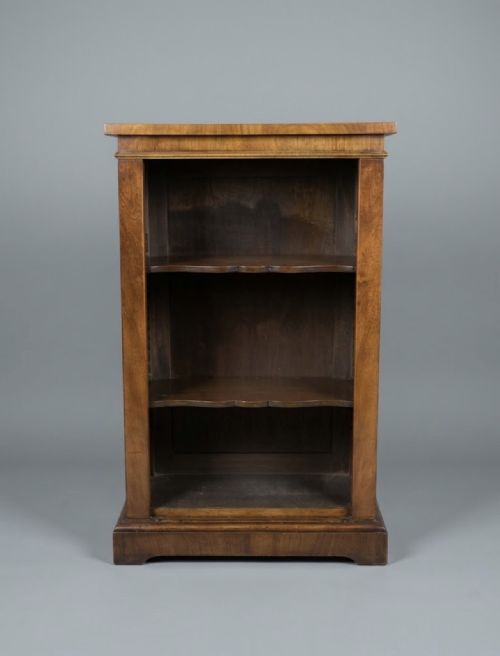
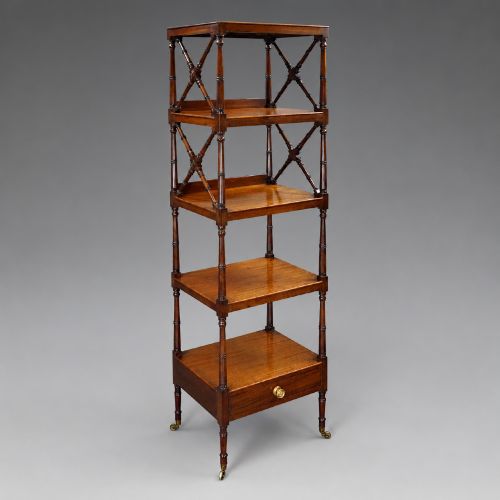
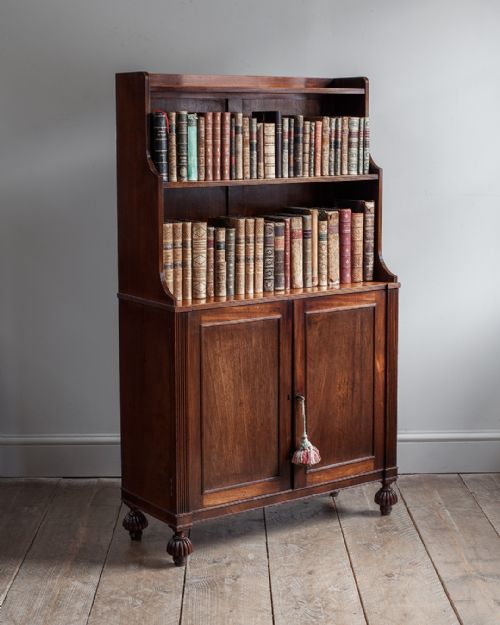
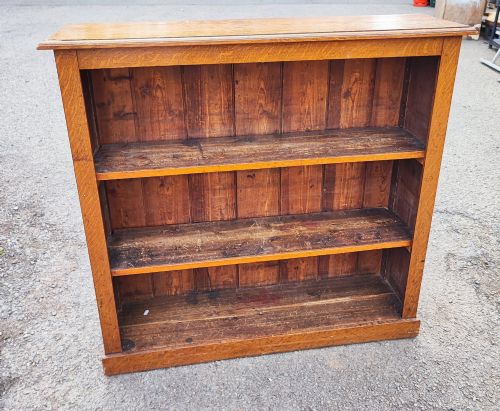
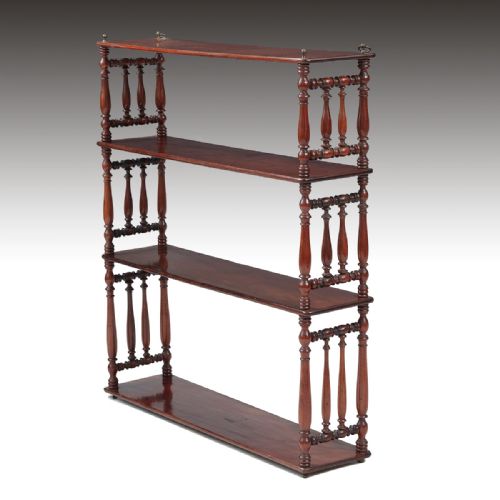
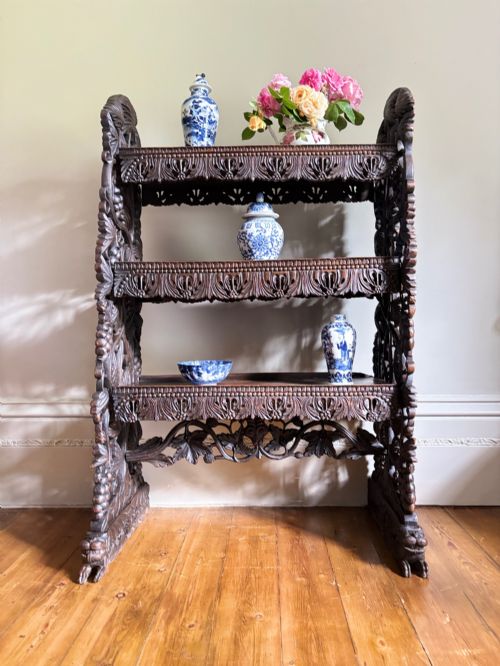
A tier shelf unit encompasses multiple open levels designed for display and storage, appearing in forms such as whatnots, etageres, bookcases, and hanging shelves. When exploring a tier shelf unit, buyers frequently encounter 19th-century and Victorian pieces, alongside Regency, Edwardian, and Arts and Crafts examples.
The selection ranges from dwarf bookcases and wall-hung shelves to substantial multi-tiered buffets and corner units. Timelines span from George III origins through the Regency period and into the early twentieth century, reflecting shifting domestic needs for organised display.
Materials and Construction
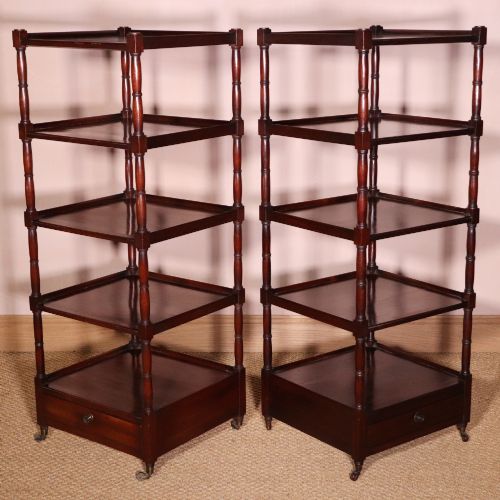
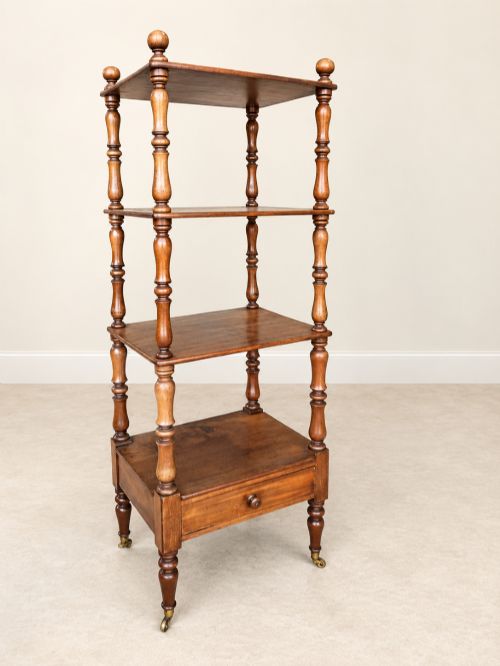
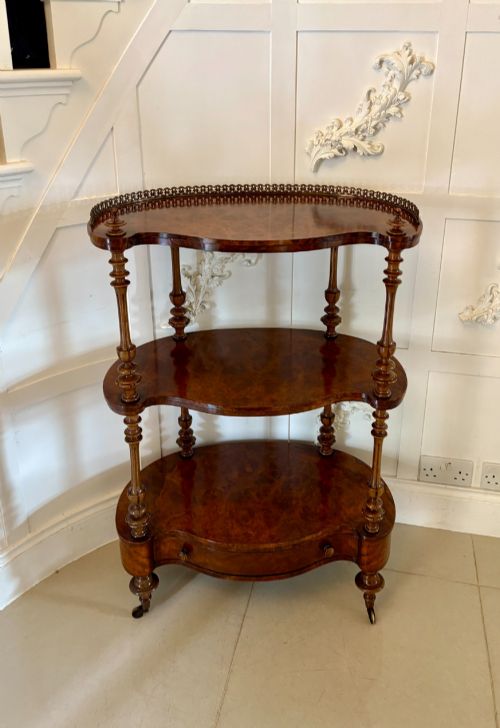
Construction relies heavily on figured timbers such as mahogany, burr walnut, rosewood, and oak, occasionally incorporating ebonised wood or pine. Brass fixtures and original castors appear frequently on freestanding items like étagères and buffets.
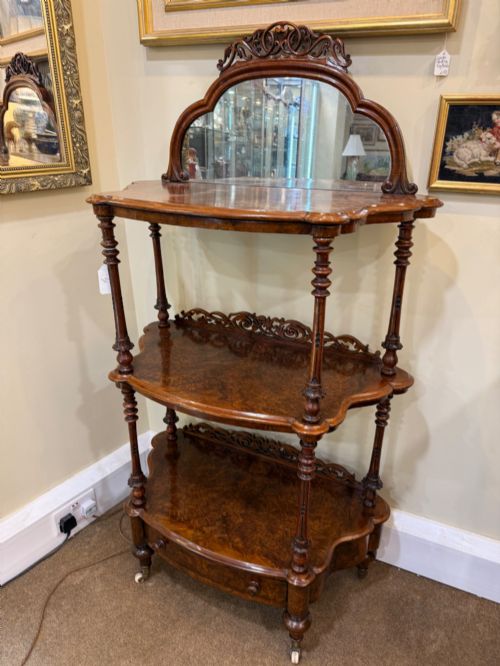
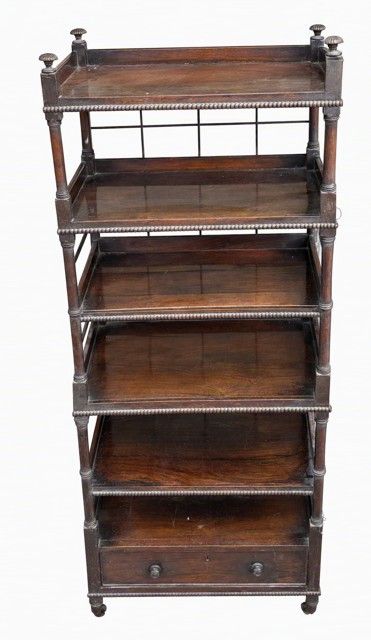
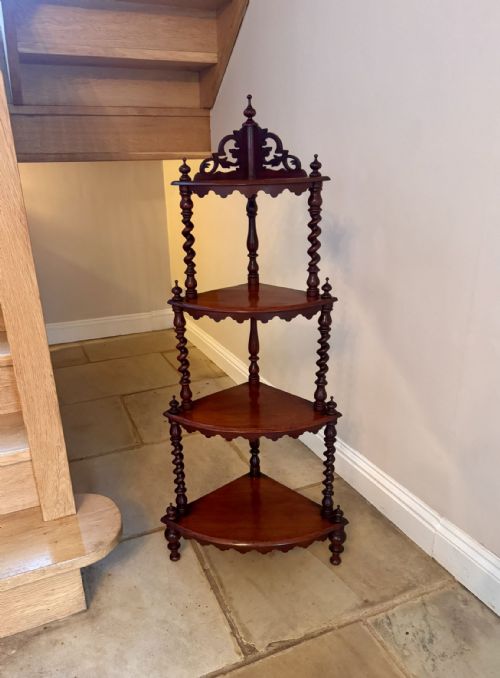
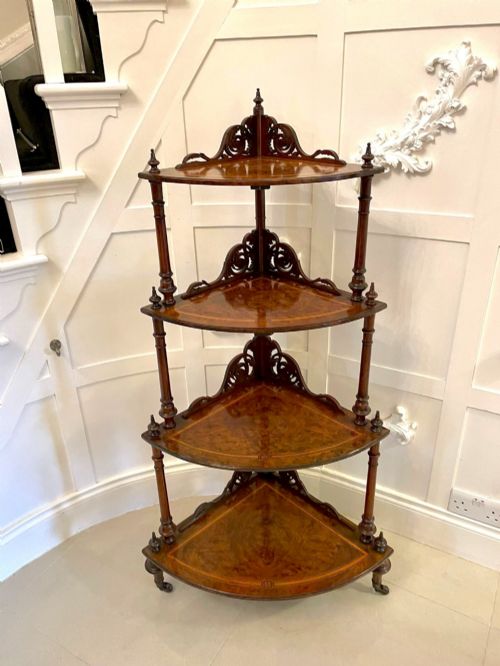
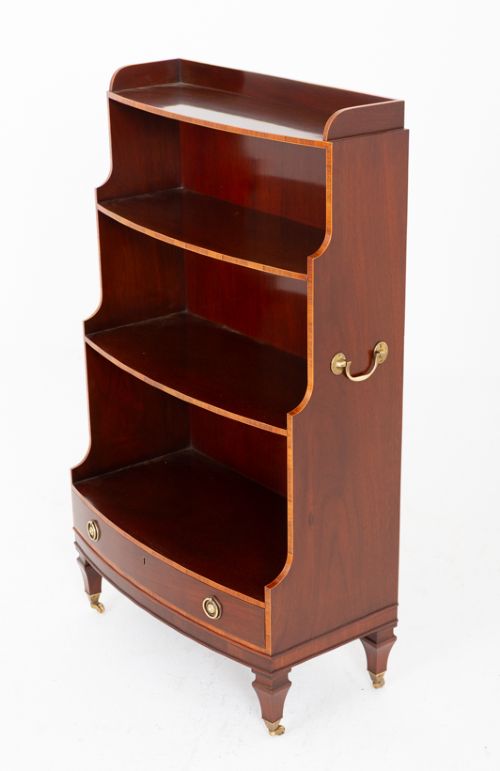
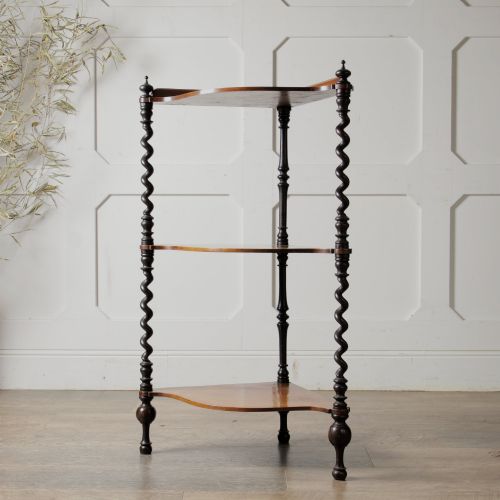
Joinery techniques serve the architectural demands of stacking tiers securely, utilising turned legs, barley twist supports, and graduated graduated shelves that form waterfall silhouettes or serpentine shapes.
Some six-tier ebonised dumb waiters from eighteen-sixty provide towering displays that require careful ceiling height consideration.
Build and Material Selection
Proportion and timber matching define the upper tier of pieces, where grain patterns align across successive levels and original brass hardware remains intact.
The Tier Shelf Unit Glossary
- Whatnot
- A piece of furniture consisting of several open shelves for displaying small objects. They often feature three to six tiers supported by columns or turned posts.
- Étagère
- A piece of furniture with a set of open shelves for holding ornaments. These French-derived open display units frequently utilise rosewood or walnut.
- Waterfall bookcase
- A set of open shelves where each tier steps back progressively from the one below. This creates a cascading silhouette popular during the Regency period.
- Dumb waiter
- A freestanding tiered stand used historically for serving food or holding tableware. Examples range from revolving designs to multi-tiered ebonised buffet shelves.
Tier Shelf Unit: Frequently Asked Questions
What is a tier shelf unit used for?
These units serve primarily to display books, ceramics, and decorative objects across multiple open levels within a living space.
Historically, they adapted to various domestic rooms, functioning as bedside storage, corner display stands, or dining room serving surfaces.
How do I date a tier shelf unit?
Dating relies on identifying timber choices, such as rosewood and burr walnut in nineteenth-century examples or oak in Edwardian and Arts and Crafts pieces.
Structural details like barley twist supports, serpentine shaping, and original castors help narrow the period of manufacture.
Are hanging shelves considered a tier shelf unit?
Hanging shelves form a distinct subcategory designed to mount directly onto walls rather than stand freely on the floor.
They share the multi-tiered construction and display function of floor-standing whatnots and bookcases.
What woods were used for tier shelf units?
Mahogany and walnut dominate the formal nineteenth-century pieces, often featuring figured grains or burr veneers.
Oak appears in Edwardian and Arts and Crafts interpretations, while pine serves simpler rustic country variations.