



Tier Revolving Bookshelf
A tier revolving bookshelf is a practical piece of library furniture designed for easy access to volumes from any angle in a room.
Tier Revolving Bookshelf
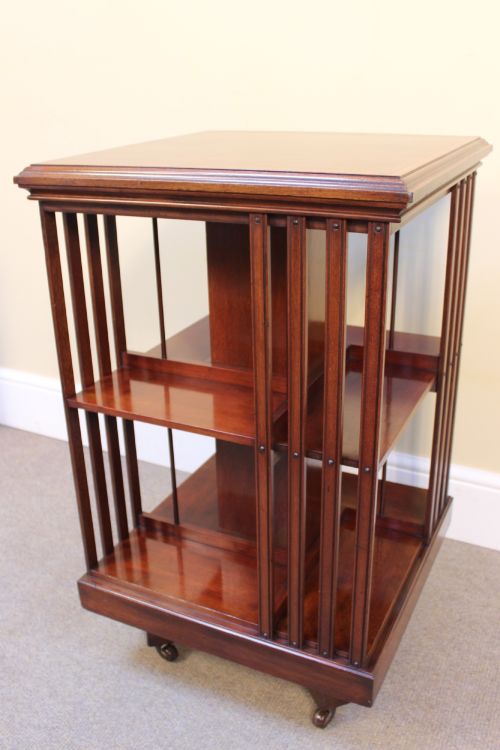
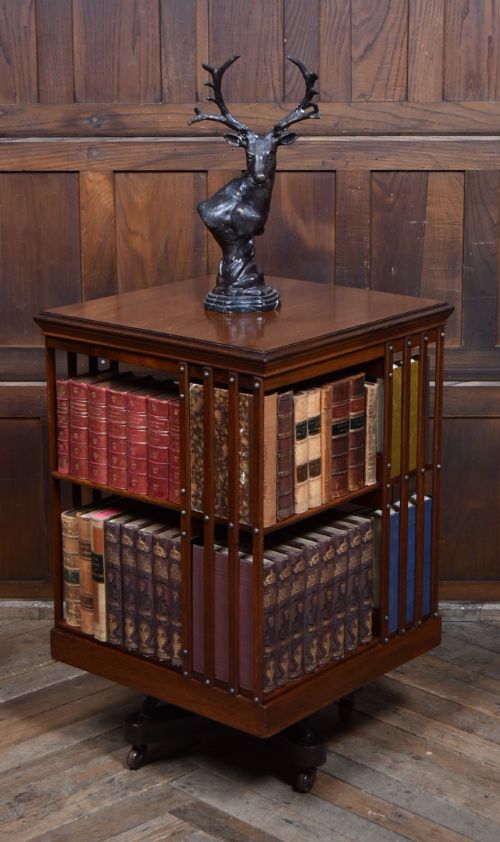
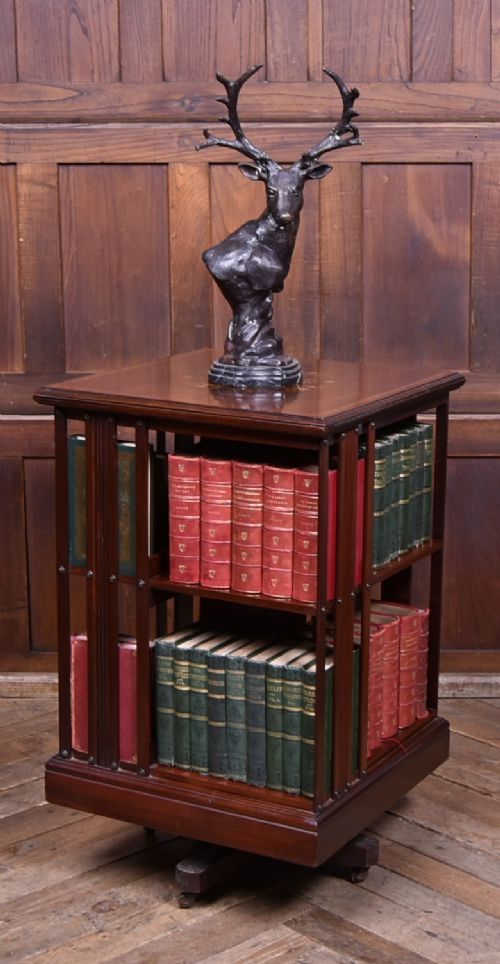
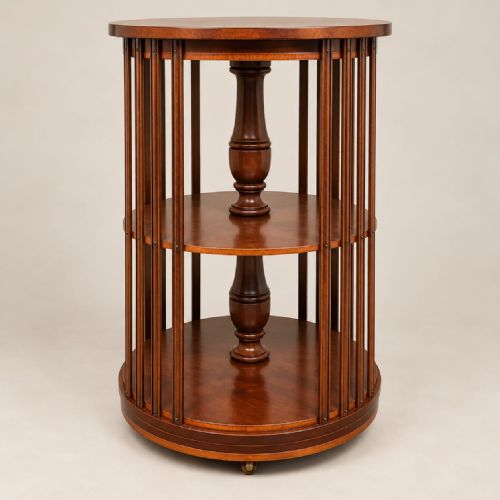
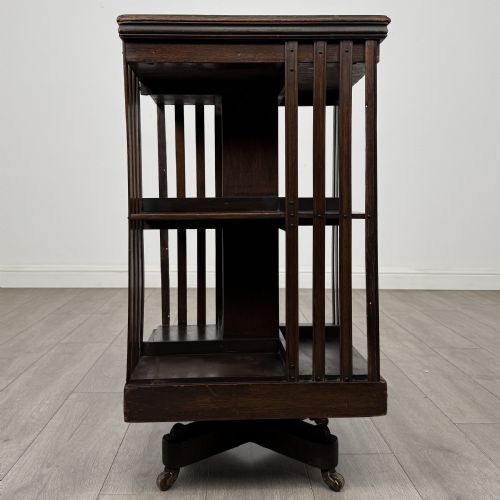
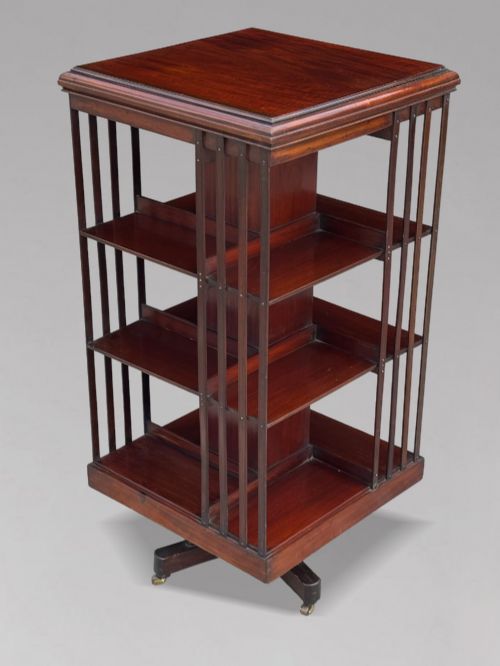
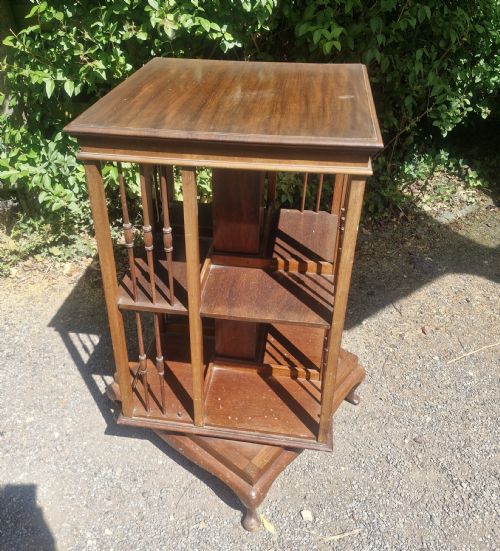
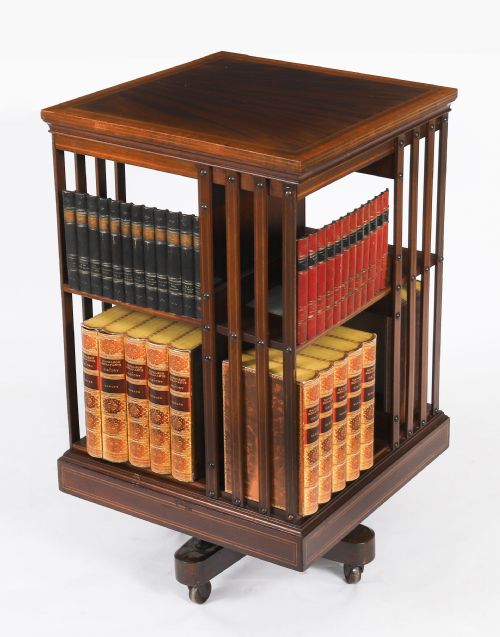
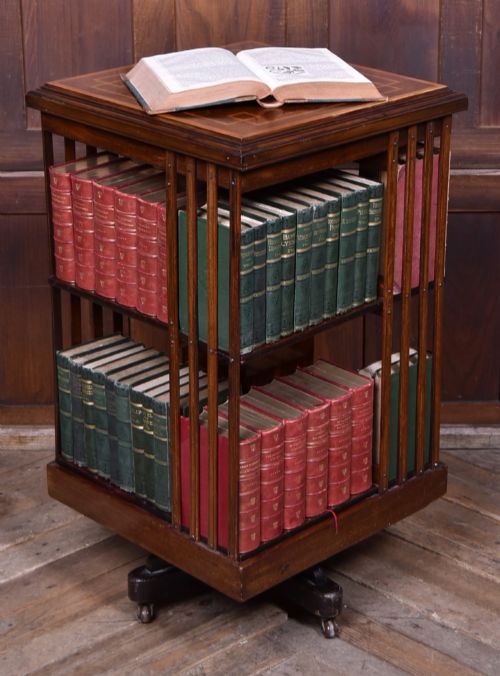
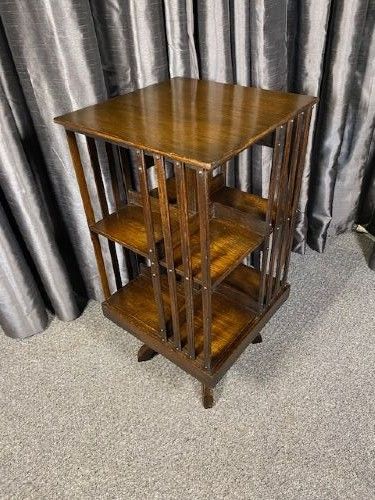
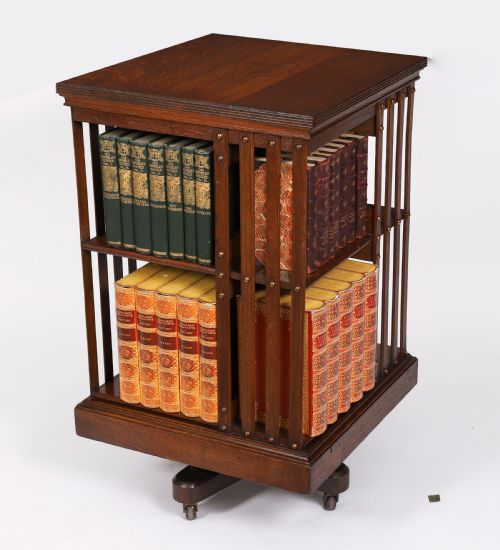
A tier revolving bookshelf places multiple tiers of book storage upon a central rotating pivot so volumes remain within arm's reach. The pieces found here span the Victorian, Edwardian and 1920s periods, showing both circular and square formats.
Most examples encountered on this page date from the Edwardian era and the late nineteenth century. These items typically feature timber construction designed to hold reference books, novels or games table combinations.
How they were made
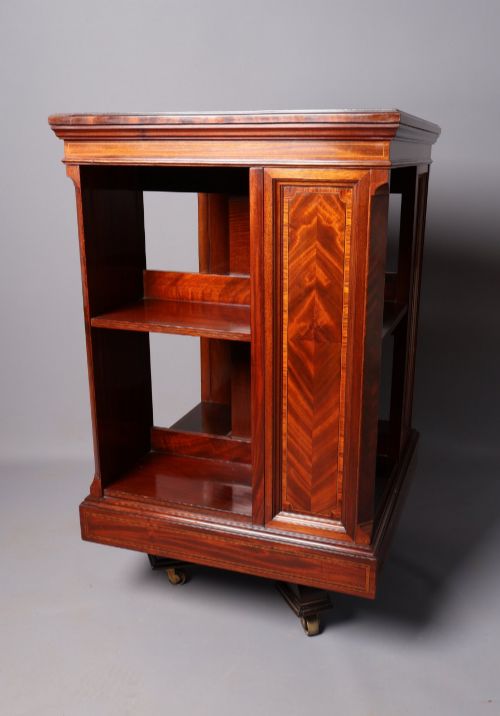
Cabinet makers constructed these revolving units primarily from mahogany, oak and walnut. Selected pieces display flame mahogany veneers, satinwood inlay and brass or cast iron internal pivot mechanisms.
Joinery methods focused on stability to support the weight of stacked volumes while maintaining a smooth turning motion. Slatted sides and inlaid borders appeared frequently in Edwardian workshops.
Tier Revolving Bookshelf Retail Price Guide 2026
Typical asking prices for tier revolving bookshelf among the pieces listed under this phrase on Sellingantiques today, from the lower quarter to the upper quarter. They describe what is for sale here now, not the wider market.
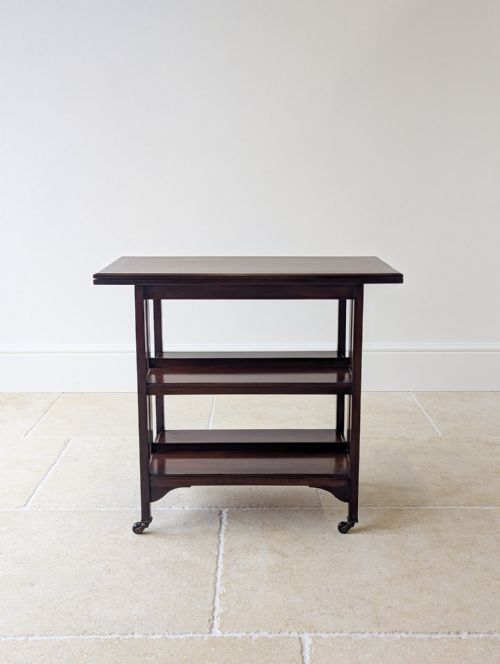
A card table with a bookshelf base offers a place for both trump cards and weighty tomes.
What varies in quality
The sophistication of the timber selection and decorative detail marks the distinction between standard production and finer examples. Figured flame mahogany and delicate satinwood inlay elevate the appearance of Edwardian pieces.
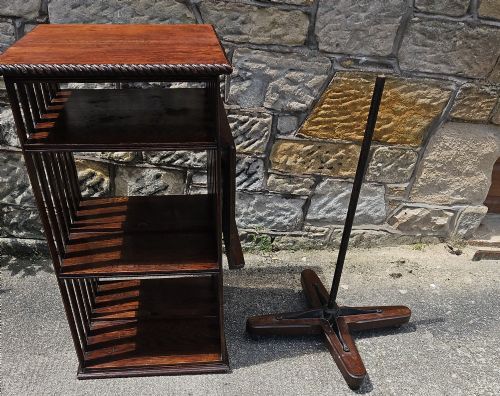
Mechanical integrity of the internal revolving mechanism determines daily utility and longevity. Heavier cast iron or brass fittings ensure a smoother rotation than simpler pivot designs.
The Tier Revolving Bookshelf Glossary
- Flame mahogany
- Timber showing a distinct, fiery grain pattern created by slicing through the fork of the mahogany tree. This figured wood was prized for top surfaces and cabinet fronts.
- Satinwood inlay
- A contrasting light-coloured timber inserted into recesses on the main wood surface to form decorative borders or motifs. It is frequently seen on Edwardian furniture.
- Slatted sides
- Open vertical wooden bars forming the exterior walls of the bookcase tier. This design lightened the visual weight of the furniture while keeping books visible.
- Pivot mechanism
- The hidden central bearing and spindle assembly that allows the tiers to turn smoothly in a circle. It often incorporates metal components for strength.
Tier Revolving Bookshelf: Frequently Asked Questions
How do these bookcases spin?
A concealed central spindle and bearing mechanism beneath the tiers allows the entire structure to rotate smoothly.
This engineering lets a reader access multiple sides of the bookcase without moving from a chair.
Which periods are most common?
Edwardian and late nineteenth-century Victorian pieces dominate the current selection of revolving bookcases.
Maker styles from the interwar period and Chippendale revival also appear among the listings.
What timbers were used?
Mahogany, oak and walnut form the primary structural materials across the available items.
Finer versions additionally incorporate flame mahogany veneers and satinwood inlay for decorative contrast.
Where should I place one?
These compact rotating units suit corners, study floors or beside armchairs where floor space is limited.
The ability to spin means books remain accessible even when the piece sits away from a wall.