


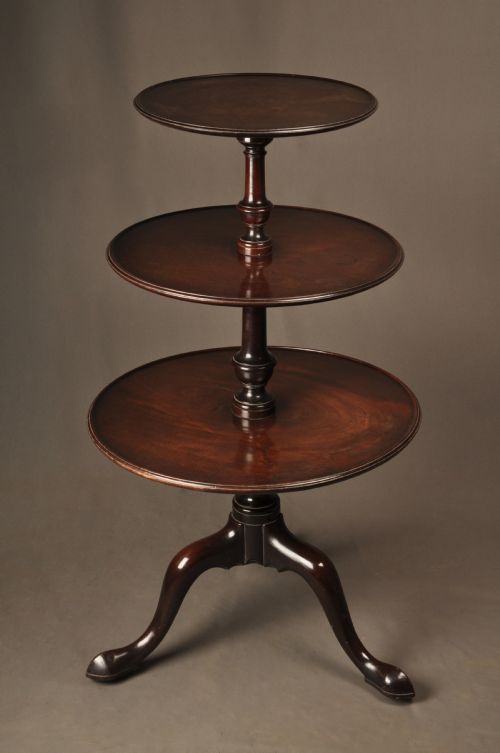
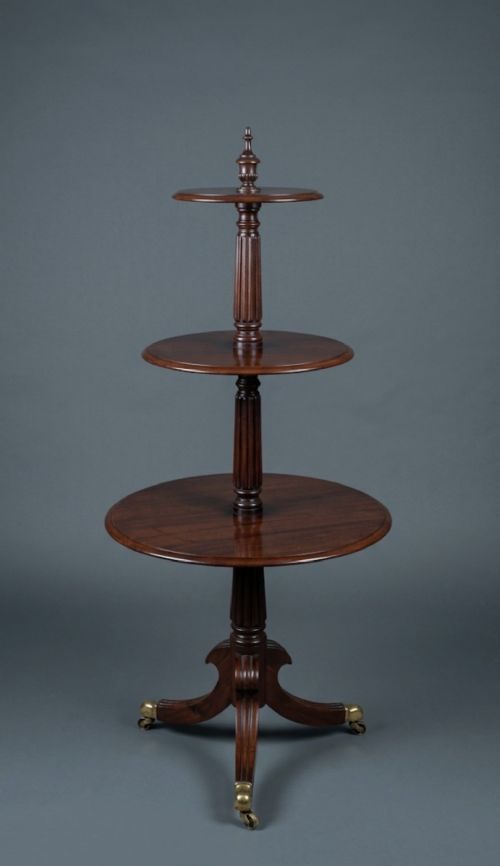


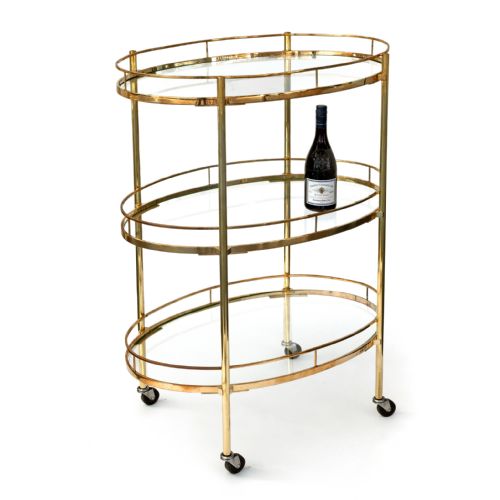

Three Tier Serving Stand
A three tier serving stand brings tiered architectural elegance to dining spaces, offering graduated tiers for food and service.
Three Tier Serving Stand
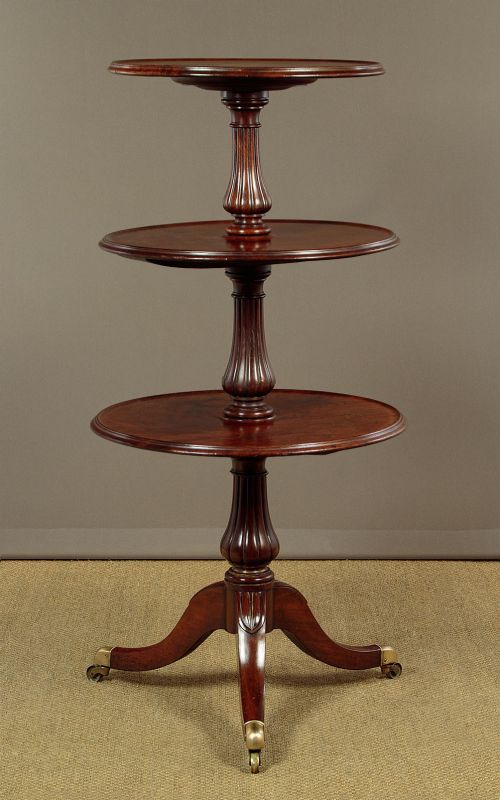
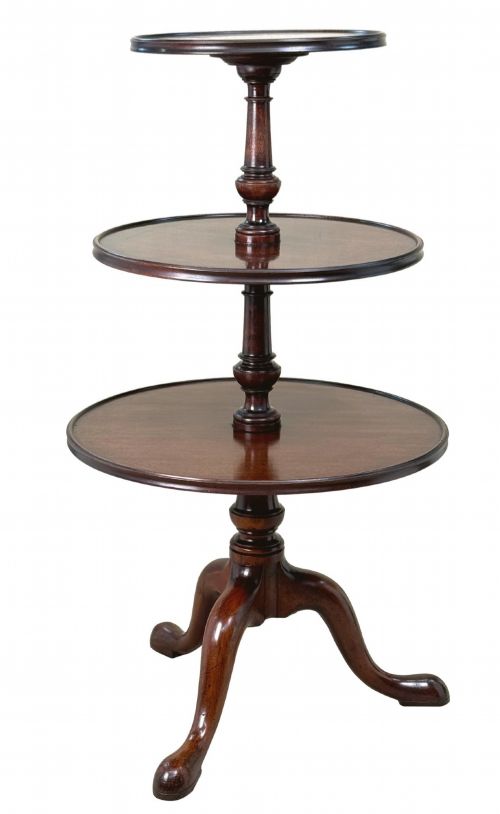
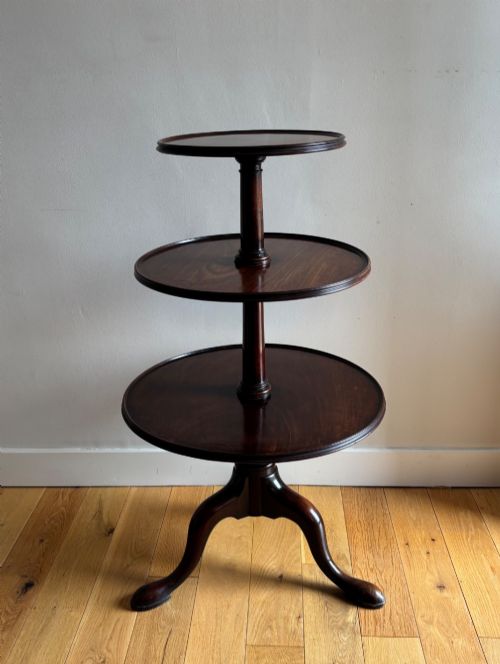
A three tier serving stand primarily manifests as a traditional dumb waiter or buffet, functioning as a tiered serving table used during formal meals. The examples found here span the eighteenth century, the Regency era, and the Victorian period, reflecting long centuries of dining room utility.
Most pieces encountered on this page are constructed from mahogany, though walnut, pollard oak, and padauk wood also appear alongside marble and brass variants. These stands commonly utilise circular gradated tiers supported on central pedestals or tripod legs, though rectangular drop-leaf and folding formats also exist.
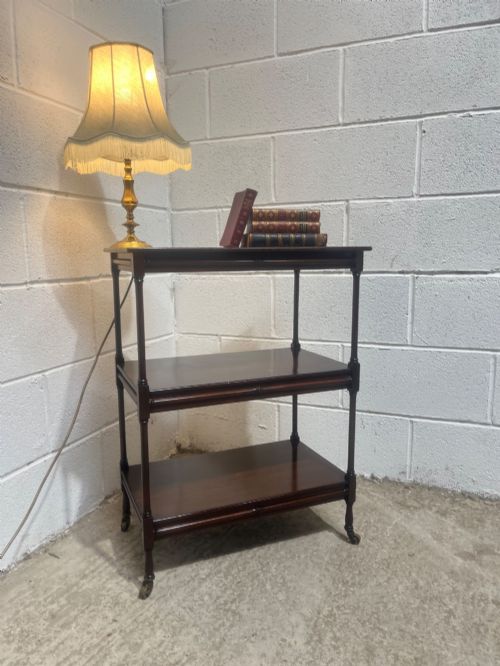
The forms range from revolving designs and adjustable buffers to galleried display stands, often associated with styles such as George III, William IV, and Edwardian. Buyers select these stands to introduce vertical display space and historic character into domestic interiors.
How they were made
Cabinet makers utilised solid mahogany and figured veneers, turning central pillars on lathes and shaping graduated tiers with raised edges or brass galleries. Joinery relied on sturdy central columns fitted into tripod or multi-footed bases to support the weight of the stacked trays.
Many sophisticated examples incorporated mechanical elements such as revolving tiers, drop-leaf flaps, or fully adjustable brass mechanisms allowing tiers to alter in height. Carved ornamentation, seen on Burmese padauk wood buffets and regional adaptations, highlights skilled hand-chiselling on pillar shafts and leg mounts.
Three Tier Serving Stand Retail Price Guide 2026
Typical asking prices for three tier serving stand among the pieces listed under this phrase on Sellingantiques today, from the lower quarter to the upper quarter. They describe what is for sale here now, not the wider market.
The selection encompasses diverse functional formats, pairing traditional revolving dumb waiters with drop-leaf tables, adjustable buffets, and brass galleried display stands.
What varies in quality
The distinction between standard utility items and exceptional pieces rests upon the selection of timber grain, the crispness of turned mouldings, and the integration of functional mechanisms. Superior stands exhibit dense, richly figured mahogany or exotic woods like pollard oak, paired with robust, well-fitted pillar joints that prevent wobble across the tiers.
Refinement shows in details such as brass castors, finely pierced galleries, and smooth revolving actions that operate without friction. Maker attribution, evidenced by signatures or distinct workshop attribution like Gillows or Maple & Co, elevates the standing of certain pieces above standard vernacular furniture.
Maple & Co·Gillows
The Three Tier Serving Stand Glossary
- Dumb waiter
- A freestanding tiered piece of dining furniture designed to hold dishes without servant attendance. These stands use graduated shelves to present food or porcelain.
- Pollard oak
- Timber taken from trees that were pollunted or pruned close to the trunk, producing highly figured, clustered grain patterns. Cabinet makers utilised this timber for decorative decorative surfaces.
- Galleried
- Featuring a raised decorative border or railing around the edge of a shelf to prevent items from sliding off. This detail frequently incorporates pierced brass or shaped timber.
- Drop-leaf
- A table or tier design featuring hinged side flaps that fold down when not in use. This mechanism allowed furniture to save space in smaller dining rooms.
Three Tier Serving Stand: Frequently Asked Questions
What is a three tier serving stand?
A three tier serving stand is a historic piece of dining furniture, commonly known as a dumb waiter, featuring stacked circular or rectangular shelves. These stands were originally designed to hold plates, dishes, and bottles near the dining table.
Today, they function as versatile display units or side tables in living spaces, utilising vertical height to showcase decorative objects or plants without occupying excessive floor space.
How do I identify a George III stand?
George III stands typically date from the late eighteenth or early nineteenth century, exhibiting classic proportions, rich mahogany timbers, and often tripod bases with pad or snake feet. Many feature revolving tiers supported on turned columns.
Examining the underside reveals period construction methods, such as hand-cut tenons and older fixings, which help distinguish eighteenth-century examples from later Victorian reproductions or revivals.
How do I care for antique mahogany stands?
Maintain antique mahogany stands by placing them away from direct sunlight and rapid temperature fluctuations, which can cause timber to dry out or split. Regular dusting with a soft, dry cloth preserves the finish.
Applying a traditional beeswax polish occasionally nourishes the wood and enhances the natural grain without building up heavy chemical residues that dull the surface sheen.
Were these stands used exclusively for food?
While originally created to assist dining room service by holding surplus dishes and wine bottles during meals, these stands quickly adapted to other domestic roles as dining habits evolved. Wealthy households utilised them for portable service.
In modern settings, collectors repurpose them to display collections of ceramics, books, or decorative objects, taking advantage of their tiered arrangement to create varied interior displays.