

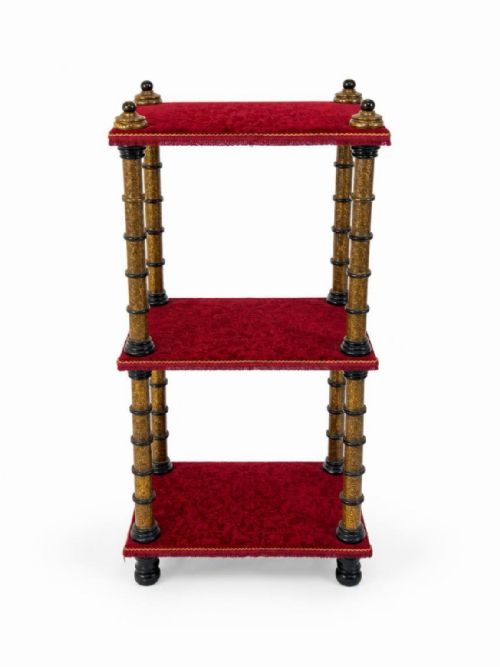
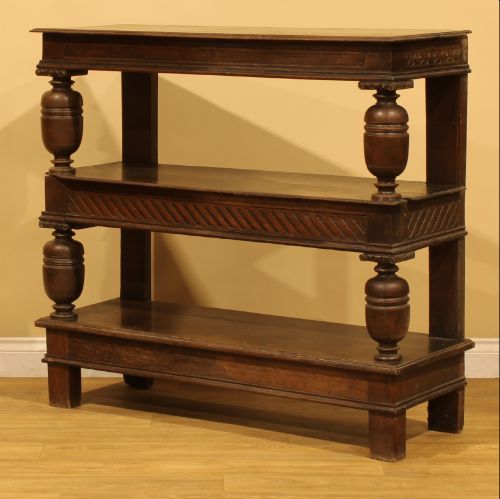
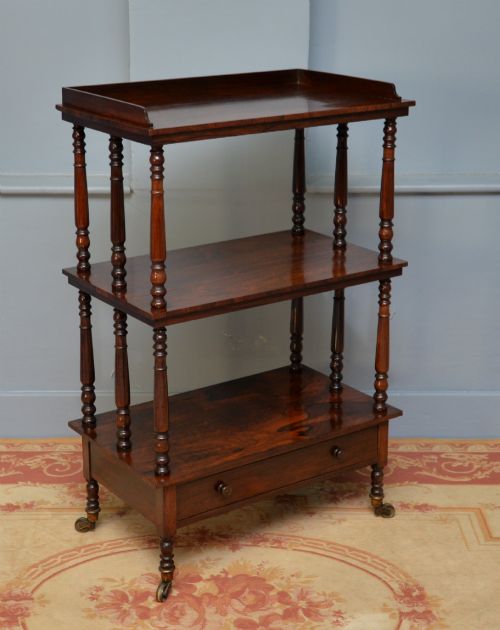
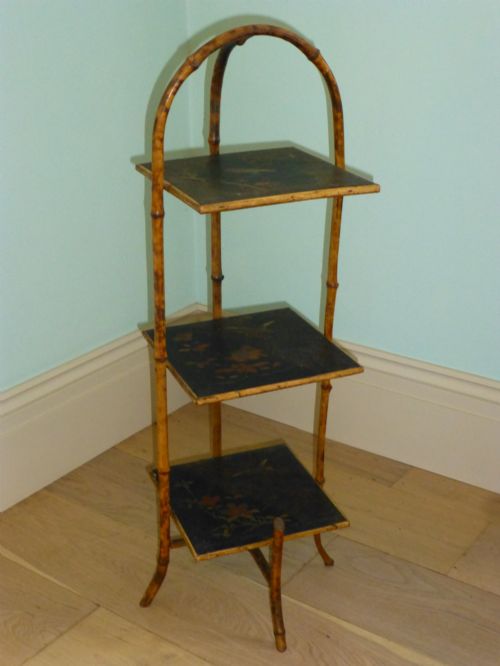

Three Tier Display Shelf
A three tier display shelf organises ornaments and books across stacked stages, bringing compact vertical utility to a room.
Three Tier Display Shelf
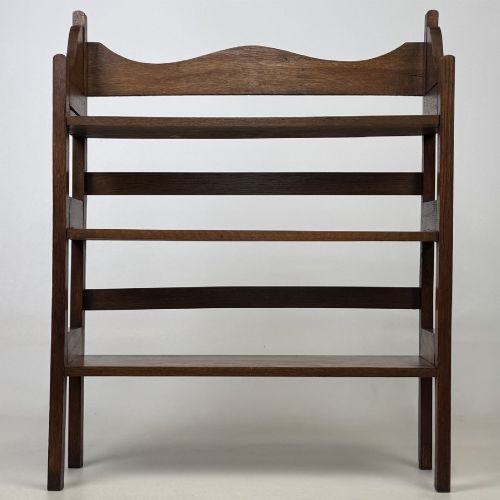
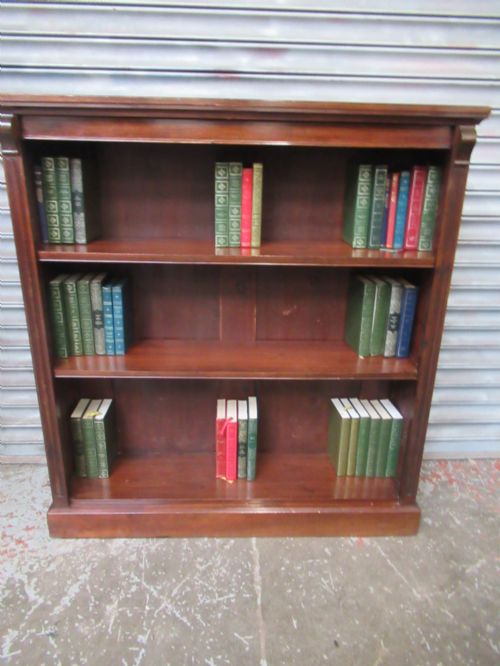
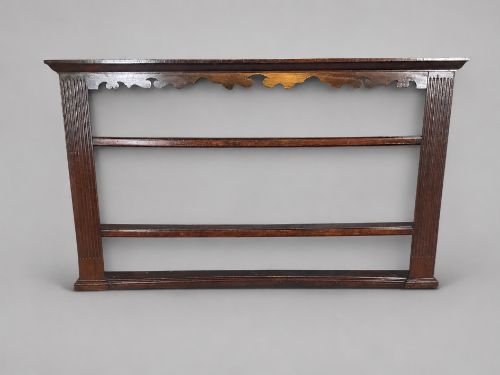
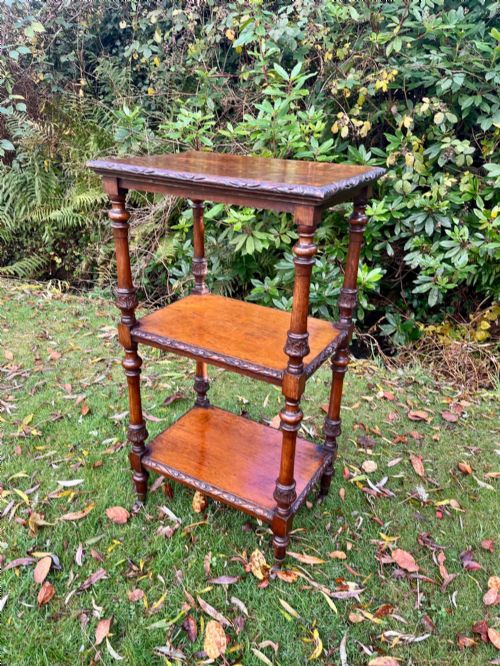
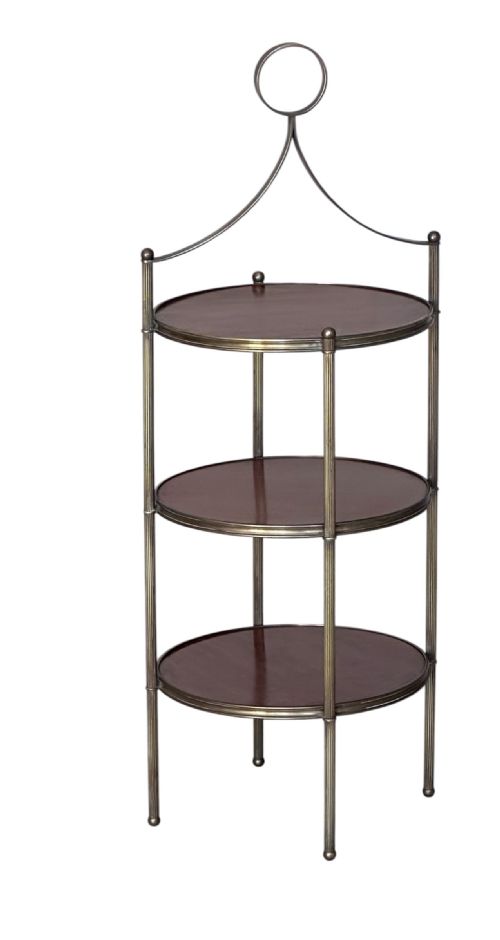
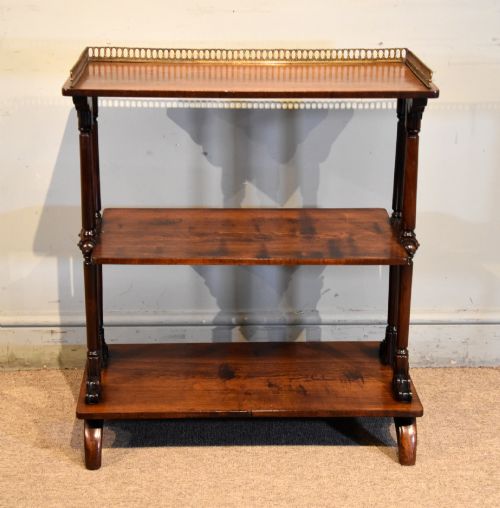
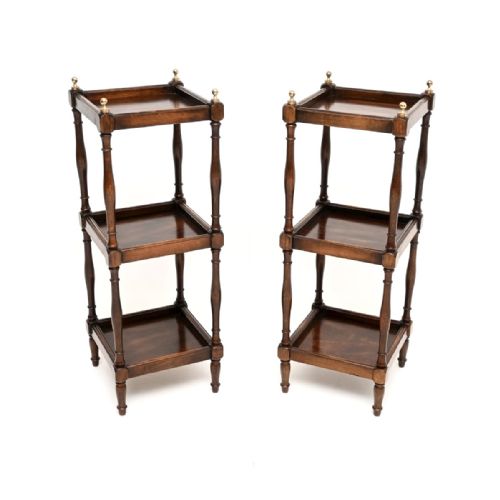
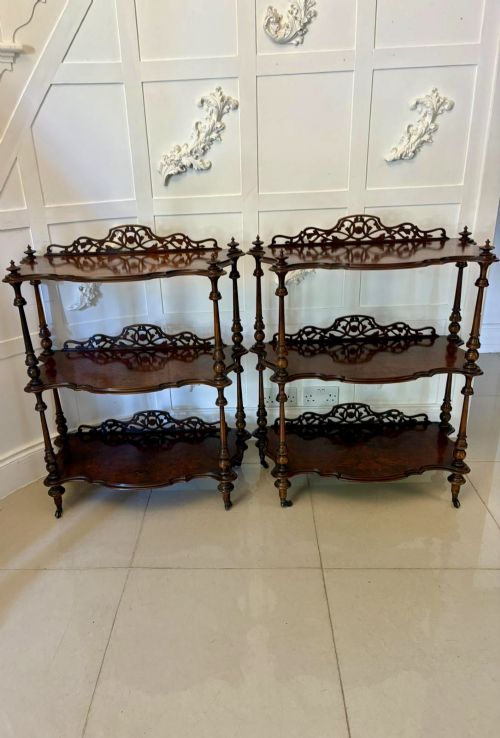
A three tier display shelf encompasses whatnots, etageres, wall shelves, and small bookcases spanning the nineteenth century through the Edwardian period. Buyers examining this page encounter pieces intended for standing on floors or hanging on walls, constructed in forms ranging from slim buffets to serpentine display stands.
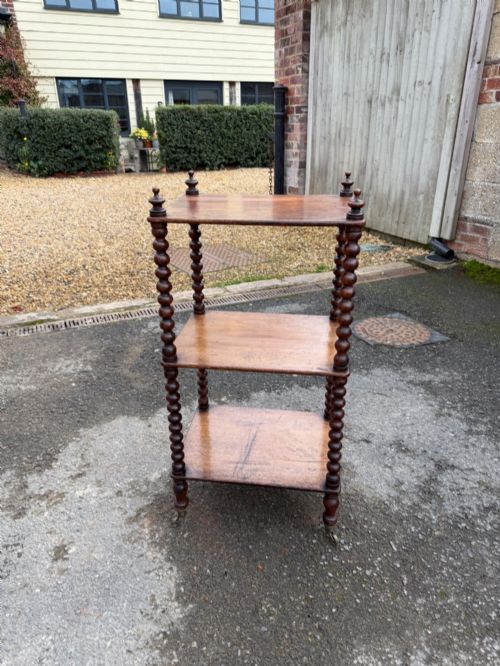
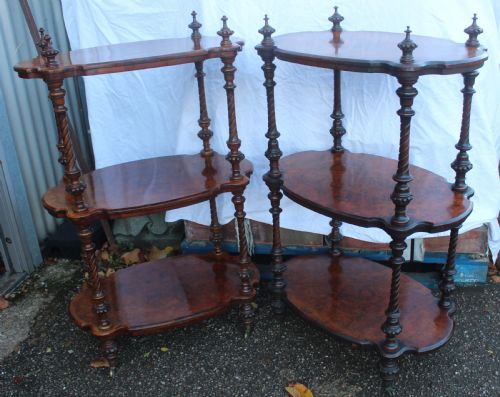
The nineteenth century yields the majority of walnut and mahogany examples, frequently built with three graduated tiers supported by turned legs, barley twists, or brass mounts. These tiered structures served to display small decorative objects in parlours and drawing rooms.
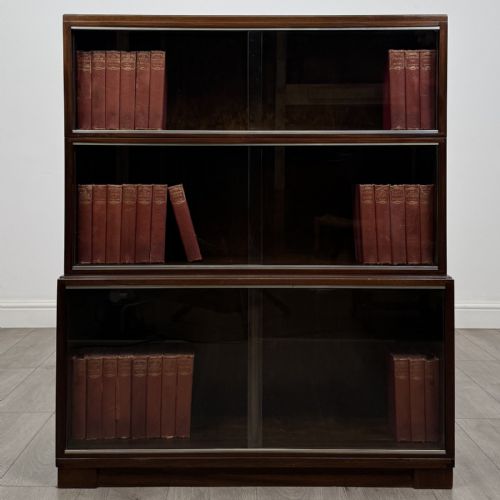
Later pieces introduce Edwardian pine bookshelves and oak open bookcases alongside revival styles referencing Regency and French designs. The core design remains consistent through these periods, prioritising open display surfaces arranged vertically to conserve floor space.
Materials and Techniques
Cabinetmakers utilised hardwoods including mahogany, walnut, burr walnut, rosewood, and oak as the structural foundation for these tiered shelves, often applying figured veneers to the prominent surfaces of Victorian whatnots. Ebonised wood and satin birch also appear, occasionally accented with brass mounts or inlaid parquetry.
Joinery methods involved precise turning for upright supports and sturdy vertical frames to sustain the weight of books and ceramics across multiple levels. Wall-hanging variants incorporated secure bracket fixings, while freestanding etageres relied on stable corner posts and aligned tiers.
Three Tier Display Shelf Retail Price Guide 2026
Typical asking prices for three tier display shelf among the pieces listed under this phrase on Sellingantiques today, from the lower quarter to the upper quarter. They describe what is for sale here now, not the wider market.
Listings feature nineteen-century Victorian whatnots and etageres alongside Edwardian oak bookcases.
Distinctions in Execution
Quality reveals itself in the selection of timbers, where highly figured burr walnut or rich rosewood veneer indicates a finer commission than plain pine or standard oak. The crispness of turned supports, barley twists, and brass mounts distinguishes standard production from exceptional cabinet work.
Proportion and structural integrity separate robust pieces from heavier, clumsier constructions. Refined edging, precise parquetry inlays, and balanced tier spacing elevate certain nineteenth-century examples above simpler utilitarian shelving.
Globe Wernicke·Samson Son London
The Three Tier Display Shelf Glossary
- Whatnot
- A small open set of shelves for displaying ornaments or books, typically featuring three or more tiers supported by columns or legs.
- Etagere
- A piece of furniture consisting of a number of open shelves for displaying articles, originating in France during the eighteenth century.
- Barley twist
- A type of turned wooden column resembling the spiral twist of a barley sugar stick, common in seventeenth and nineteenth-century furniture.
- Parquetry
- Geometric mosaic woodwork used for decorative floors and furniture panels, created with contrasting pieces of timber.
- Serpentine
- A furniture shape featuring a wavy outline that curves outward at the centre and inward at the sides.
Three Tier Display Shelf: Frequently Asked Questions
What is a three tier display shelf used for?
These pieces function as open storage and display units for books, ceramics, and ornaments within living spaces.
Their stacked design permits vertical exhibition without dominating the floor plan of a room.
Where should I place a wall hanging shelf?
Wall-mounted variants suit smaller rooms or hallways where floor space remains restricted.
Fixing them securely to a solid wall ensures they safely support the weight of books and decorative items.
How do I identify a Victorian whatnot?
Victorian examples frequently employ burr walnut or mahogany with turned uprights separating three distinct tiers.
Many incorporate decorative elements such as serpentine edges, brass mounts, or barley twist supports characteristic of the period.
Are these shelves suitable for heavy books?
Freestanding bookcases and sturdy oak or mahogany structures handle heavier volumes effectively.
Lighter etageres and wall shelves work best for displaying smaller decorative objects and lighter collections.