

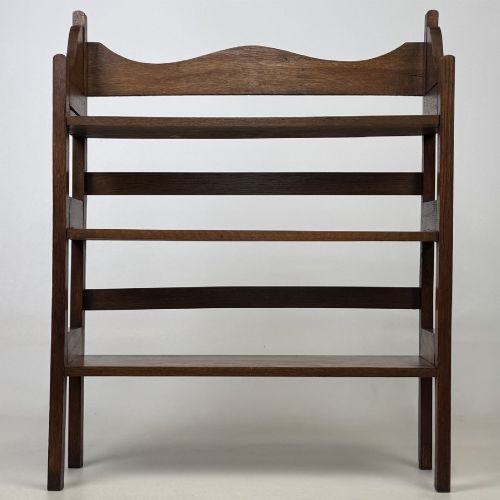
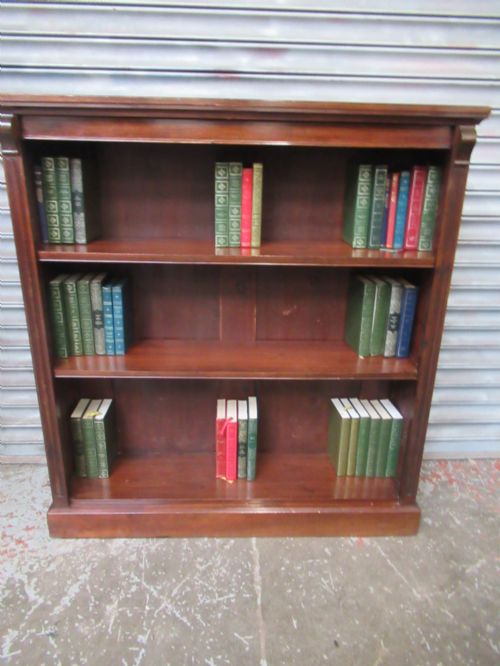
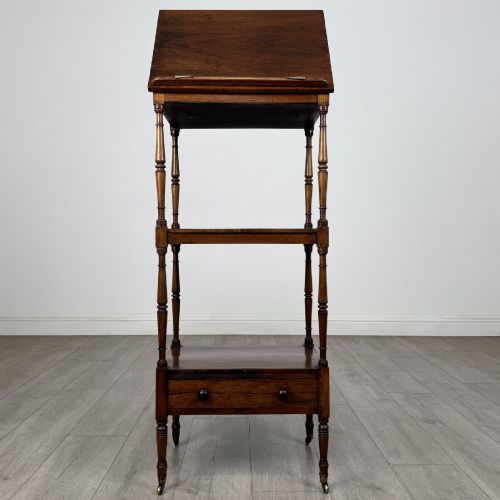
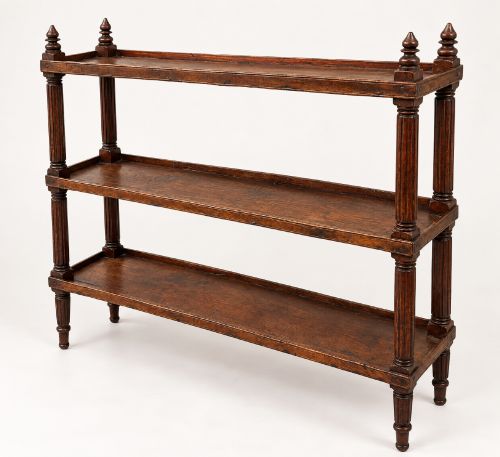
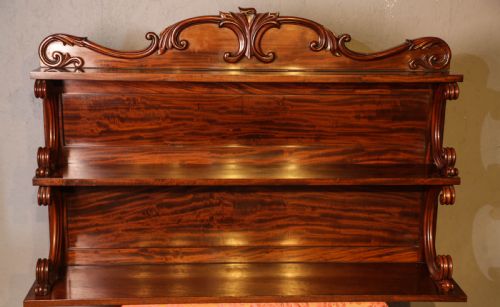


Three Tier Bookshelf
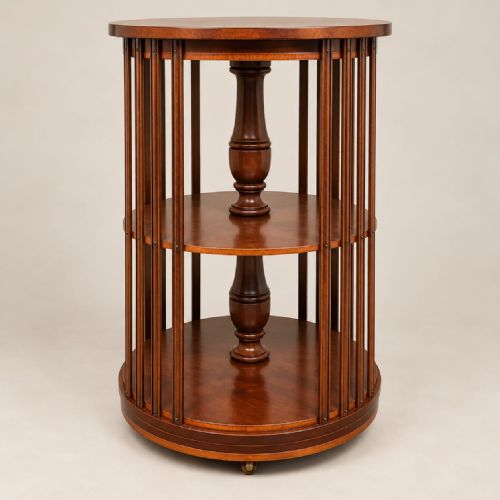
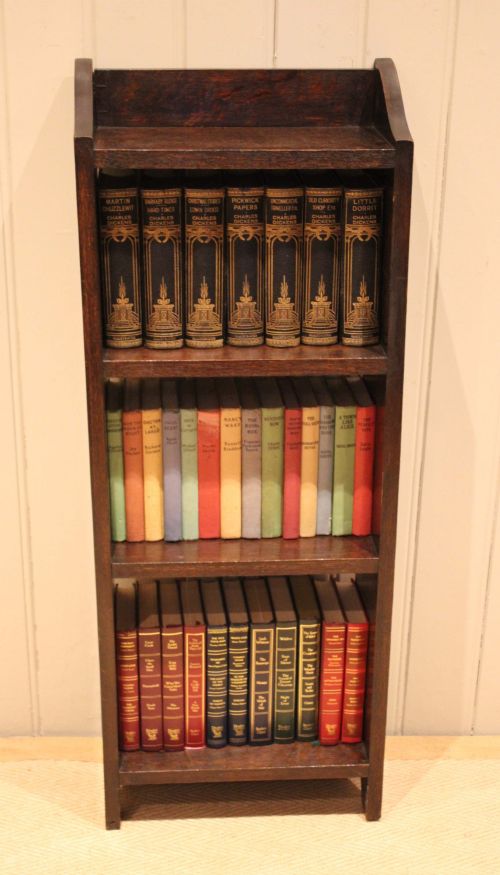
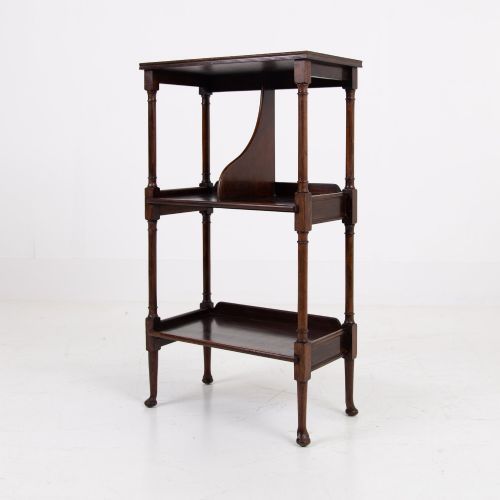
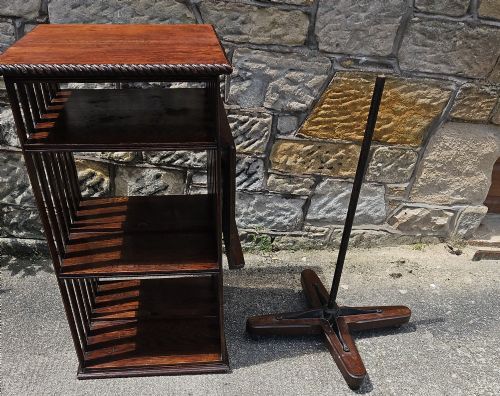
A three tier bookshelf organises favourite volumes with tiered display and compact utility, spanning open mahogany frames, revolving designs and decorative walnut whatnots.
Three Tier Bookshelf
A three tier bookshelf provides graduated open shelving across diverse forms including compact standing bookcases, wall hanging units, revolving tables and multi-tiered whatnots. These pieces serve to display books and decorative objects within domestic interiors while occupying minimal floor space.
Materials and construction
Makers utilised dense hardwoods such as mahogany, oak, walnut, and rosewood, often selecting figured veneers like burr walnut or satin birch for decorative impact. Brass fittings, cast iron components, and carved details appear on specific exhibition pieces and whatnots.
Joinery methods range from straightforward pegged framing on rustic country and Arts and Crafts oak pieces to sophisticated turned columns and serpentine fronts on Victorian burr walnut and mahogany whatnots.
Three Tier Bookshelf Retail Price Guide 2026
Typical asking prices for three tier bookshelf among the pieces listed under this phrase on Sellingantiques today, from the lower quarter to the upper quarter. They describe what is for sale here now, not the wider market.
Listings feature woods spanning mahogany, oak, walnut, rosewood, satin birch, cherry, and padauk.
Distinctions in craftsmanship
Superior examples demonstrate careful timber selection, such as richly figured mahogany or burr walnut matched symmetrically across shelves and panels. Finely executed turnings, crisp carving, and robust structural joinery separate standard utility pieces from exhibition quality works.
Proportion and stability define better tier construction, ensuring that standing bookcases, revolving models, and wall shelves support weight evenly without structural sag.
Heals·Samson & Son London
The Three Tier Bookshelf Glossary
- Whatnot
- A moveable piece of furniture with multiple open shelves for displaying ornaments, books, or small objects. It originated in the eighteenth century and remained popular through the Victorian period.
- Etagere
- A piece of furniture consisting of a set of open shelves for displaying small objects or ornaments. The term is often used interchangeably with a whatnot.
- Revolving bookcase
- A freestanding bookcase mounted on a rotating spindle or pivot base. This design allows users to access volumes from all sides while seated.
- Serpentine front
- A furniture front characterised by a concave central section flanked by two convex curves, or vice versa. This undulating contour requires skilled woodworking.
- Satin birch
- A timber derived from North American birch trees, featuring a lustrous grain pattern resembling satin. It was frequently utilised for decorative nineteenth century shelving and display pieces.
Three Tier Bookshelf: Frequently Asked Questions
What is a three tier bookshelf?
A three tier bookshelf is a compact shelving unit featuring three distinct horizontal surfaces for storing books and displaying decorative objects.
These pieces take various structural forms, including standing open bookcases, rotating table models, wall hanging shelves, and multi-tiered whatnots.
How were three tier bookshelves used?
In period interiors, these tiered units held working libraries in studies, displayed decorative ceramics in parlours, and served as convenient side tables.
Revolving versions placed reference volumes within arm's reach beside armchairs, while wall mounted shelves preserved floor space in smaller rooms.
How do I date a three tier bookshelf?
Dating relies on identifying timber choices, construction techniques, and stylistic markers associated with specific periods like the Victorian or Edwardian eras.
Heavy carved ornament and dark walnut point to mid-nineteenth century manufacturing, whereas lighter oak finishes and simpler lines often indicate Arts and Crafts or Edwardian influence.
Where should I place a three tier bookshelf?
These compact units fit comfortably into alcoves, beside seating arrangements, or mounted directly onto walls in hallways and sitting rooms.
Revolving models function effectively beside desks or reading chairs where access from multiple angles is practical.