


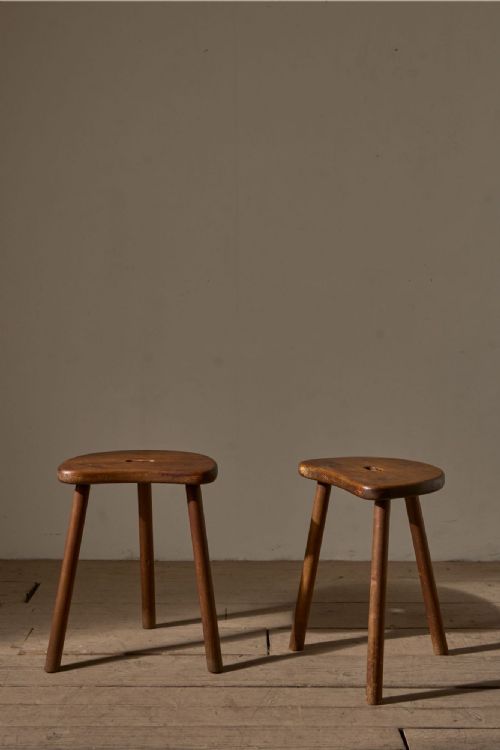


Three Legged Milking Stool
These three legged milking stool examples are honest country seats built for daily utility, offering simple rustic charm for modern interiors.
Three Legged Milking Stool
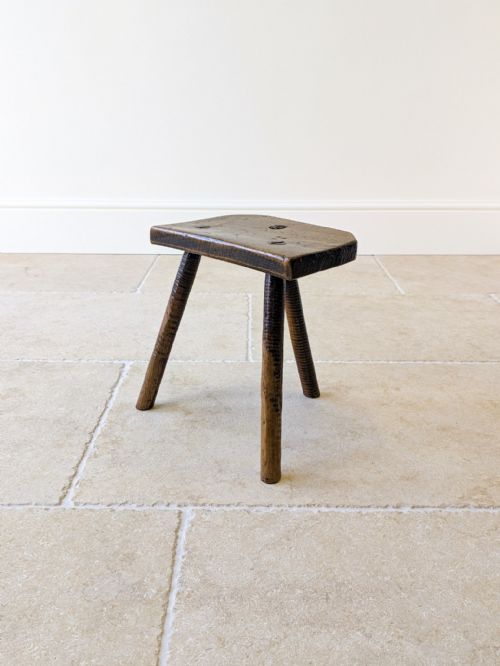
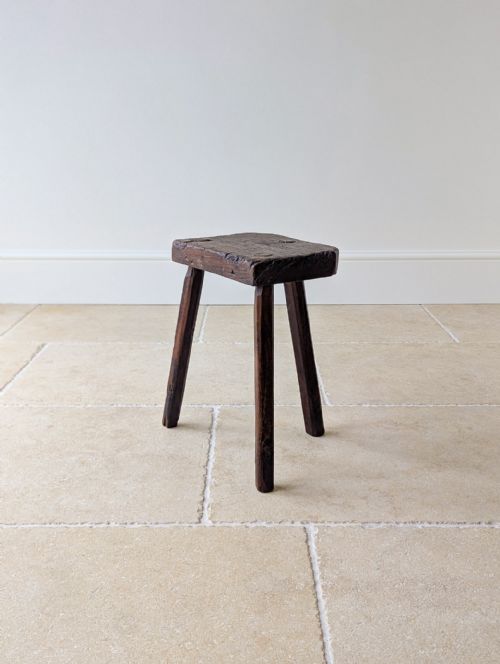
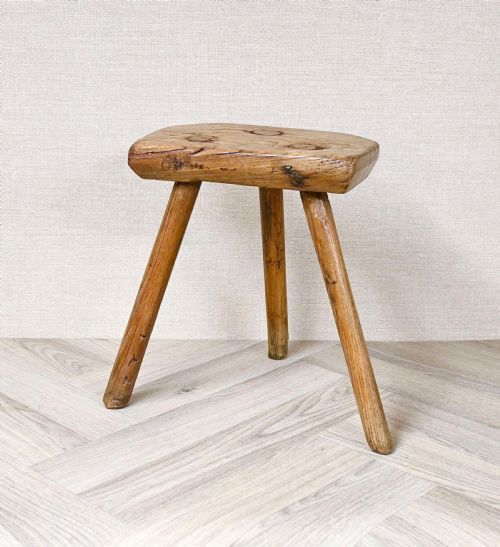
A three legged milking stool represents practical vernacular seating shaped by agricultural work and domestic tasks. These pieces appear most frequently as nineteenth century or Victorian examples utilising native woods with splayed legs designed to stand firm on uneven floors.
Makers fashioned these low seats primarily for farm work, but similar forms served trades like jewellers and cutlers. The inventory shows regional origins from English counties and Wales, encompassing simple primitive designs alongside polished mahogany saddle stools.
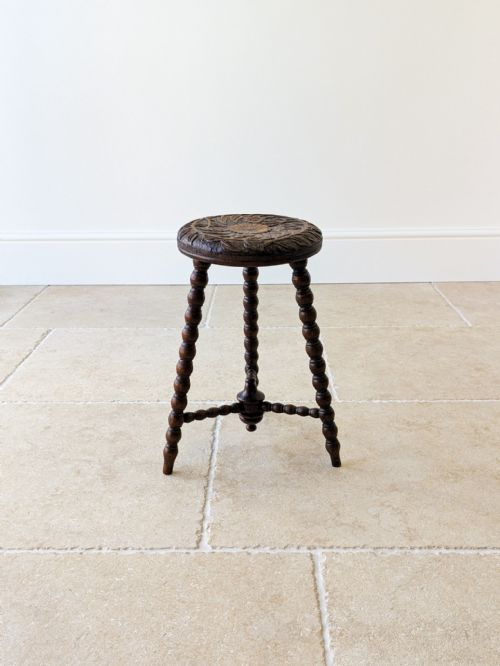
Collectors encounter circular tops, live edge slices, and carved oak surfaces alongside pokerwork decoration. The three legged format ensures stability on cobbled yards and packed earth, making each survivor a functional fragment of rural history.
How they were made
Country carpenters and blacksmiths relied on native hardwoods like elm, ash, and oak for durability. Artisans frequently wedged splayed legs directly into thick timber seats through bored holes, securing them with wedges.
Iron reinforcements and blacksmith repairs appeared when working parts cracked under heavy use. Workshops also utilised pine, mahogany, and ebonised wood for more refined iterations like the saddle stool or bobbin turned table.
Three Legged Milking Stool Retail Price Guide 2026
Typical asking prices for three legged milking stool among the pieces listed under this phrase on Sellingantiques today, from the lower quarter to the upper quarter. They describe what is for sale here now, not the wider market.
One Scottish nineteenth century piece carries the fierce pokerwork motto Touch Me Wha Daur.
What varies in quality
Quality rests in the relationship between the thickness of the timber top and the rake of the legs. Superior pieces display harmonious proportions where the grain of the wood follows the natural contours of the seat.
Original blacksmith repairs and honest patina elevate a piece above later domestic reproductions. The integrity of the wedged joints and the choice of dense elm or ash define the enduring strength of the stool.
J. Shoolbred
The Three Legged Milking Stool Glossary
- Vernacular
- Objects built by local tradesmen for specific regional tasks rather than high style design. These pieces prioritize function over academic ornament.
- Splayed
- Legs angled outward from the centre to provide a wider, more stable base. This geometry prevents tipping on uneven ground.
- Pokerwork
- The technique of burning designs into wood using heated metal points. Scottish examples sometimes feature mottoes executed in this manner.
- Live edge
- A furniture edge that retains the natural contour of the tree trunk. This feature appears on rustic stools utilising solid slices of timber.
- Saddle stool
- A seat shaped with a hollowed upper surface resembling an equestrian saddle. These examples often employ polished mahogany.
Three Legged Milking Stool: Frequently Asked Questions
Were these actually used for milking?
Many of these three legged forms served dairy workers in fields and byres where a single central leg avoided rocking on uneven muck.
Other variants supported seated tradesmen such as cutlers and jewellers who required close access to their benches.
How do I date a milking stool?
Examination of the timber species, tool marks, and leg construction reveals the likely period of manufacture. Eighteenth century versions often display hand-rived green wood and blacksmith repairs.
Nineteenth century examples frequently utilise heavier turned legs and standardised fixings while retaining rustic character.
Are three legged stools stable on flat floors?
Three legs naturally find purchase on any surface without wobbling, which explains their historic popularity in farmhouses and cottages.
The splayed angle of the legs further widens the footprint to support weight securely.
How should I clean an antique stool?
Gentle dusting with a dry cloth preserves the historic wax and dry scrubbed finishes accumulated over decades of use. Avoid modern chemical polishes that soften aged timber and remove honest patina.