
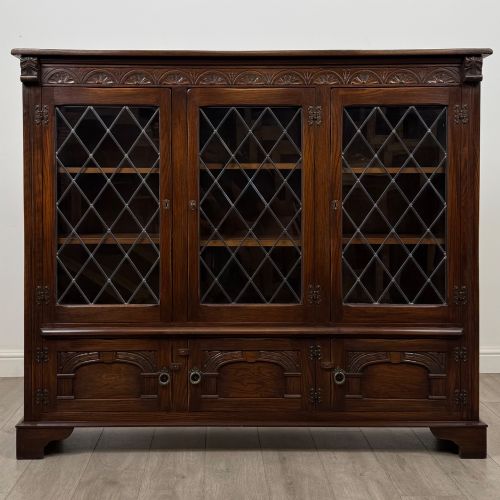
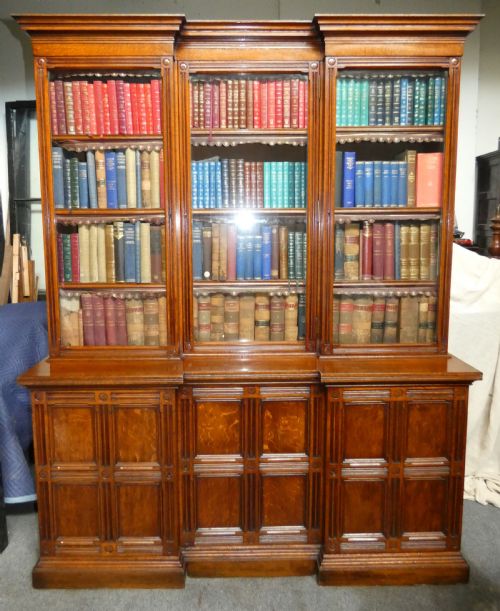
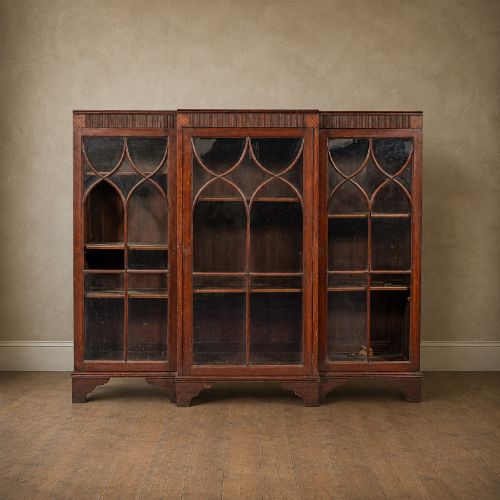
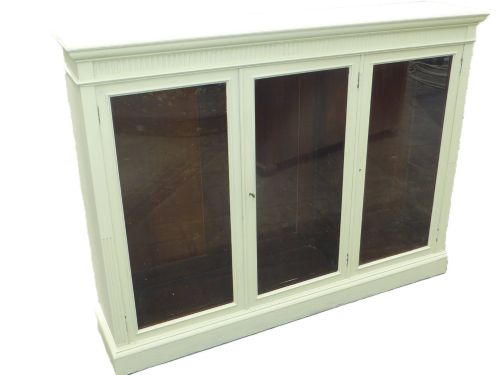


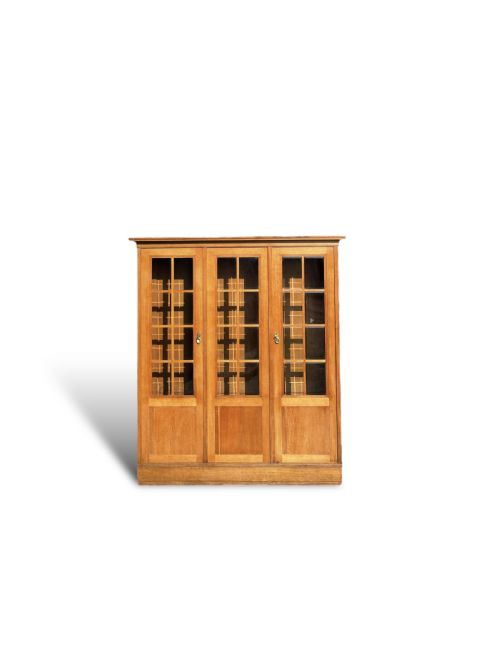
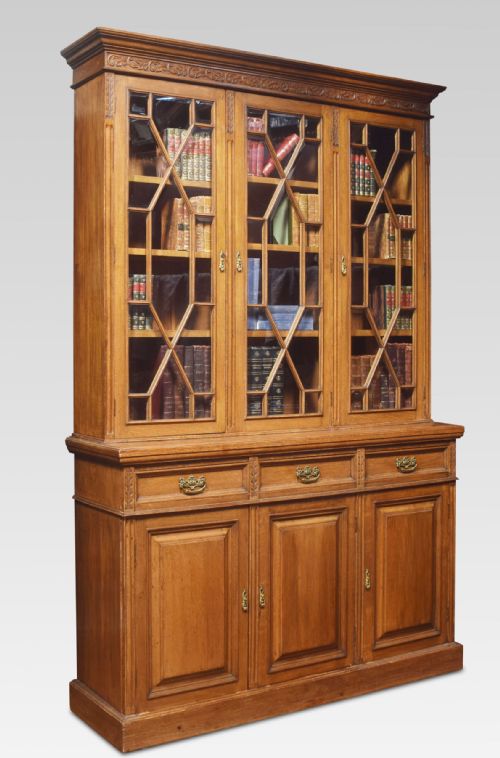

Three Door Glazed Cupboard
A three door glazed cupboard offers generous display and storage space, most commonly met here in oak or mahogany from the Victorian and Edwardian periods.
Three Door Glazed Cupboard
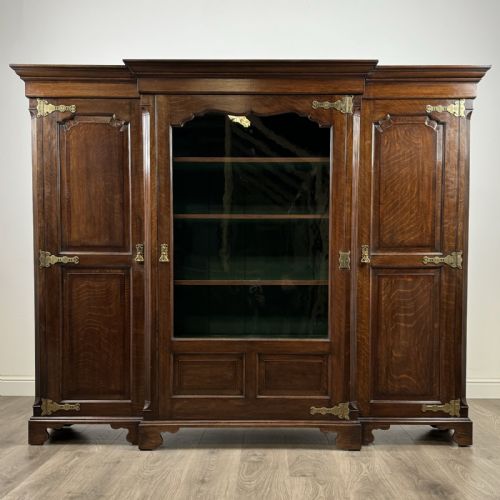
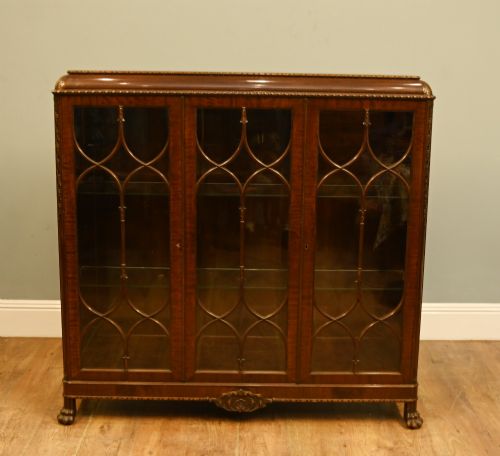
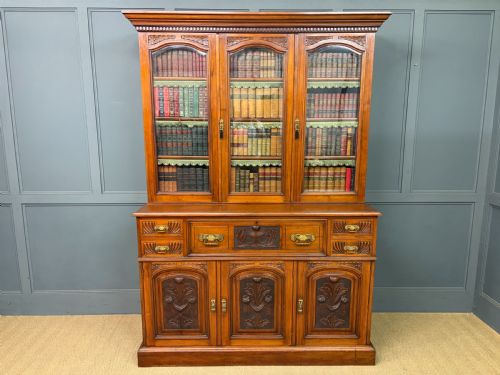
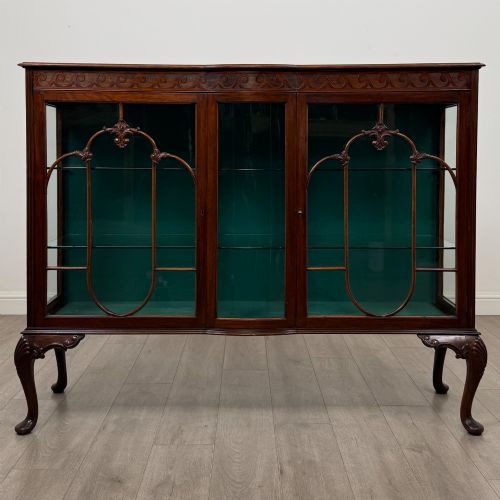
A three door glazed cupboard spans several grand forms including bookcases, display cabinets, and library bookcases. Buyers searching for a three door glazed cupboard usually encounter substantial timber furniture designed to protect and exhibit books or porcelain.
The pieces on this page originate predominantly from the Victorian and Edwardian eras, alongside examples from the late nineteenth century and the early twentieth century. Common styles range from plain English oak library pieces to revival designs drawing on Georgian, Gothic, and Sheraton traditions.
Forms vary from breakfront library bookcases with adjustable shelves to satinwood display cabinets and painted country pieces. Walnut, mahogany, and oak provide the primary timber carcasses, fitted with glazed doors that reveal the interior shelving.
How they were made
Cabinet makers constructed these large carcasses primarily using solid and veneered hardwoods such as oak, mahogany, walnut, and satinwood, occasionally utilising softer woods like pine and painted timber for regional pieces. Brass hardware frequently secures the doors and supports adjustable internal shelving.
Glass panels are fitted into wooden framing to form the glazed doors, allowing clear visibility for display while keeping dust away from the contents. Carved ornamentation, panelled sections, and decorative satinwood inlays reflect the specific revival styles popular during the nineteenth and twentieth centuries.
Listings span periods from eighteen-seventy through to nineteen-fifty, demonstrating the enduring popularity of glazed storage furniture.
What varies in quality
The distinction between ordinary and superior examples lies in the selection of timber figures and the crispness of any carved detailing. Cabinets utilising finely figured mahogany, walnut, or quarter-sawn oak display a depth of grain that plain timber lacks.
Construction methods also separate standard utility furniture from finer cabinet work, evident in the snug fit of doors, the smoothness of adjustable shelf mechanisms, and the quality of internal brass fittings. Revival pieces executed by notable workshops show greater attention to proportion and joinery.
Edwards & Roberts
The Three Door Glazed Cupboard Glossary
- Breakfront
- A cabinet design where the central section projects forward from the flanking wings. This architectural arrangement creates visual depth on large library bookcases.
- Glazed
- Fitted with glass panes rather than solid wooden panels. This allows books or display items to be viewed while protected.
- Satinwood
- A lustrous, yellowish timber native to India and Ceylon, prized for veneering cabinet facades. It forms a pale contrasting surface beneath clear polish.
- Quarter-sawn
- Timber cut radially through the growth rings rather than tangentially. This method produces durable boards with a decorative grain pattern often seen in oak furniture.
- Adjustable shelves
- Internal boards resting on movable supports that allow shelf heights to be altered. This mechanical feature accommodates books of varying sizes.
Three Door Glazed Cupboard: Frequently Asked Questions
How do I date a glazed cupboard?
Dating relies on identifying the prevailing timber choices, construction techniques, and decorative revival styles associated with specific decades. Examining drawer linings, backboards, and hinge types provides further clues to the period of manufacture.
Victorian pieces often feature heavy mahogany or walnut with Gothic or Sheraton revival details, whereas Edwardian examples frequently incorporate lighter satinwood inlays or refined Edwardian proportions.
Where were these cupboards used?
These large cabinets typically served in formal libraries, drawing rooms, and studies of substantial homes to house prized book collections and porcelain. Vestry cupboards and painted Irish library pieces also saw service in institutional or regional domestic settings.
Their substantial storage capacity made them practical furniture for organising large numbers of volumes while keeping them visible yet protected.
How do I clean the glass and timber?
Maintenance requires gentle cleaning methods that preserve the aged patina of the wood and protect the original polish. Standard glass cleaner applied to a cloth rather than sprayed directly avoids damaging surrounding timber.
Nutrient waxes applied sparingly help maintain the lustre of oak, mahogany, and walnut surfaces without building up heavy chemical layers.
Are the shelves adjustable?
Many examples on this page feature adjustable shelving supported by wooden ratchets, metal pins, or sliding mechanisms. This flexibility allows the interior layout to accommodate taller volumes or varied display pieces.
Checking the listing details confirms whether the internal shelves can be repositioned or if they are fixed in place.