



Three Decanter Oak Stand
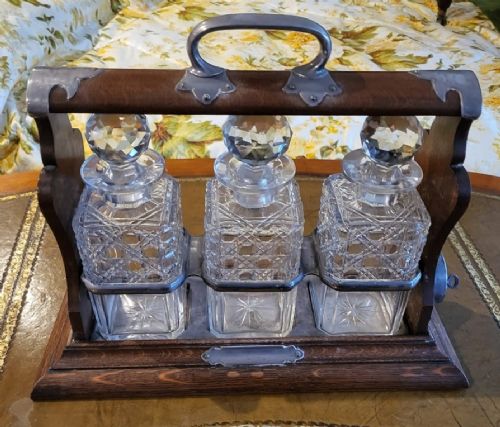
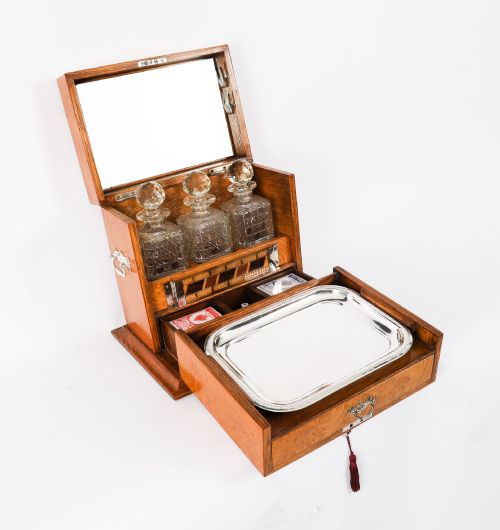
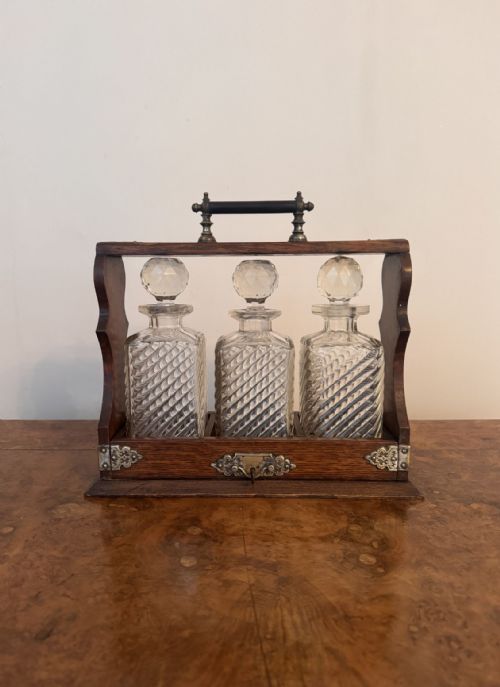
These pieces of three decanter oak stand are secure drinks cabinets designed to display three bottles while keeping them locked away.
Three Decanter Oak Stand
When you search for a three decanter oak stand, you are looking at barware designed to hold three bottles securely within a timber frame. These pieces appear most frequently from the Victorian and Edwardian periods, stretching into later 1930 examples.
The form is often known as a tantalus, functioning as an after-dinner cabinet fitted with a locking mechanism that secures the stoppers in place. Most versions found here utilise oak as the primary timber, sometimes enhanced with marquetry stringing or partner configurations.
The framework supports three separate receptacles, which typically take the form of cut glass or cut crystal decanters. Alternatively, some variations present three oak barrel decanters mounted together on a shared timber base.
How they were made
Makers built these stands using solid oak timbers, occasionally incorporating marquetry stringing for surface decoration. The structural carpentry relies on sturdy joinery to support the weight of three full glass vessels.
Metal components play a structural and decorative role, featuring brass mountings alongside silver plated hardware that secures the locking arms. The decanters themselves are formed from heavy cut glass or cut crystal, paired with glass stoppers.
Three Decanter Oak Stand Retail Price Guide 2026
Typical asking prices for three decanter oak stand among the pieces listed under this phrase on Sellingantiques today, from the lower quarter to the upper quarter. They describe what is for sale here now, not the wider market.
What varies in quality
The standard of the timber framing and the complexity of the metal locking mechanism separate basic items from finer examples. Superior pieces display crisp marquetry stringing and robust silver plated mounts that operate smoothly.
The glass receptacles themselves influence the overall standard, with deep hand-cut crystal and matching original stoppers commanding greater appreciation. The inclusion of dated inscriptions or specific partner configurations also elevates the standing of an individual piece.
The Three Decanter Oak Stand Glossary
- Tantalus
- A locking drinks cabinet that restrains the decanter stoppers so the bottles cannot be removed without a key. This device originated in the Victorian era to prevent unauthorised access by servants or guests.
- Marquetry stringing
- Inlays of contrasting thin wood strips inserted into the oak surface to create delicate geometric borders. This decorative technique is seen on finer Victorian examples.
- Silver plate
- A thin layer of silver fused to a base metal foundation, utilised for the carrying handles, lock plates, and secure hinge bars. It provides the appearance of solid silver whilst maintaining structural rigidity.
- Cut crystal
- High-clarity glass shaped with faceted cuts that refract light across the barware. These heavy vessels form the standard containers housed within the timber framework.
- Partner tantalus
- A dual-access after-dinner cabinet designed to be operated from either side of a large desk or table. This layout reflects formal nineteenth-century entertaining habits.
Three Decanter Oak Stand: Frequently Asked Questions
What is a three decanter oak stand?
A three decanter oak stand is a secure locking cabinet, often called a tantalus, made to hold three glass bottles. These pieces date from the Victorian period through to the nineteen thirties.
The design keeps spirits safely stored behind a metal locking bar while displaying the cut glass decanters clearly. They were traditionally placed in studies, dining rooms, and smoking rooms.
How do you open a tantalus?
Opening a tantalus requires a small key that turns the lock, releasing the hinged metal bar that holds the decanter stoppers down. Once this bar swings backward or lifts clear, the bottles can be removed.
Without the key, the stoppers remain trapped beneath the metal framework, preventing anyone from pouring the contents. This mechanism gave the object its name, teasing would-be drinkers.
What periods do these stands come from?
The examples available span from the late nineteenth century into the twentieth century, covering Victorian, Edwardian, and nineteen-thirties eras. Victorian models frequently feature substantial brass mountings and marquetry stringing.
Edwardian and later iterations maintain the oak and silver plated format while sometimes adopting simpler structural lines. Each period reflects the prevailing tastes in domestic entertaining and barware.